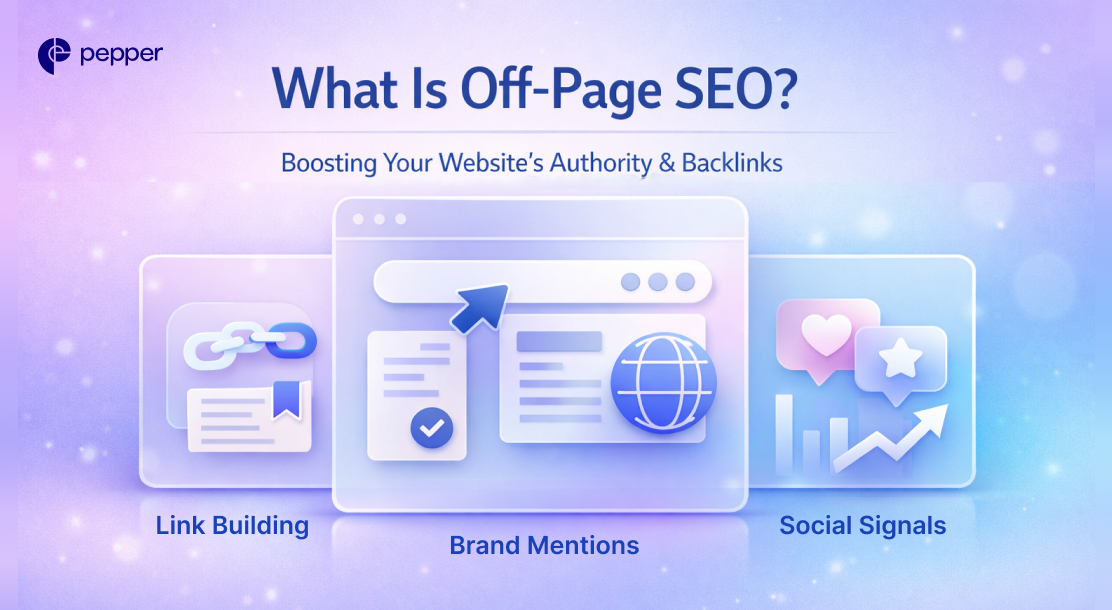
Off-page SEO refers to optimization activities performed outside your website to improve search engine rankings and build domain authority. Unlike on-page SEO, which focuses on elements you control directly, off-page SEO builds your site’s reputation through external signals like backlinks, brand mentions, and social proof.
The most common off-page signal is a backlink (when another site links to yours), which Google views as a “vote of confidence.”
Off-Page SEO Explained
Think of your website as a candidate running for office.
- On-Page SEO is your campaign speech—your polished message and platform.
- Off-Page SEO is the endorsements you get from other leaders, newspapers, and voters.
You can have the best speech (content) in the world, but if nobody trusts or endorses you, you won’t win the election (rank #1).

Why It Matters (The 50% Rule)
Off-page SEO accounts for roughly 50% of Google’s ranking factors. It is the primary way search engines determine your E-E-A-T (Experience, Expertise, Authoritativeness, Trustworthiness).
- The “Vote” Logic: The #1 result in Google typically has 3.8x more backlinks than positions #2–#10.
- The Authority Gap: You can’t demonstrate authority just by claiming “I am an expert.” You need external sources to verify it.
- The Ranking Reality: On-Page SEO determines what you rank for. Off-Page SEO determines how high you rank.

Key Off-Page SEO Techniques
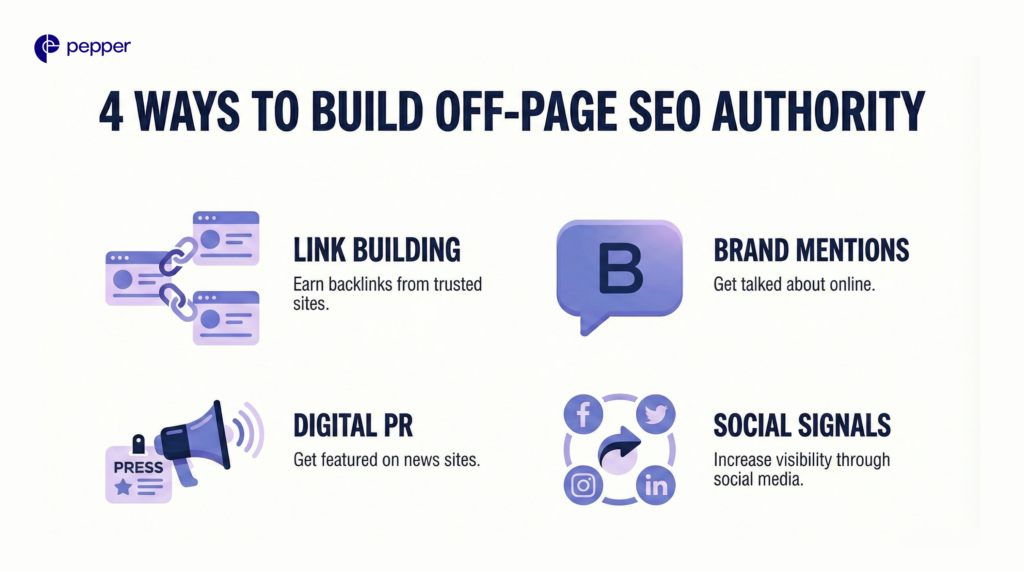
Off-page SEO is where authority, trust, and real-world relevance are built. Aim for:
- Link Building: Acquiring backlinks from relevant, authoritative websites. This includes guest posting, digital PR, and creating linkable assets like original research.
- Brand Mentions: Google considers unlinked brand mentions as trust signals, especially from authoritative platforms.
- Digital PR: Using public relations tactics to earn coverage and backlinks from news sites and industry publications.
- Social Signals: While social media doesn’t directly impact rankings, it amplifies content reach and can generate organic backlinks.
Off-Page SEO vs. On-Page SEO
Off-page SEO builds the external trust signals search engines need to rank your content competitively, making link building and brand authority essential for B2B visibility.
| Aspect | Off-Page SEO | On-Page SEO |
|---|---|---|
| Location | Outside your website | On your website |
| Control | Limited direct control | Full direct control |
| Focus | Authority & reputation | Content & structure |
| Tactics | Backlinks, brand mentions | Keywords, meta tags, internal links |
| Impact | How high you rank | What you rank for |

| The “Sticky Note” Summary If you only remember three things from this guide, make it these: 1. Google counts links as votes. The more “votes” you have from “popular” (authoritative) kids, the more popular you become. 2. One link from a university (.edu) or major publisher is worth more than 100 links from random, spammy blogs. 3. On-Page is the car; Off-Page is the fuel. You need a working engine (On-Page) to move, but you won’t go anywhere without gas (Off-Page). |
Frequently Asked Questions
1. What is off-page SEO and why is it important?
Off-page SEO encompasses all optimization activities outside your website that build authority and trust. It’s important because search engines use external signals like backlinks to determine ranking positions.
2. What is the difference between off-page and on-page SEO?
On-page SEO optimizes elements on your website (content, meta tags, structure). Off-page SEO builds reputation through external factors like backlinks and brand mentions from other sites.
3. What are the most effective off-page SEO techniques?
Link building remains the most effective technique. Other tactics include digital PR, guest posting, brand mention building, and creating shareable content that naturally attracts backlinks.
4. How do backlinks improve SEO?
Backlinks act as endorsements from other websites. High-quality backlinks from authoritative sites signal to search engines that your content is trustworthy and valuable.
5. Can you do SEO without backlinks?
You can optimize on-page factors without backlinks, but competing for high-value keywords typically requires some backlink authority. Approximately 95% of pages have zero backlinks, limiting their ranking potential.
Latest Blogs
This blog focuses on 12 of India’s top content writing services.
According to the Content Marketing Institute, one of the most effective ways to promote a business is via good content. At least half of all marketers either are or are planning to use content to reach their customers.
Get your hands on the latest news!

Similar Posts
Digital Marketing
3 mins read
When, Where, And How To Use Primary Keywords And Secondary Keywords
Artificial Intelligence
3 mins read
What Is Anchor Text?
Organic Marketing
2 mins read