How to Optimize for AI Search Results in 2026: The Complete Guide to AI Search Optimisation
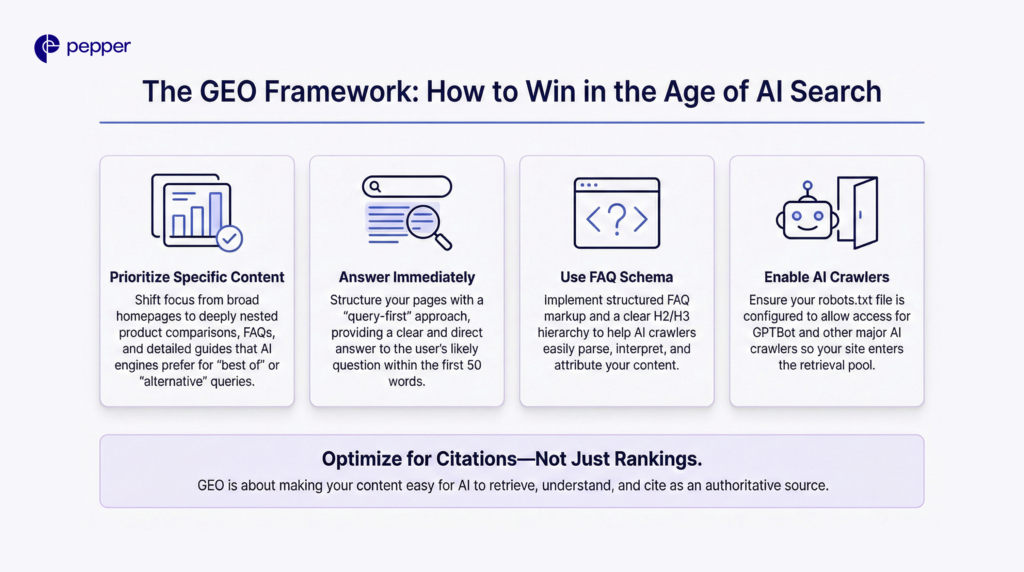
To optimize for AI search in 2026, brands must transition to Generative Engine Optimization (GEO) by prioritizing specific, deeply nested content like product comparisons and FAQs over broad homepages. Success requires structuring pages with a “query-answering” first paragraph, implementing FAQ schema, and ensuring AI crawlers like GPTBot have full access.
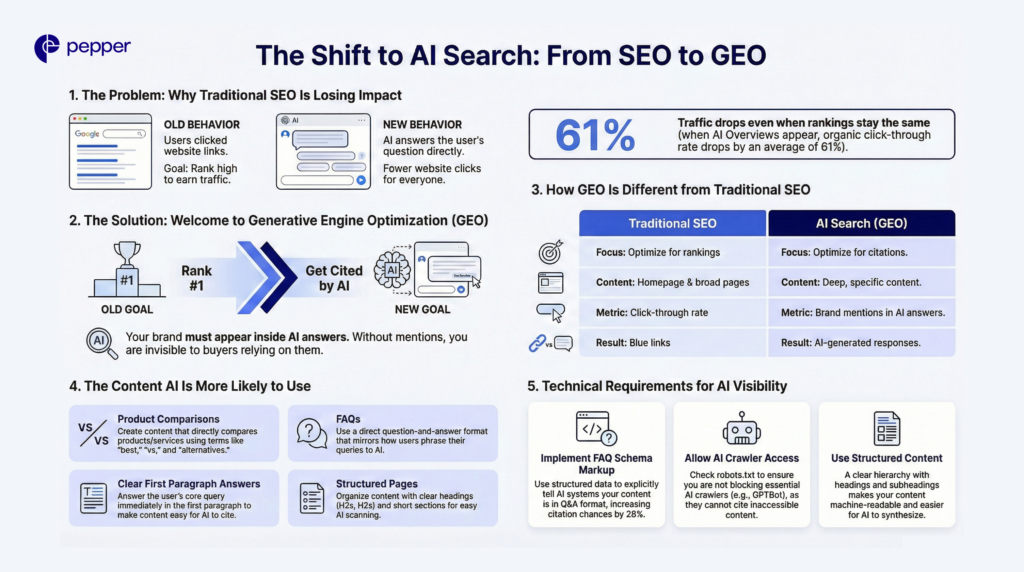
If you’re a CMO or VP Marketing at a B2B SaaS company, you’ve watched organic traffic decline while your traditional SEO metrics stayed flat. Your content ranks on Page 1, but clicks keep dropping. The culprit? AI-generated answers now satisfy queries before users ever reach your website.
This shift demands a new approach: AI search optimisation, also known as Generative Engine Optimization (GEO).
Instead of optimizing for rankings, you’re optimizing for citations. When ChatGPT or Google AI Overviews answer questions about your product category, does your brand get mentioned? If not, you’re invisible to a growing segment of buyers.
This guide covers the tactical framework for getting your content retrieved, cited, and trusted by LLMs in 2026. You’ll learn how AI search retrieval actually works, which content formats get cited most often, and how to measure success beyond traditional SEO metrics.
What Is AI Search Optimisation and Why Does It Matter Now?
AI search optimisation is the practice of structuring content so that large language models (LLMs) retrieve and cite it when generating answers. Unlike traditional SEO, which focuses on ranking web pages in a list, AI search optimisation focuses on becoming a source that AI systems reference directly.
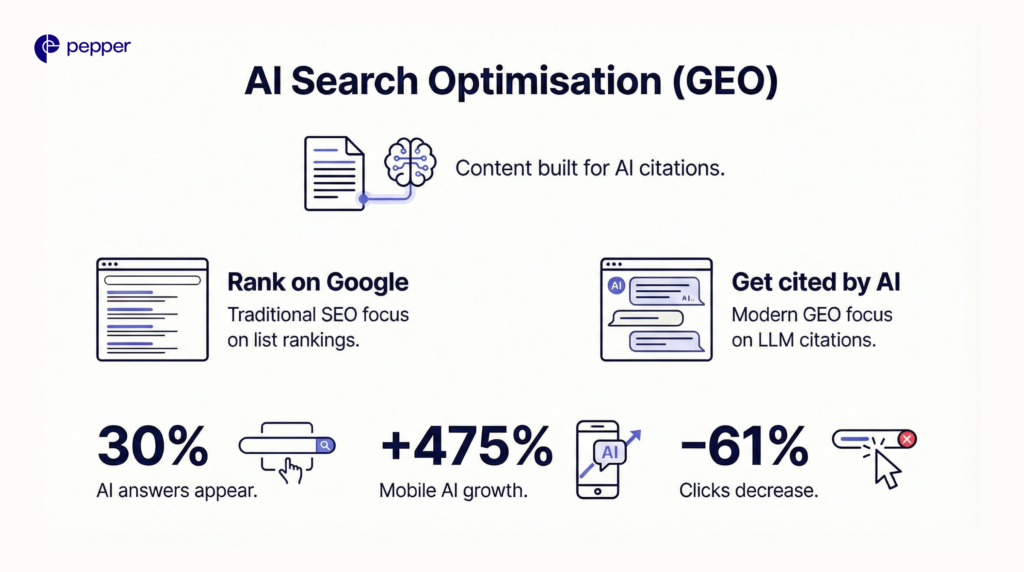
The business case is straightforward: Google AI Overviews now appear for
- 30% of U.S. desktop keywords—up from just 6.49% in January 2025 to 13.14% by March 2025 (a 102% increase in two months).
- Mobile presence has surged nearly 475% year-over-year.
- When AI Overviews appear, organic CTR drops 61% (from 1.76% to 0.61%).
Key Takeaway: AI search optimisation isn’t replacing SEO—it’s becoming an essential layer on top of it. Brands that appear in AI-generated answers capture outsized traffic gains while competitors watch clicks evaporate.
How Does AI Search Retrieval Actually Work?
Understanding retrieval mechanics helps you optimize strategically rather than guessing at tactics.
The Retrieval-Then-Generate Process
LLMs like ChatGPT and Perplexity don’t simply “know” information. They retrieve relevant documents from indexed sources, then generate responses by synthesizing those documents. The citation is the new click-through—it’s how LLMs signal which sources informed their answer.
Microsoft’s advertising team describes it this way: “Assistants like Copilot break content down (a process called parsing) into smaller, structured pieces that can be evaluated for authority and relevance. Those pieces are then assembled into answers, often drawing from multiple sources.”
What Gets Retrieved vs. What Gets Ignored
Analysis of AI citations reveals clear patterns:
| Content Type | Citation Rate | Why It Works |
|---|---|---|
| Product/comparison pages | Medium to High | Matches “best,” “vs,” “alternatives” queries |
| Deep nested content | High | Specific, detailed answers beat generic pages |
| Homepages | Very low | Too broad, lacks specific answers |
| FAQ-structured content | High | Mirrors how users phrase questions |
Pages in Google’s top 10 show a strong correlation with LLM mentions, and AI Overview citations are pulled from these top-ranking positions. This means traditional SEO fundamentals still matter—they determine whether you enter the candidate pool for citation.
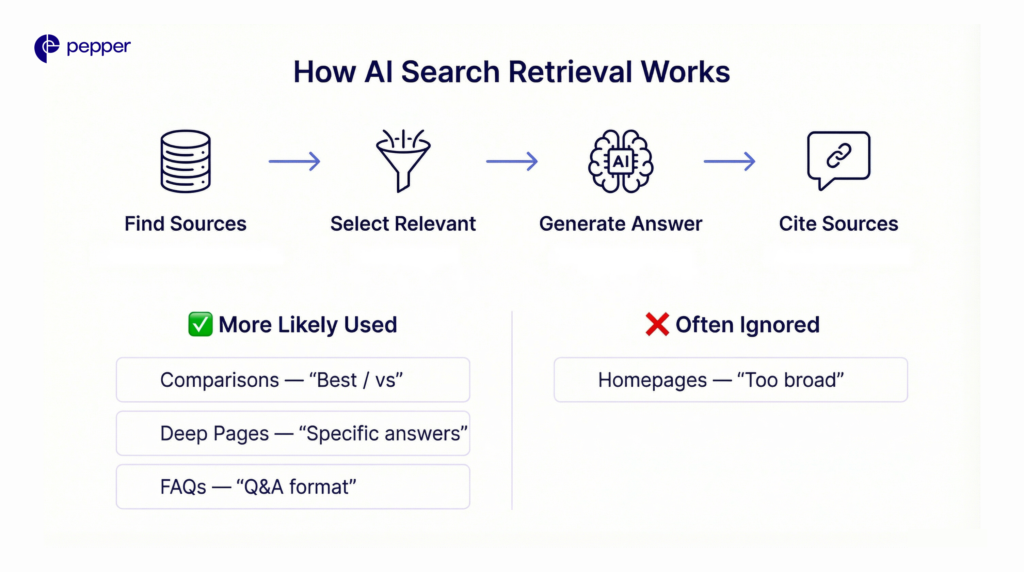
Key Takeaway: LLMs favor specific, deeply nested pages over homepages. Your product comparisons, detailed guides, and FAQ content are more likely to get cited than broad category pages.
Comparison and List Content Dominates
Comparative list articles make up about a third of all mentions in AI outputs. This contradicts traditional SEO wisdom that favored long, comprehensive articles. For AI searches, clearly organized comparison content gets cited far more often.
| Quick Tip: AI systems frequently answer queries containing “best,” “top,” “compare,” “vs,” and “alternatives” by pulling from comparison-style formats. |
Quotable Formats Win
Content that includes “statements worth repeating” gets cited more frequently. These include:
- Concise definitions that answer “what is X” queries directly
- Actionable steps that can be extracted without editing
- Data-backed claims with specific metrics attached
- Expert quotes that add credibility and attribution
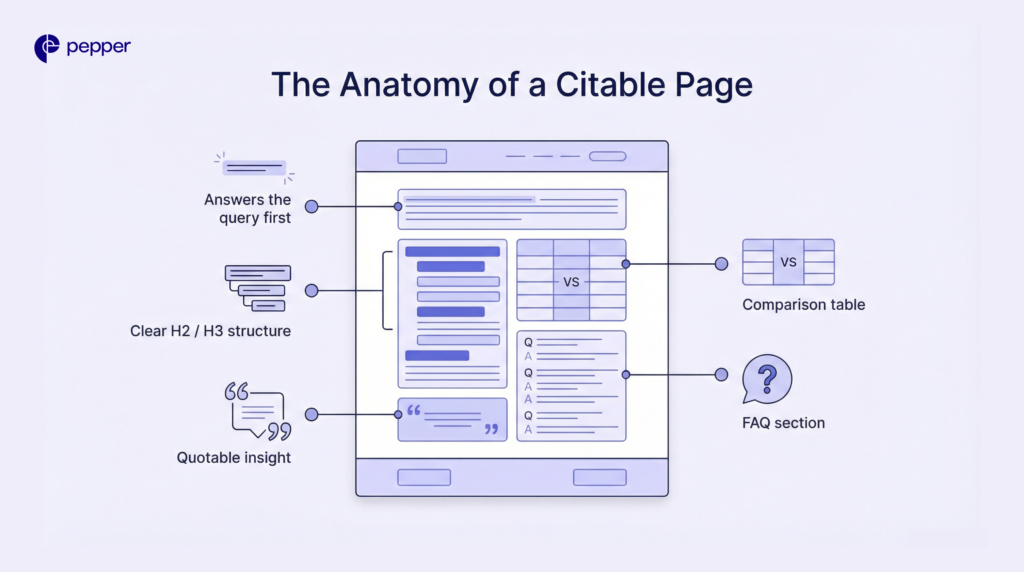
| Remember: Opening paragraphs that answer the query upfront get cited more often than content that buries the answer. |
Structure Signals Authority
Pages using clear H2/H3/bullet point structures are more likely to be cited by AI engines. Q&A formats perform best because they closely match how users ask questions.
| Structure Element | Impact |
|---|---|
| Clear H2/H3 hierarchy | Higher citation rate |
| Query-answering opening paragraph | Increased citation potential |
| FAQ schema markup | Enhances visibility in AI-generated answers |
| Comprehensive schema markup | Advantage in AI summaries |
| ✓ Content Format Checklist Structure pages with a clear H2/H3 hierarchy Answer the primary query in the first 50 words Include comparison tables for “best” and “vs” queries Add FAQ sections matching natural language questions Create quotable statements (definitions, steps, data points) Keep paragraphs to 2-3 sentences for easy parsing |
How to Conduct an AI Search Visibility Audit
Before optimizing, you need baseline data on where your brand currently appears in AI-generated answers.
Map Your Buyer’s AI Search Journey
Create a list of 50-100 questions prospects might ask ChatGPT or Perplexity about your product category. Include:
- Product comparison queries (“best [category] for [use case]”)
- How-to queries (“how to implement [solution]”)
- Definition queries (“what is [industry term]”)
- Evaluation queries (“[competitor] vs alternatives”)
Test Across Multiple LLM Platforms
Run each prompt through ChatGPT, Perplexity, Google AI Overviews, and Claude. Document:
- Whether your brand appears at all
- Citation placement (first source vs. buried mention)
- Sentiment and accuracy of how you’re described
- Which competitors appear instead
Without real-time visibility into AI search results, most marketing teams operate blind—they don’t know if optimization efforts actually improve brand citations.
Tools like Atlas solve this by automatically tracking brand presence across ChatGPT, Gemini, and Perplexity, showing exactly where you appear in AI-generated answers and measuring share-of-voice against competitors. This baseline data turns GEO from guesswork into a measurable strategy.
Identify Content Gaps
Compare your citation frequency against competitors. Where do they appear and you don’t? These gaps represent high-priority optimization opportunities.
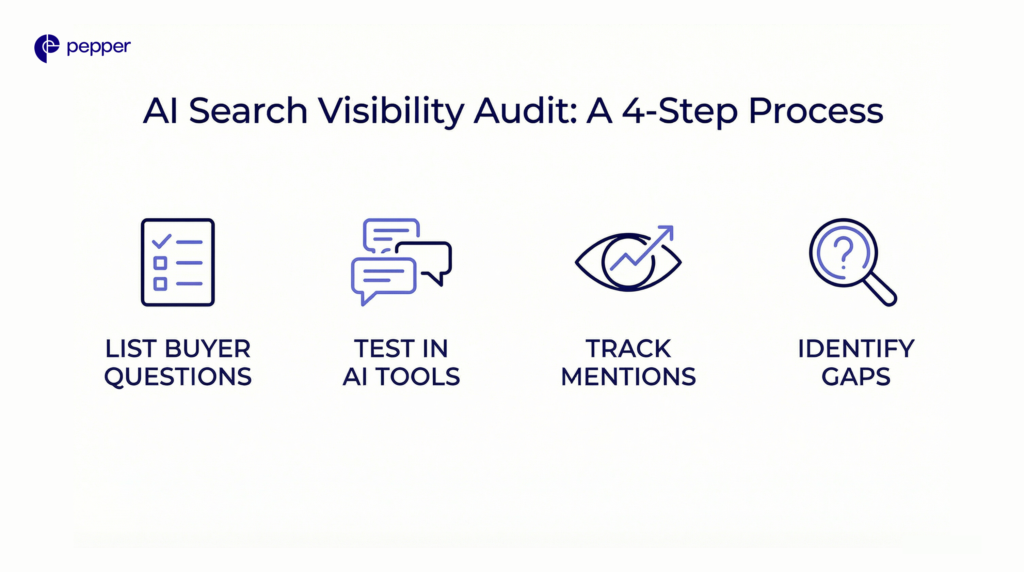
| ✓ GEO Audit Checklist Compile 50-100 buyer-intent prompts for your category Test all prompts across 4 LLM platforms (ChatGPT, Perplexity, AI Overviews, Claude) Track brand mentions, citation placement, and sentiment Identify the top 10 queries where competitors appear, but you don’t Document content gaps and prioritize by buyer intent value Establish baseline metrics to measure improvement |
What Technical Optimizations Improve AI Retrievability?
Beyond content structure, technical factors determine whether LLMs can access and cite your content.
Schema Markup Implementation
Pages with comprehensive schema markup get a 36% advantage in AI-generated summaries and citations. Proper Article and FAQ schema increases AI citations by 28%.
Priority schema types for AI search optimisation:
- FAQPage: Matches how AI delivers information
- Article: Establishes content type and authority
- Organization/Person: Builds E-E-A-T signals
- Product/Service: Enables rich product mentions
- Review/AggregateRating: Adds social proof signals
Enable AI Crawler Access
If AI crawlers can’t reach your site, they can’t cite it. Review your robots.txt file to ensure you’re not blocking crawlers like GPTBot (OpenAI), Anthropic-AI, or CCBot.
The llms.txt File
This emerging standard helps AI systems understand your site structure. Formatted in Markdown, it signals your most authoritative pages to AI crawlers. Dell has publicly shared their llms.txt file, demonstrating how enterprise brands guide AI crawlers to priority content.
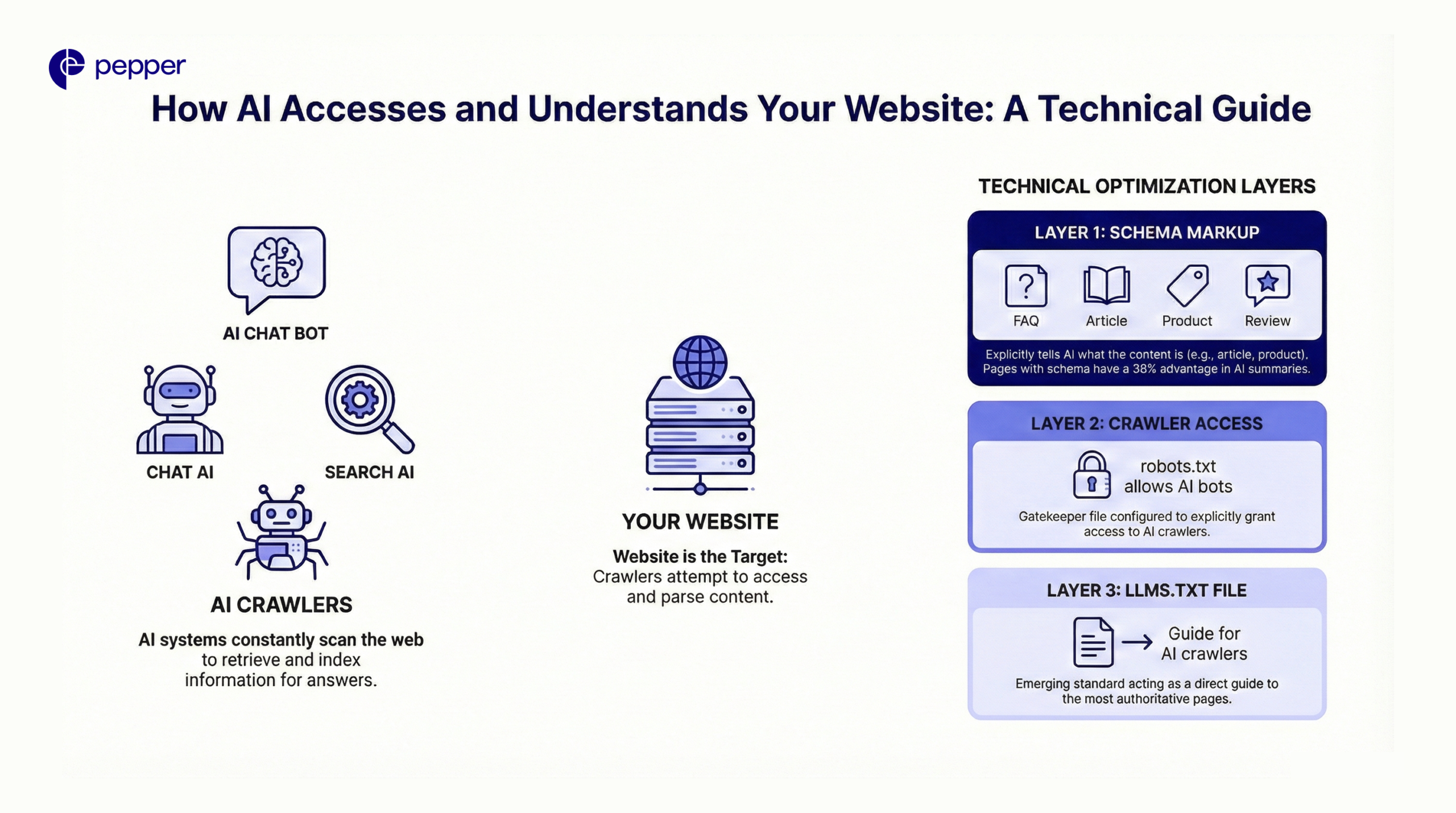
| Key Takeaway: Technical SEO fundamentals determine whether you enter the LLM retrieval pool. Schema markup, crawler access, and site structure aren’t optional—they’re prerequisites for AI search visibility. |
How Should You Measure AI Search Performance?
Traditional metrics like rankings and CTR no longer tell the complete story. AI search optimisation requires new measurement frameworks.
New Metrics to Track
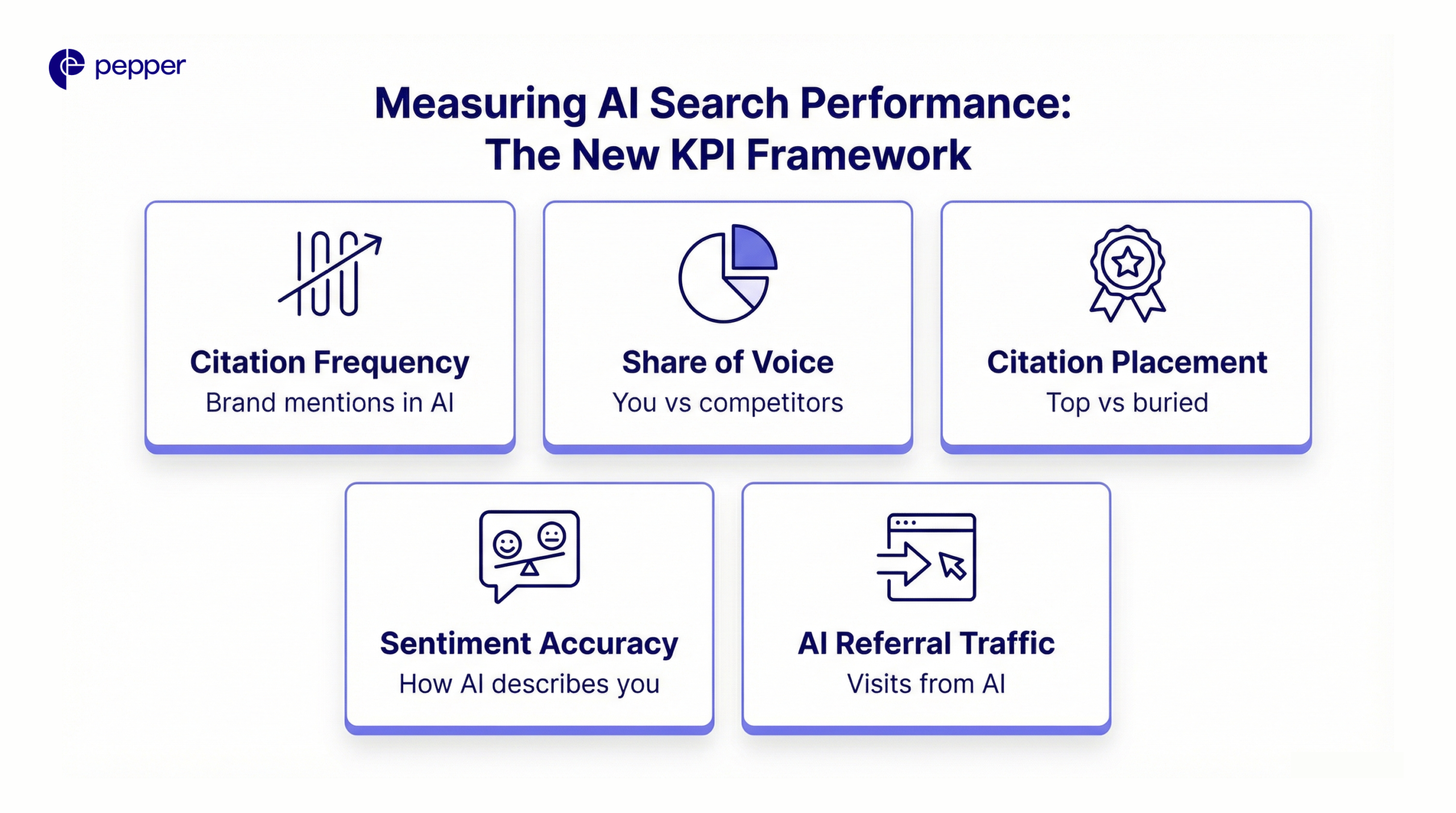
| Metric | What It Measures | Why It Matters |
|---|---|---|
| Citation frequency | How often does your brand appear in AI answers | Direct visibility indicator |
| Share of voice | Your citations vs. competitors | Competitive positioning |
| Citation placement | First source vs. buried mention | Quality of visibility |
| Sentiment accuracy | How AI describes your brand | Brand perception in AI |
| AI referral traffic | Visits from AI platforms | Direct business impact |
The Traffic Reality Check
Traditional search still drives the majority of traffic. The strategy isn’t abandoning SEO—it’s layering GEO on top of proven fundamentals. Implementing GEO at scale requires both strategic frameworks and execution capacity.
Pepper’s approach combines three elements: the GEO methodology (Visibility, Citability, Retrievability), the Atlas platform for measurement, and AI-native content experts who understand LLM optimization.
This hybrid model has helped companies like Acceldata grow organic traffic 6X while building category authority through structured, expert-backed content.
| Key Takeaway: Systematic AI search optimisation produces measurable results within months, not years. The brands investing now are building competitive moats as AI search share grows. |
The Future of Search Is Visibility, Not Rankings
AI search optimisation represents a fundamental shift from rankings to citations, from page views to brand mentions, from click-through rates to share of voice. The brands appearing in ChatGPT and Google AI Overviews today are capturing visibility that compounds as AI search adoption accelerates.
Start with a visibility audit to understand your current AI search presence. Pepper’s Atlas platform automates this process, tracking brand mentions across LLM platforms and identifying optimization opportunities based on competitive share-of-voice. The audit provides the baseline metrics you need to build a measurable GEO strategy tied to pipeline and CAC goals.
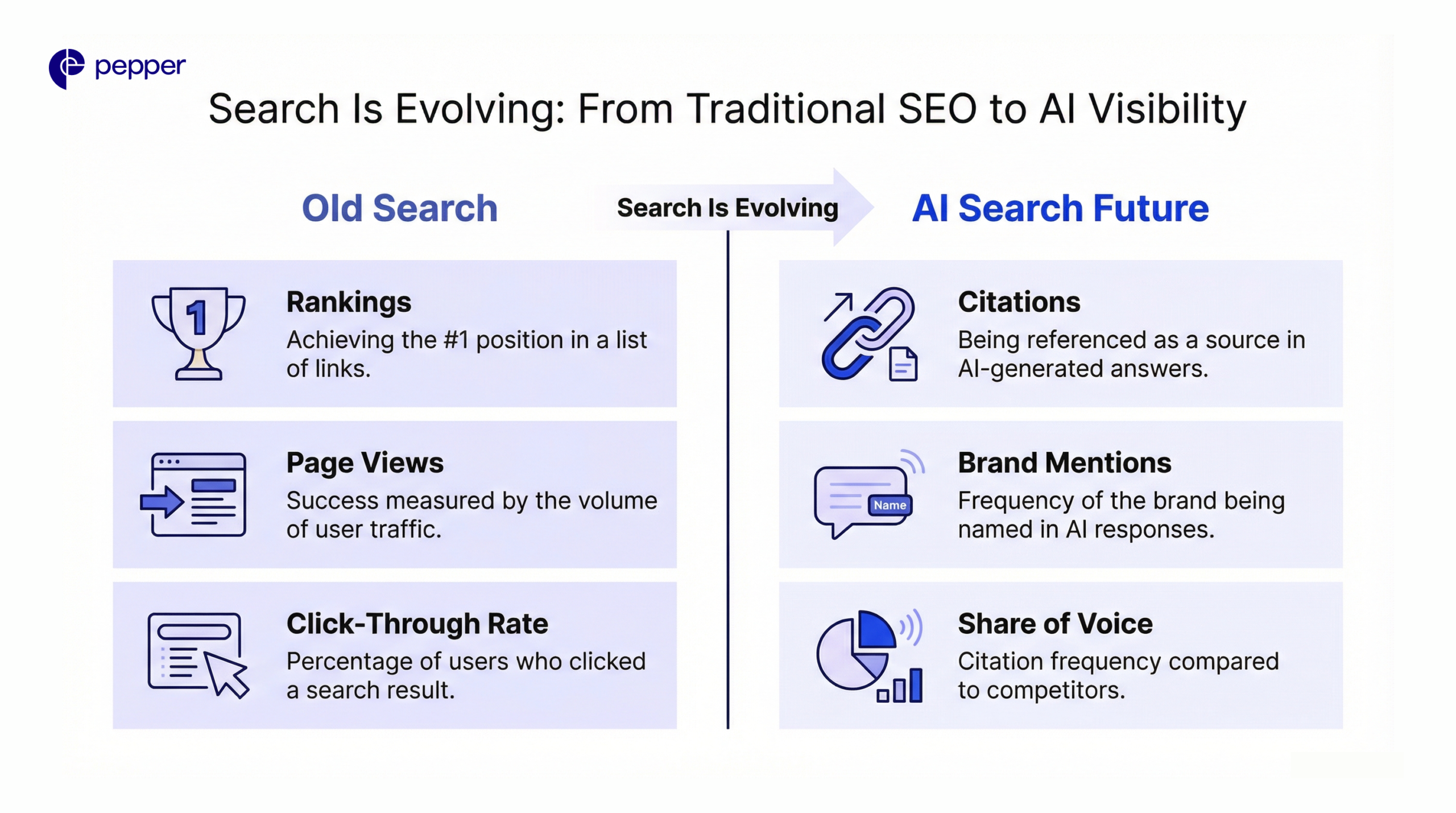
AI search introduces new signals of success that traditional SEO metrics can’t capture
| Highlights: AI search shifts SEO from rankings to citations, making brand mentions in AI answers the new visibility metric. Deep, structured, query-first content (comparisons, FAQs, definitions) is far more likely to be cited than broad pages. Technical accessibility matters—schema markup and AI crawler access determine whether your content enters the retrieval pool. Measurement must evolve, with citation frequency and share of voice replacing CTR as indicators of search impact. |
Frequently Asked Questions
1. What is AI search optimisation, and how does it fit into a modern SEO strategy?
AI search optimisation (also called GEO) focuses on getting your content cited in AI-generated answers from ChatGPT, Perplexity, and Google AI Overviews. It layers on top of traditional SEO rather than replacing it—strong rankings improve your chances of entering the LLM retrieval pool.
2. How does Google AI search change traditional search engine optimization techniques?
Google AI Overviews answer queries directly, reducing clicks to websites. Organic CTR drops 61% when AI Overviews appear. This means optimizing for citations and brand mentions matters as much as ranking position.
3. Which SEO AI tools are essential for effective AI search optimisation?
You need tools that track brand presence across AI platforms (not just Google rankings), monitor citation frequency, and identify competitive share of voice. Traditional rank trackers don’t capture AI search visibility.
4. Is AI SEO optimisation replacing standard search engine optimisation?
No. Pages in Google’s top 10 have a 0.65 correlation with LLM mentions, and 76% of AI Overview citations come from top-ranking positions. Traditional SEO fundamentals remain foundational—GEO adds a citation-focused layer.
5. How can I use SEO AI principles to rank higher in Google AI search?
Focus on quotable content formats (comparisons, FAQs, definitions), implement comprehensive schema markup, enable AI crawler access, and structure content with a clear H2/H3 hierarchy. Opening paragraphs that answer queries directly get cited more often.
6. How long does it take to see results from AI search optimisation?
Case studies show meaningful improvements within 2-3 months of systematic optimization.
7. What percentage of search traffic comes from AI platforms?
Currently, about 1% of total publisher traffic comes from AI platforms. It’s small today, but growing fast as AI answers increasingly replace traditional clicks.
Latest Blogs
This blog focuses on 12 of India’s top content writing services.
According to the Content Marketing Institute, one of the most effective ways to promote a business is via good content. At least half of all marketers either are or are planning to use content to reach their customers.
Get your hands on the latest news!

Similar Posts
Generative AI
7 mins read
Best LLM Monitoring Tools for Brand Visibility in 2026
Generative AI
8 mins read
Top 5 Rules to Rule AI Marketing Tools Like a Pro
Generative AI
8 mins read