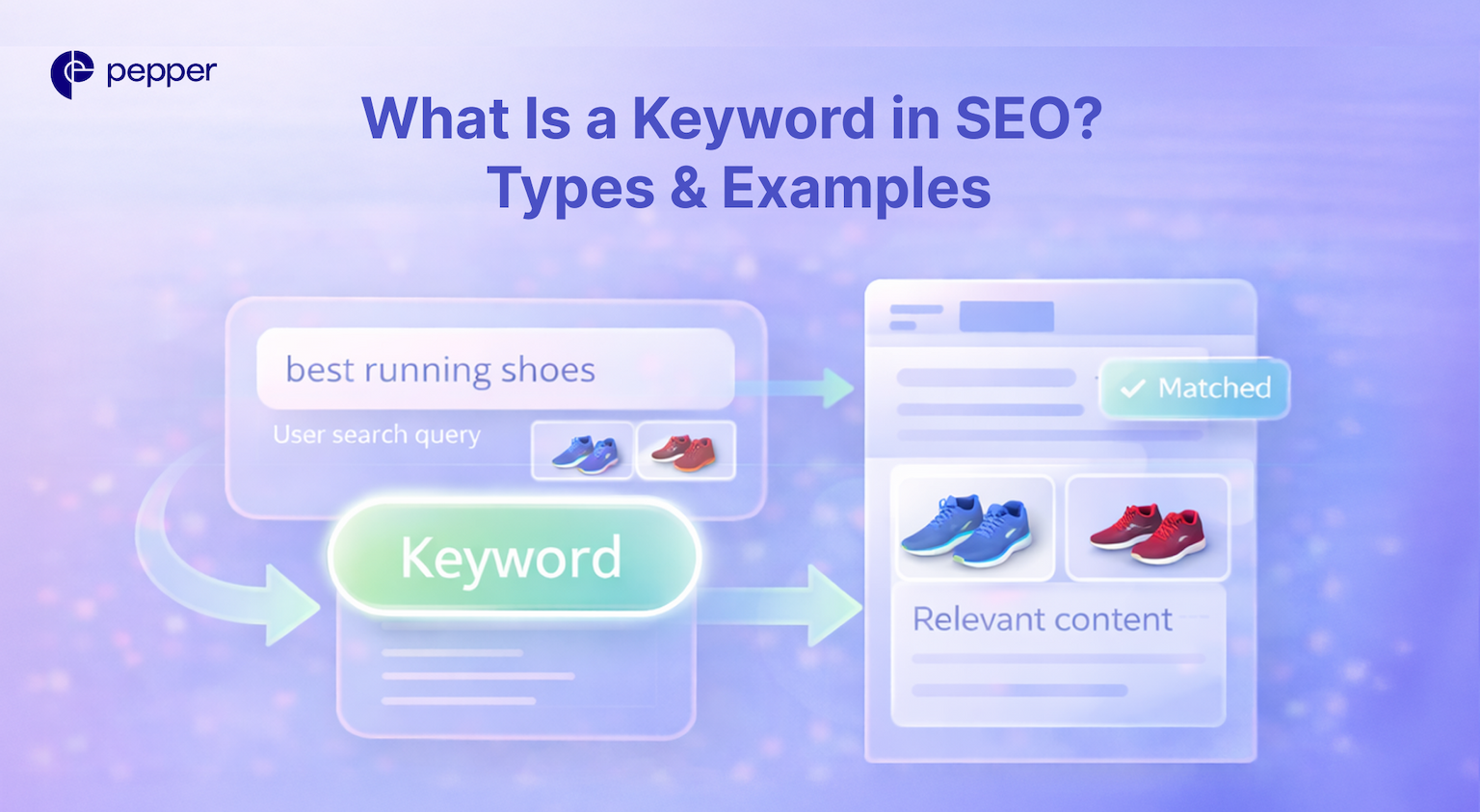
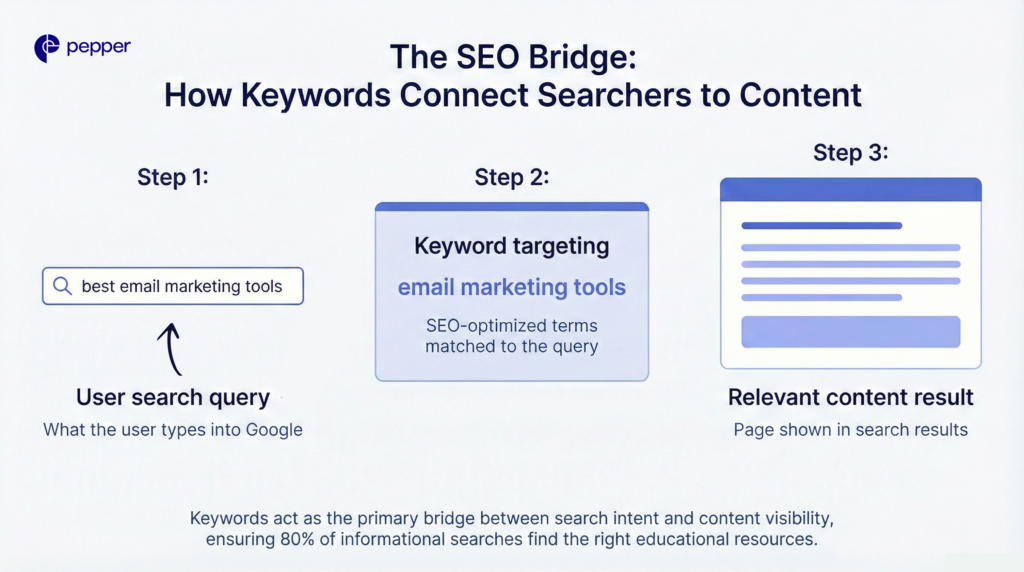
A keyword in SEO is a word or phrase that users type into search engines to find information, products, or services. Keywords connect user queries to relevant content, directly influencing search visibility and organic traffic.
Keywords function as the language bridge between what your audience searches and the content you create. Understanding keyword types and search intent helps you create content that ranks and converts.
Keywords in SEO Explained
Search engines use keywords to understand what your page covers. When you include relevant terms throughout your content, you signal to Google and other search engines what topics your page addresses.
The goal is to match your content’s language to the words your audience actually uses when searching. This alignment improves your relevance for specific queries and increases your chances of appearing in search results.
Keywords should appear in strategic locations: title tags, meta descriptions, headers, and body content. However, quality content aligned with user intent matters more than keyword frequency.
Why Keywords Matter for SEO
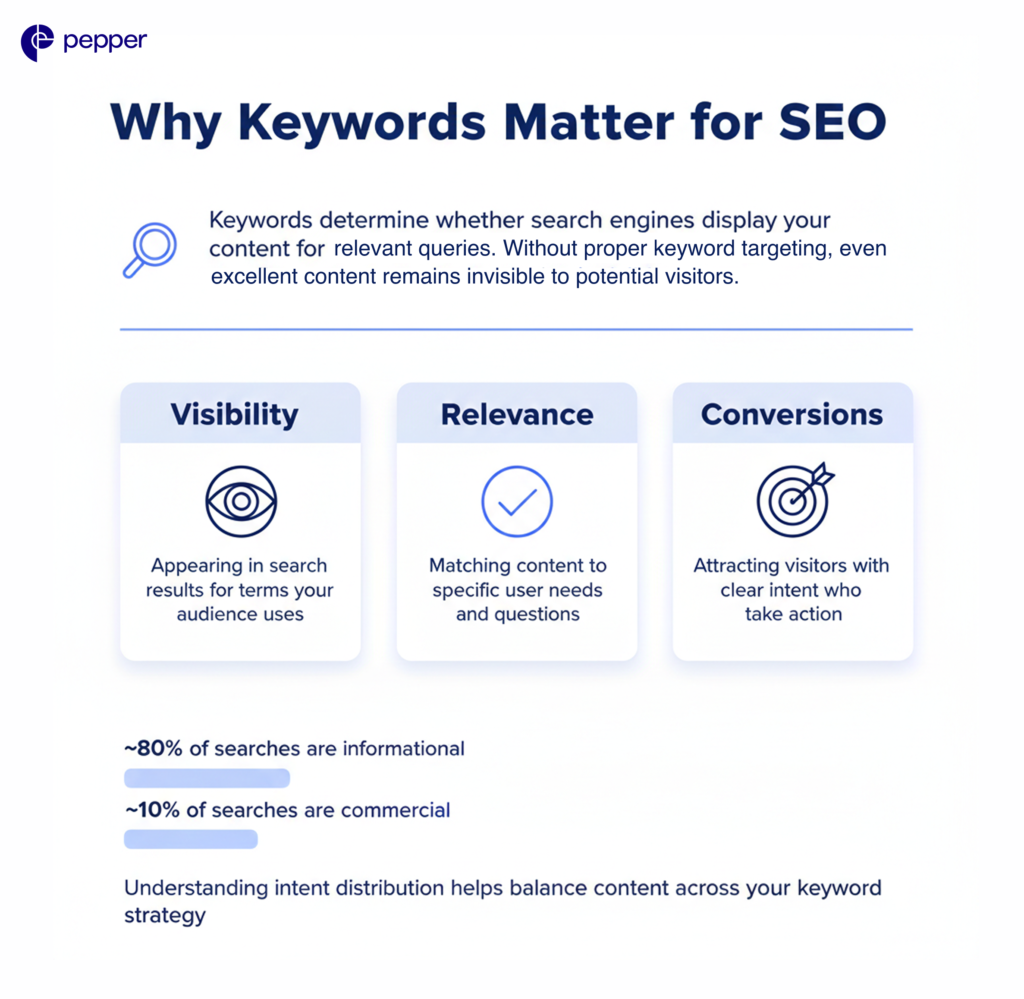
Keywords determine whether search engines display your content for relevant queries. Without proper keyword targeting, even excellent content remains invisible to potential visitors.
Effective keyword selection drives three outcomes:
- Visibility: Appearing in search results for terms your audience uses
- Relevance: Matching content to specific user needs and questions
- Conversions: Attracting visitors with clear intent who take action
Approximately 80% of searches have informational intent, while 10% carry commercial intent. Understanding this distribution helps you balance content types across your keyword strategy.
Types of Keywords by Length
| Keyword Type | Word Count | Search Volume | Competition | Conversion Rate |
|---|---|---|---|---|
| Short-tail | 1-2 words | High | Very high | Lower |
| Mid-tail | 3-4 words | Moderate | Moderate | Moderate |
| Long-tail | 5+ words | Lower | Lower | Higher |
Short-tail keywords like “marketing” or “SEO” attract high search volume but face intense competition. Ranking for these terms requires significant domain authority and content investment.
Long-tail keywords like “best email marketing tools for small business” attract fewer searches but bring visitors closer to taking action. Research indicates long-tail terms deliver approximately 2.5× higher conversion rates compared to short-tail keywords.
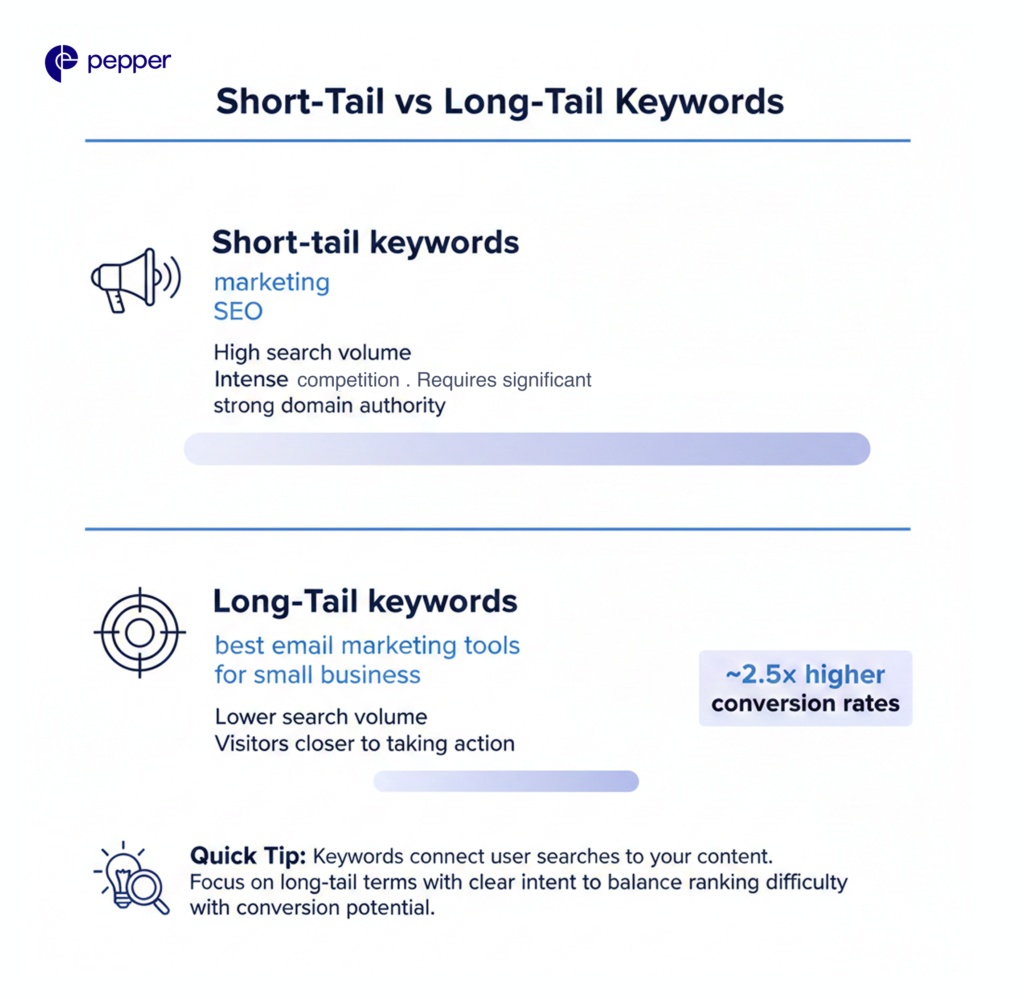
| Quick Tip: Keywords connect user searches to your content. Focus on long-tail terms with a clear intent to balance ranking difficulty with conversion potential for measurable SEO results. |
Keywords by Search Intent
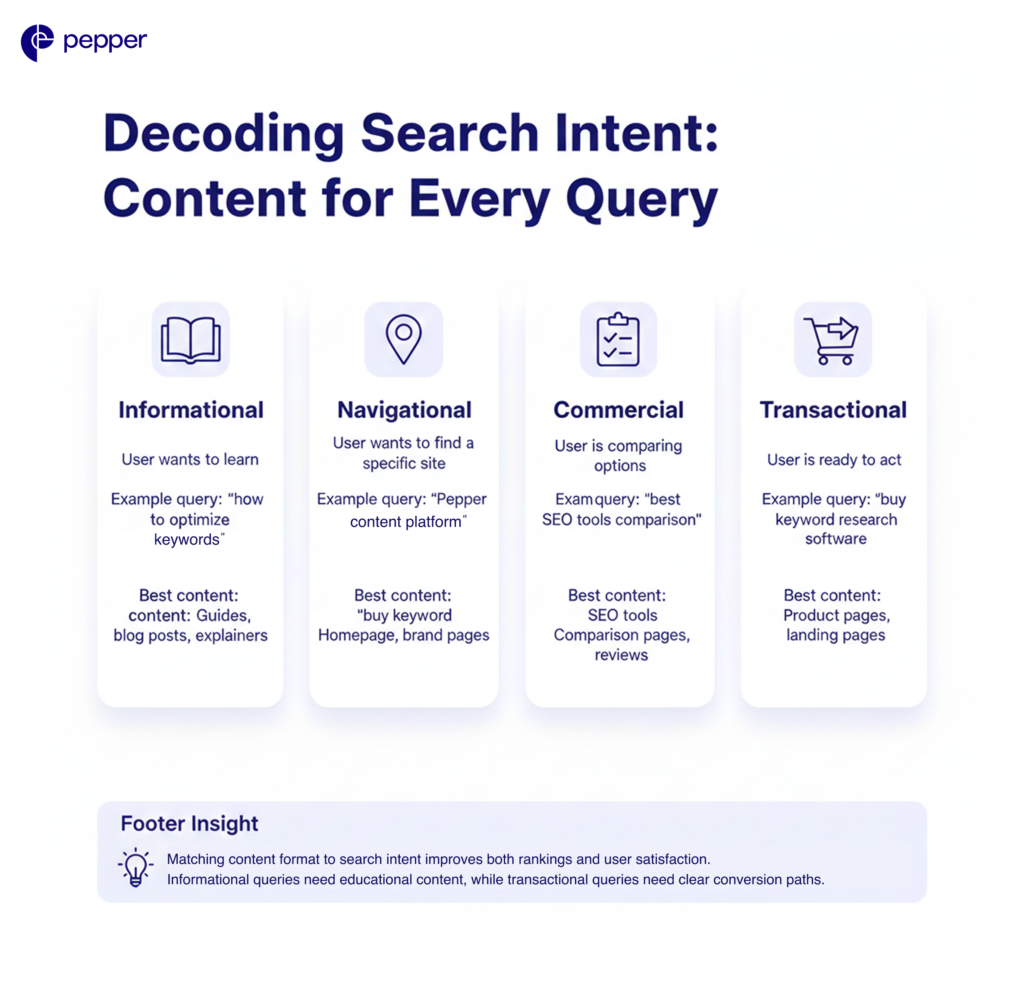
Search intent describes the purpose behind a user’s query. Four primary intent categories guide keyword selection:
- Informational: Users want knowledge (“how to optimize keywords”)
- Navigational: Users seek a specific site (“Pepper content platform”)
- Commercial: Users research options (“best SEO tools comparison”)
- Transactional: Users want to act (“buy keyword research software”)
Matching content format to search intent improves both rankings and user satisfaction. Informational queries need educational content, while transactional queries need clear conversion paths.
How to Choose Effective Keywords
Start with seed keywords representing your core topics. Expand these into specific variations based on search volume, competition, and intent alignment.
Effective keyword selection balances three factors: sufficient search volume to drive traffic, manageable competition for realistic ranking potential, and clear intent alignment with your content goals.
Focus on long-tail variations when building authority in competitive markets. These terms offer faster ranking opportunities while attracting high-intent visitors ready to engage with your solutions.
| Key Takeaways: Keywords bridge what users search for with the content you create, directly shaping search visibility and traffic. Long-tail keywords drive lower competition and higher conversions, making them ideal for sustainable SEO growth. Search intent matters more than keyword density—content must match why the user is searching. An effective keyword strategy balances volume, competition, and intent to attract the right audience, not just more clicks. |
Frequently Asked Questions
1. What is a keyword in SEO and how do search engines use them?
Keywords are terms users search for. These help search engines understand page topics. Engines match query terms to page content, displaying relevant results based on keyword presence, placement, and context.
2. What are long tail keywords and why are they easier to rank for?
Long-tail keywords contain three or more words with specific intent. Lower search volume means less competition, making them accessible targets for newer sites building authority.
3. How do you determine keyword competition before creating content?
Analyze top-ranking pages for your target term. High competition shows established domains with strong backlink profiles. Tools measure difficulty scores based on ranking page authority.
4. What is the difference between short-tail and long-tail keywords?
Short-tail terms are 1-2 words with broad intent and high competition. Long-tail terms are 3+ words with specific intent, lower volume, and higher conversion potential.
5. How do I choose the right Google SEO keywords for my specific niche?
Start with seed terms representing core topics. Research variations using keyword tools, prioritizing terms with moderate volume, manageable competition, and clear alignment to your content goals.
Latest Blogs
This blog focuses on 12 of India’s top content writing services.
According to the Content Marketing Institute, one of the most effective ways to promote a business is via good content. At least half of all marketers either are or are planning to use content to reach their customers.
Get your hands on the latest news!

Similar Posts
Digital Marketing
3 mins read
When, Where, And How To Use Primary Keywords And Secondary Keywords
Artificial Intelligence
3 mins read
What Is Anchor Text?
Organic Marketing
2 mins read