What Is Organic Traffic? Definition and How It Works in SEO
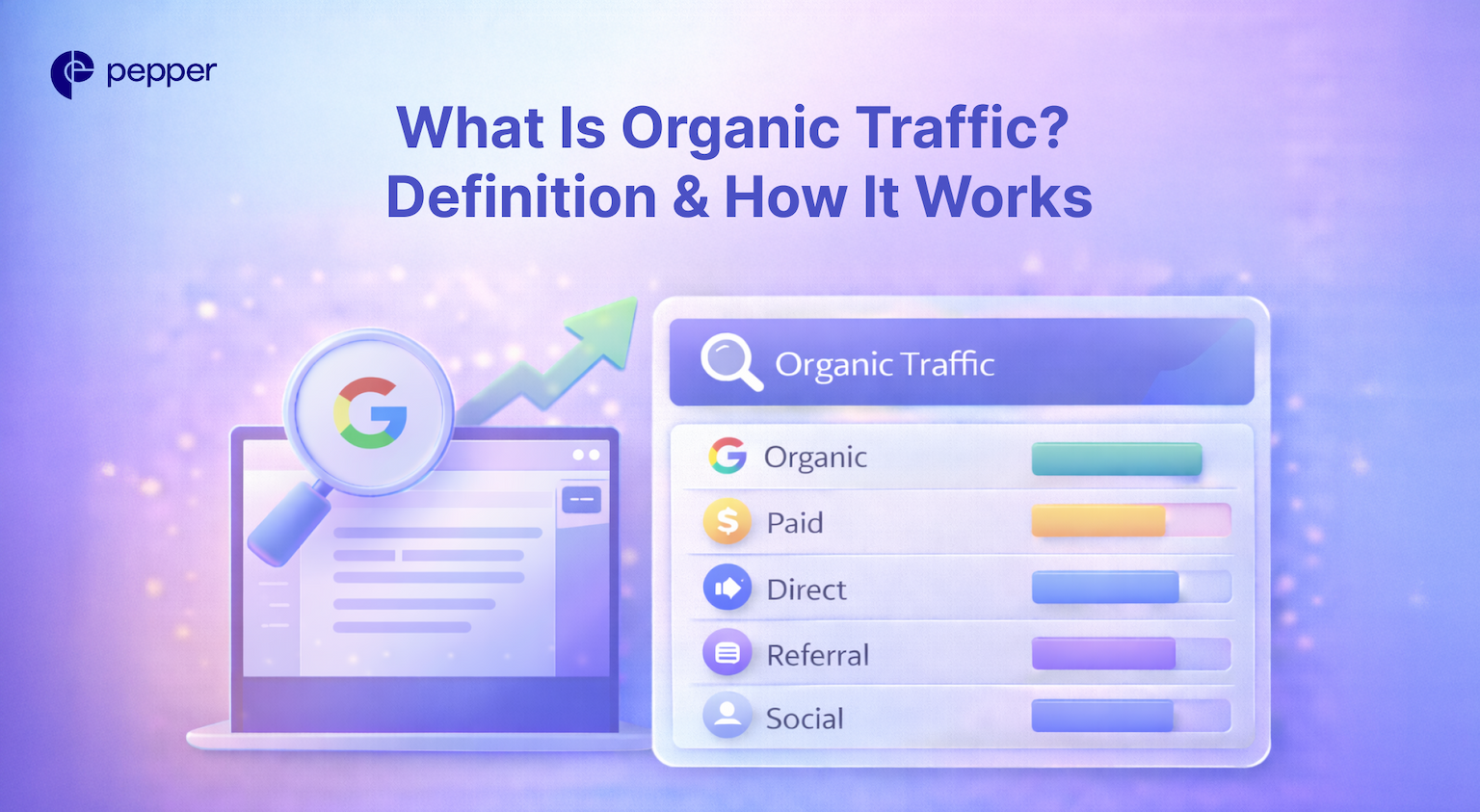
Organic traffic refers to website visitors who arrive through unpaid search engine results rather than paid advertisements. This metric indicates the effectiveness of your SEO strategies and content relevance, representing a sustainable acquisition channel that compounds over time. For enterprise marketers, understanding organic website traffic is foundational to content-led growth.
Organic Traffic Definition
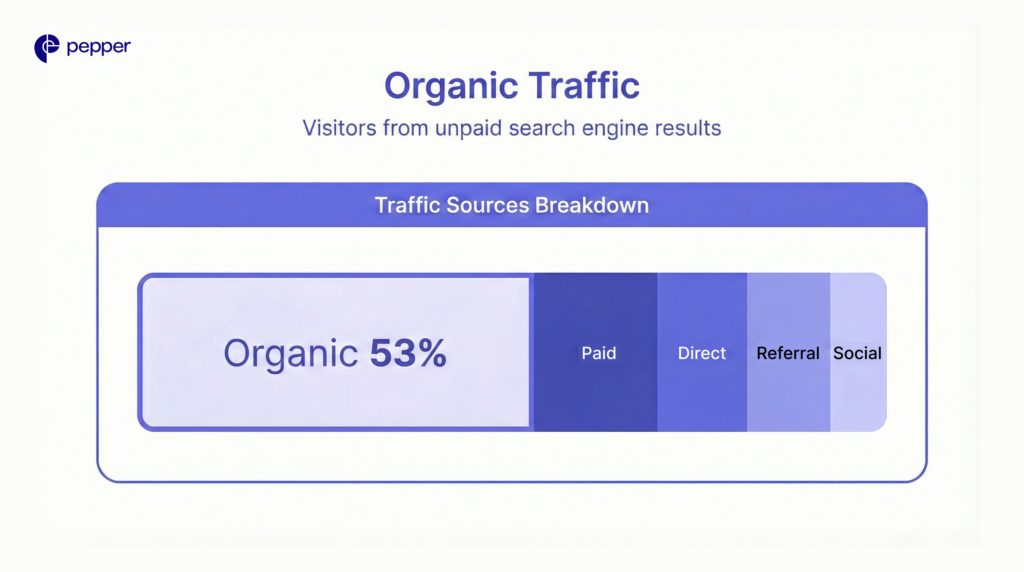
Organic traffic is when someone visits your website after finding it in search engine results on Google, Bing, or Yahoo. These visitors aren’t clicking paid ads or arriving from social media links. They’re searching for something specific and discovering your content naturally.
Google Analytics 4 tracks this metric by measuring how many visitors arrive at your website from search engine results pages (SERPs). The platform distinguishes organic visits from other traffic sources, such as paid campaigns, direct visits, or referral links.
What makes organic traffic valuable is its sustainability. Unlike paid campaigns that stop delivering the moment you pause spending, organic search traffic continues generating visitors as long as your content remains relevant and well-optimized.
Why Organic Traffic Matters
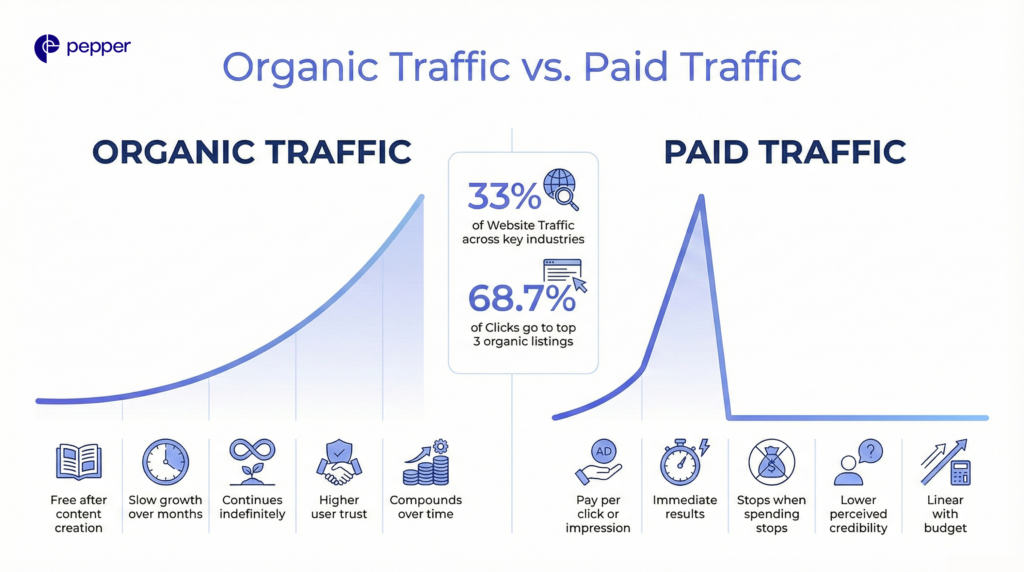
Conductor’s 2024 research found that organic search produces 33% of overall website traffic across seven key industries, including technology, finance, and healthcare. For B2B companies, this percentage often runs higher. Organic traffic outperforms paid channels
by delivering cost efficiency, higher user trust, and compounding long-term returns.
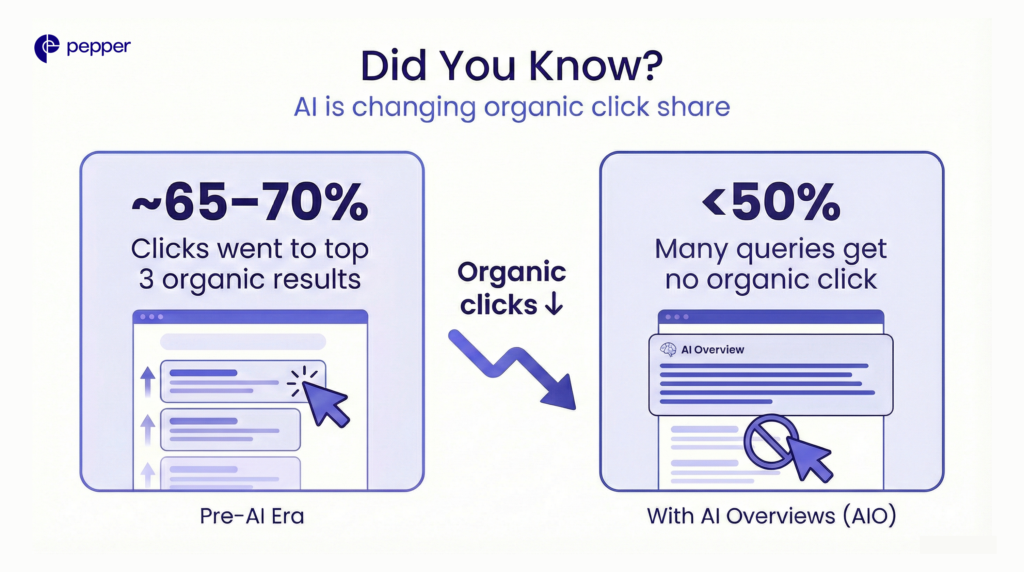
Did You Know?
In the pre-AI era, the top 3 organic Google results captured ~65–70% of all clicks.
With AI Overviews (AIO) and AI Mode now live, that share has dropped dramatically — in many queries, less than half of searches result in any organic click at all, as users get answers directly from AI.
Examples of Organic Traffic
BuzzStream hired a content marketer in November 2023 with the goals of building organic traffic and increasing brand awareness. Despite volatile SEO conditions, they achieved nearly 300% more organic website traffic through consistent content optimization.
VIM & VIGR saw a 404% increase in organic search traffic after implementing competitive keyword strategies. Multiple page-one positions led to increased conversions and revenue growth.
These results demonstrate how website traffic analysis combined with strategic content creation delivers measurable business outcomes. Tools like Atlas help brands track which content drives the most organic visitors and identify optimization opportunities.
Organic Traffic vs. Paid Traffic
| Aspect | Organic Traffic | Paid Traffic |
|---|---|---|
| Cost | Free after content creation | Pay per click or impression |
| Speed | Slow growth over months | Immediate results |
| Sustainability | Continues indefinitely | Stops when spending stops |
| Trust | Higher user trust | Lower perceived credibility |
| Scalability | Compounds over time | Linear with budget |
How to Track Website Traffic
To view organic traffic in GA4:
- Navigate to Reports > Acquisition > Traffic acquisition
- Scroll to the table and switch from the Session default channel group to the Session source/medium
- Filter for entries showing “organic” as the medium
- Analyze traffic patterns across different search engines
Understanding what organic keywords are driving your traffic helps prioritize content investments. High-performing keywords deserve expanded coverage. Underperforming pages need optimization or consolidation.
Start by auditing your current organic performance. Pepper’s Atlas platform tracks brand visibility across search engines and AI answers, helping you identify where optimization efforts will deliver the greatest returns.
Frequently Asked Questions
1. What is organic traffic, and how does it differ from direct or paid traffic?
Organic traffic comes from unpaid search engine results. Direct traffic arrives when users type your URL directly. Paid traffic comes from advertisements. The key distinction is that organic visitors find you through search queries without ad spend.
2. What are organic keywords, and how do they help drive organic website traffic?
Organic keywords are search terms that bring unpaid visitors to your site. Optimizing content for relevant keywords improves search rankings, increasing visibility and driving more qualified organic website traffic to your pages.
3. How can I track website traffic effectively to see which sources are performing best?
Use Google Analytics 4 to track website traffic by source. Navigate to Acquisition reports, filter by medium, and compare organic, direct, referral, and paid channels.
4. Why is website traffic analysis important for growing a business online?
Website traffic analysis reveals which content attracts visitors, where they come from, and how they behave. This data informs content strategy, identifies optimization opportunities, and helps allocate marketing resources effectively.
5. Does organic search traffic convert better than paid traffic?
Organic search traffic often converts better because visitors actively searched for solutions. They arrive with intent, making them more qualified than passive ad viewers.
Latest Blogs
This blog focuses on 12 of India’s top content writing services.
According to the Content Marketing Institute, one of the most effective ways to promote a business is via good content. At least half of all marketers either are or are planning to use content to reach their customers.
Get your hands on the latest news!