Content optimization is the process of enhancing web content to improve its visibility in search engine results and now LLMs, while ensuring it remains valuable and engaging for human readers. It combines strategic keyword placement, structural improvements, and user experience enhancements to help content perform better across traditional and AI-powered search platforms.
Content Optimization Explained
Content optimization sits within the broader SEO discipline but focuses specifically on the content itself rather than technical infrastructure. When marketing teams ask “what is SEO optimised content,” they’re asking about content refined for both algorithms and humans.
The process involves several interconnected elements.
- You integrate relevant keywords naturally throughout your text.
- You improve readability through clear structure and formatting.
- You add metadata that helps search engines understand your content’s purpose.
- And you use visuals effectively to enhance engagement.
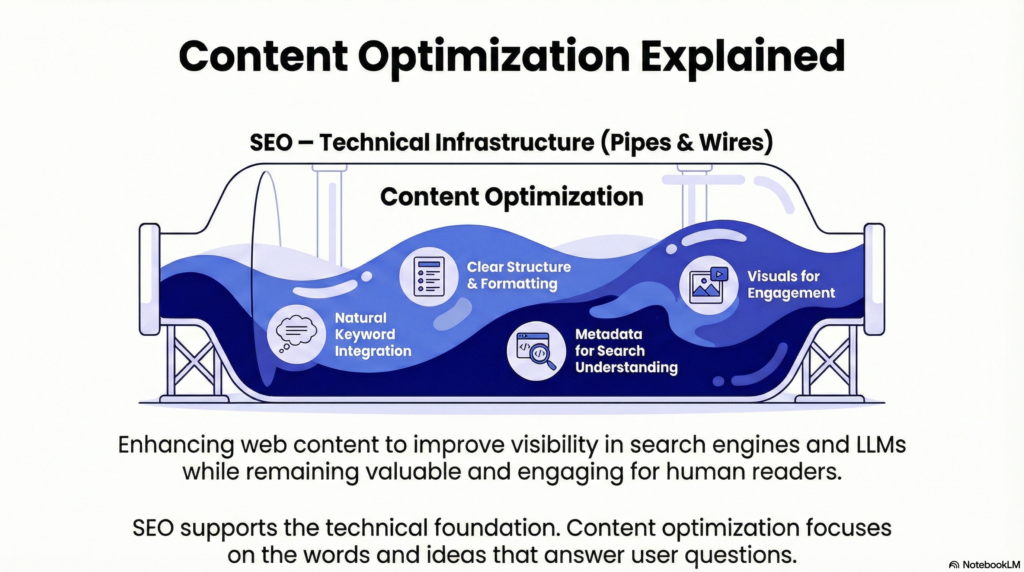
| Think of it this way: SEO is the container, and content optimization is the liquid inside. SEO covers the technical “pipes and wires” of your site, while SEO content optimisation focuses on the words and ideas that answer user questions. |
Why Content Optimization Matters
Search engines evaluate content based on relevance, authority, and user experience. Without optimization, even well-researched content can remain invisible to your target audience.
Refreshing existing content through optimization can increase traffic significantly—some studies show gains exceeding 100% from content updates alone.
For marketing teams, content optimisation in SEO translates directly to pipeline impact. When prospects search for solutions in your category, optimized content ensures your brand appears in results rather than competitors.
How Content Optimization Works
| Component | Purpose | Example |
|---|---|---|
| Keywords | Signal relevance to search engines | Primary and long-tail keyword placement |
| Meta elements | Improve click-through from SERPs | Title tags, meta descriptions |
| Headers | Structure content for crawlers and readers | H1, H2, H3 hierarchy |
| Internal links | Demonstrate topical authority | Links to related content |
| Visuals | Increase engagement and dwell time | Images with optimized alt text |
The optimization process starts with keyword research—identifying terms your audience searches for. Modern research goes beyond volume to consider search intent: Is the user seeking information, comparing options, or ready to purchase?
Next comes on-page optimization. You place keywords strategically in titles, headers, and body copy while keeping language natural. SEO optimized content reads smoothly for humans while signaling relevance to algorithms.
Content Optimization vs. On-Page SEO
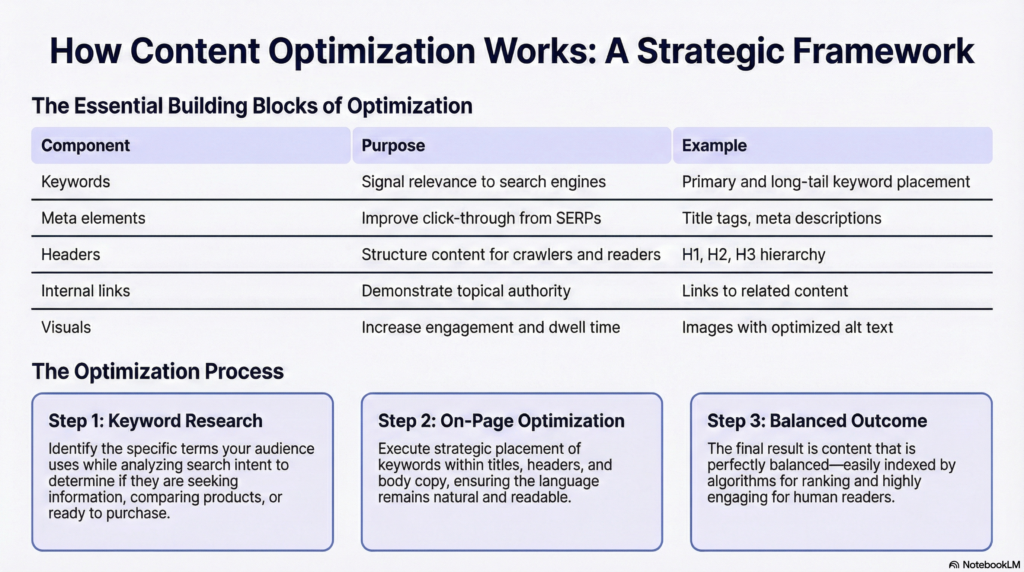
Content optimization and on-page SEO overlap but serve different functions. On-page SEO optimizes technical and structural page elements. Content optimization focuses on crafting valuable, keyword-rich content that addresses user needs.
Both matter for search visibility. Technical elements like page speed and mobile responsiveness ensure search engines can crawl and index your content. Content optimization ensures that content deserves to rank by providing genuine value.
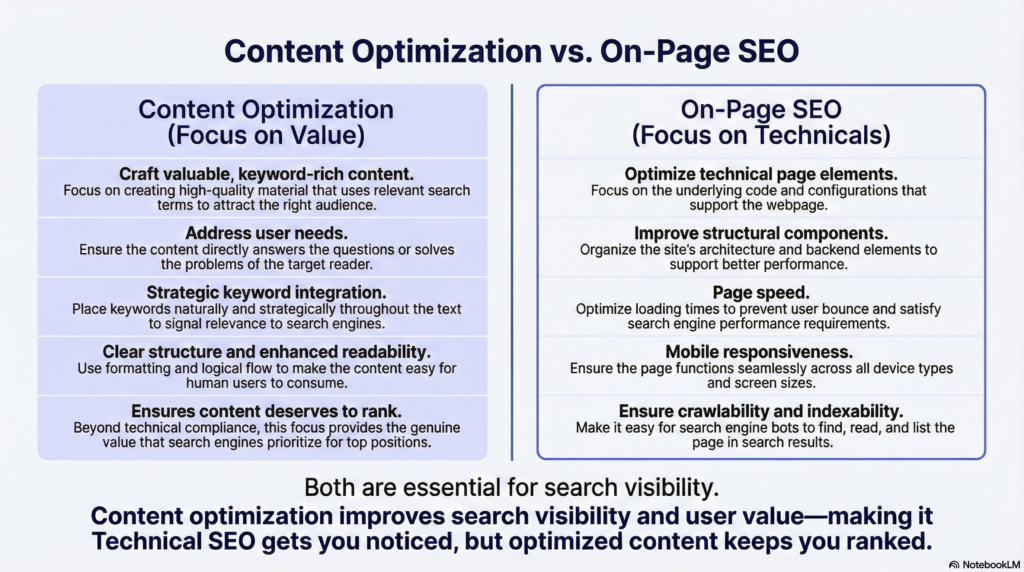
| Quick Takeaway: Content optimization improves your content’s search visibility and user value through strategic keyword integration, clear structure, and enhanced readability—making it essential for any B2B team competing for organic traffic. |
Frequently Asked Questions
1. What do people mean when they say ‘SEO optimised content’?
SEO optimised content refers to web content strategically enhanced with relevant keywords, proper structure, and metadata to rank higher in search results while remaining valuable and readable for human audiences.
2. How often should you optimize existing content?
Review high-priority content quarterly and update pieces showing traffic decline. Content refreshes targeting improved keywords or expanded coverage can restore and increase organic performance.
3. What’s the difference between content optimization and content creation?
Content creation produces new material from scratch. Content optimization improves existing content’s search performance through keyword refinement, structural updates, and enhanced user experience elements.
4. Does content optimization work for AI search platforms?
Yes. Optimized content with clear structure, authoritative sources, and direct answers performs better in AI-generated results from ChatGPT, Perplexity, and Google AI Overviews.
Latest Blogs
This blog focuses on 12 of India’s top content writing services.
According to the Content Marketing Institute, one of the most effective ways to promote a business is via good content. At least half of all marketers either are or are planning to use content to reach their customers.
Get your hands on the latest news!

Similar Posts
Content
4 mins read
Best Content Writing Companies in India: 12 Options + Selection Checklist

Blogging
3 mins read
Guest Blogging in 2026: How to Get Published + 60+ Guest Posting Sites
Content
4 mins read