What Is SERP? A Complete Guide to Search Engine Results Pages
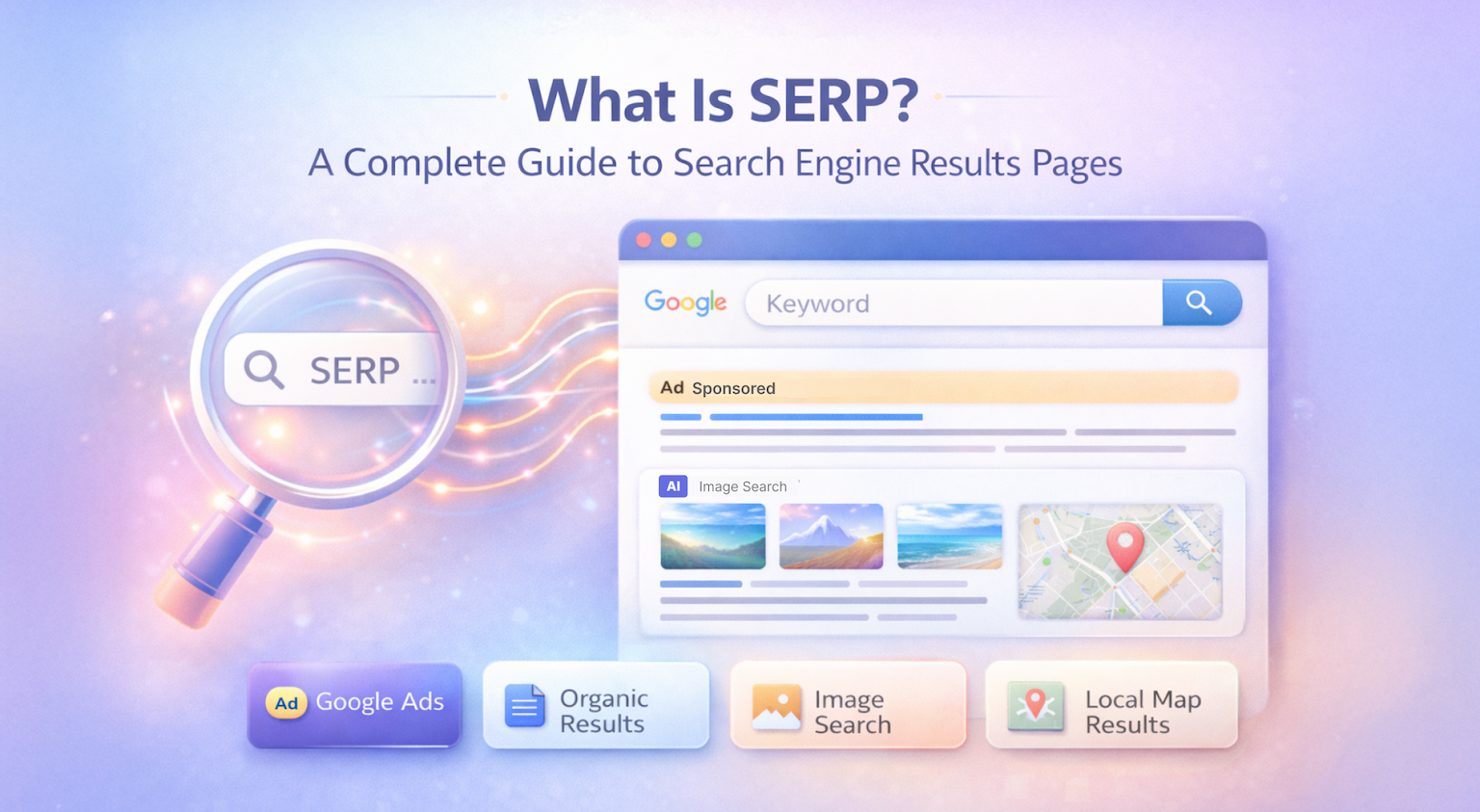
SERP (Search Engine Results Page) is the webpage displayed by search engines like Google after a user submits a query. It contains organic listings, paid advertisements, and rich features like snippets and knowledge panels that determine which websites receive visibility and clicks.

SERP Explained
A search engine results page displays listings ranked by relevance to the user’s query. Each result typically includes a title, URL, and meta description showing how the page content matches the search terms.
Google’s algorithm evaluates hundreds of factors to determine SERP positions. These include keyword relevance, content quality, backlink authority, and user experience signals like page speed and mobile-friendliness.
What makes SERPs complex is personalization. Two users searching for identical terms may see different results based on location, search history, and device type. This means SEO ranking strategies must account for variable user experiences.

Why SERP Matters for Your Business
Your position on the SERP has a direct impact on traffic, leads, and revenue. The data tells the story clearly.

Click-through rates drop dramatically after position one:
| SERP Position | Average CTR |
|---|---|
| #1 | 27.6% – 39.8% |
| #2 | 18.7% |
| #3 | 10.2% |
| #10 | 2.5% |
The #1 organic result is 10x more likely to receive a click compared to the #10 spot. For B2B companies, this visibility translates directly to the pipeline.
When Acceldata optimized their content for Google search engine optimisation, they grew organic traffic 6X (from 5.5K to 33.4K monthly visitors) and increased the top-3 keywords by 378, with 260K+ impressions on the hero article.

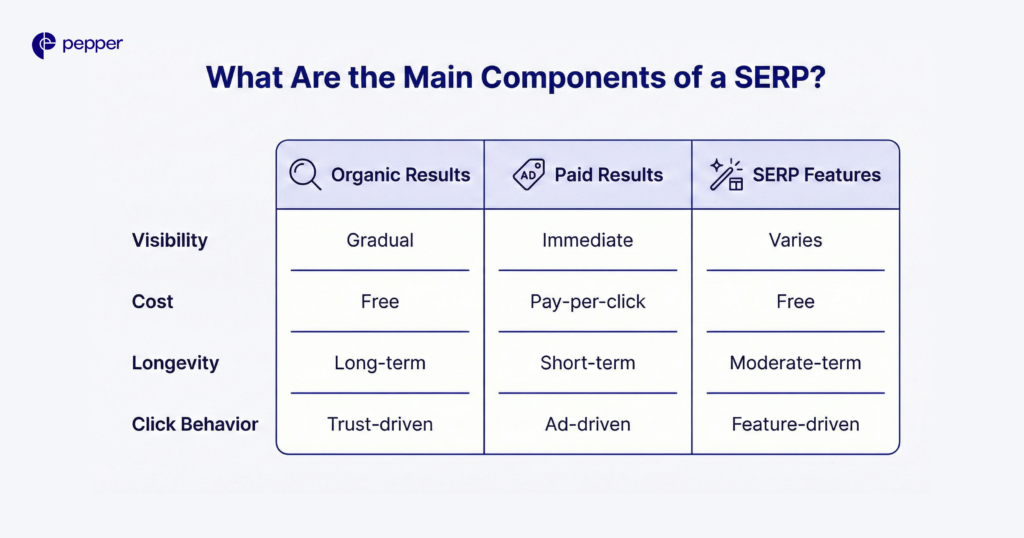
What Are the Main Components of a SERP?
Every Google ranking results page contains several distinct elements. Understanding each helps you develop a more effective SEO search strategy.
Organic Results
Google’s algorithm ranks unpaid search listings based on relevance, content quality, backlinks, page experience, and mobile friendliness. Organic results are the primary focus of SEO and drive long-term, sustainable traffic.
Paid Results
Sponsored listings that appear through pay-per-click advertising. Advertisers bid on keywords to gain prominent SERP placement. Paid results offer immediate visibility but require continuous budget investment.
SERP Features
Enhanced search elements that appear alongside or instead of standard links to provide quick answers and richer context. Common SERP features include Featured Snippets, People Also Ask boxes, Local Packs, Knowledge Panels, and Video Carousels.
How Does SERP Analysis Improve Your Strategy?
SERP analysis involves examining the results pages for your target keywords to understand what Google rewards.
Effective SERP analysis reveals:
- Content formats that rank: Does your keyword show videos, lists, or long-form guides?
- Search intent signals: Is the query informational, transactional, or navigational?
- Competitive gaps: What topics do top-ranking pages miss?
- Feature opportunities: Can you optimize for featured snippets or PAA boxes?
Tools like Atlas track where your brand appears across search results and AI-generated answers, giving you baseline metrics to measure website ranking improvements over time.
SERP vs. SEO: What’s the Difference?
These terms get confused frequently, but they serve different purposes:
| Term | Definition | Focus |
|---|---|---|
| SERP | The actual results page users see after searching | The outcome |
| SEO | Strategies used to rank higher on SERPs | The process |
How Are AI Overviews Changing SERPs?
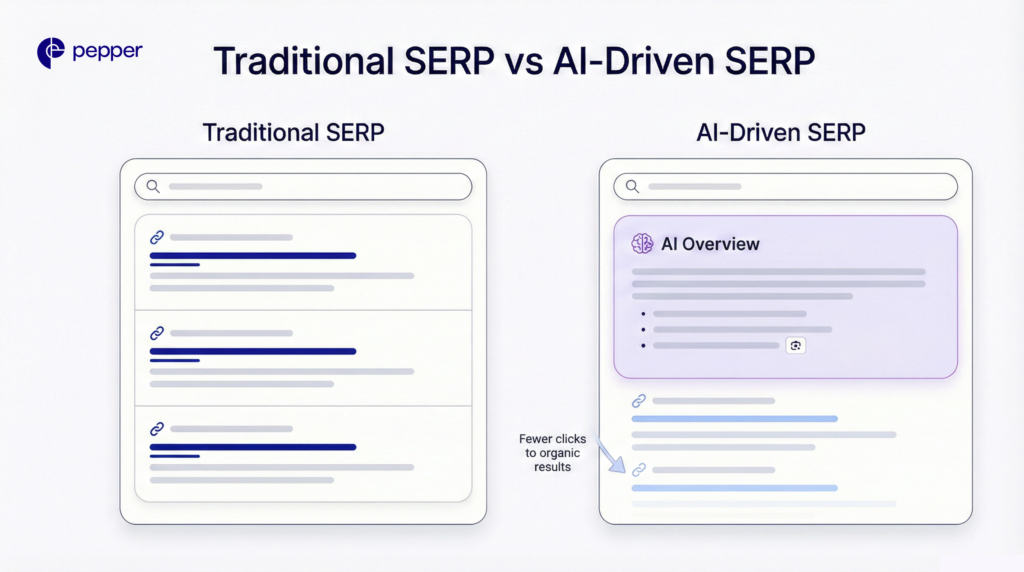
AI Overviews now appear for 30% of U.S. desktop keywords as of late 2025, synthesizing information from multiple sources into comprehensive answers.
This creates new challenges:
- Keywords triggering AI Overviews see a 34.5% decrease in CTR for top-ranking pages
- Traditional ranking positions matter less when AI answers the question directly
- Content must be structured for LLM retrieval, not just search engine crawling
Brands succeeding in this environment focus on Pepper’s GEO framework: ensuring content is visible to AI systems, citable through expert-backed claims and structured data, and retrievable through atomic content blocks LLMs can extract.
| Key Takeaways 1. SERPs determine which websites earn visibility and clicks after a user searches. 2. Top SERP positions capture the majority of traffic, making ranking critical for growth. 3. SERPs include organic results, paid ads, and features that influence user behavior. 4. AI-driven results are reshaping SERPs, requiring SEO strategies to focus on visibility and citability. |
Frequently Asked Questions
1. What is SERP, and why is it critical for digital marketing?
SERP is the results page that search engines display after queries. It determines which brands receive visibility, clicks, and traffic—making SERP optimization essential for reaching audiences through search.
2. How does Google search engine optimisation influence your position on the SERP?
Google evaluates relevance, content quality, user experience, and context to rank pages. SEO improves these signals through keyword optimization, authoritative content, and technical performance.
3. Why is SERP analysis necessary for improving your website ranking?
SERP analysis reveals which competitors rank for target keywords, what features appear, and which content formats succeed. This intelligence guides optimization priorities.
4. What is the difference between organic SEO ranking and paid results on a SERP?
Organic results earn position through SEO and receive higher trust and click rates. Paid results purchase visibility, but stop appearing when advertising budgets end.
5. How do SERP features like snippets affect your overall Google ranking?
Featured snippets capture significant click share from traditional results. Optimizing content structure for snippet eligibility can dramatically increase visibility without changing organic position.
Latest Blogs
This blog focuses on 12 of India’s top content writing services.
According to the Content Marketing Institute, one of the most effective ways to promote a business is via good content. At least half of all marketers either are or are planning to use content to reach their customers.
Get your hands on the latest news!

Similar Posts
Content
4 mins read
The Content Format Playbook: Written, Audio, Video, Interactive (Explained)

Artificial Intelligence
5 mins read
How Free AI Tools for Content Creation Can Boost Your Content Strategy
Artificial Intelligence
4 mins read