What is Zero-Click Search: When the Answer Box Steals the Show (and Why That’s Okay Now)
Remember when you had to click 5 different websites just to find out if it’s going to rain? Now Google just tells you right there. That’s zero-click search and it’s changing how brands get noticed online.
What is Zero-Click Search? (The Simple Version)
Think of zero-click search like getting your snack delivered right to your hand instead of walking to the kitchen. When you ask Google or ChatGPT a question, sometimes the answer shows up right there on the screen. You don’t need to click any links or visit any websites to get what you want.
There are two flavors of this snack delivery. The old version is when Google puts a little answer box at the top of search results (called a featured snippet). The new version is when AI tools like ChatGPT or Perplexity write you a custom answer and mention where they got their information from. That mention is like getting your name in the credits of a movie people see you’re the expert, even if they don’t visit your house.
How Does Zero-Click Search Work?
Here’s a simple example: You type “what is photosynthesis” into Google. Instead of showing you 10 blue links, Google grabs a 40-60 word explanation from a science website and displays it in a box at the top. You read it, say “cool, thanks,” and go about your day. The science website’s name is there, but you never clicked through to visit them.
With AI search engines, it works differently. You ask Perplexity “best email marketing tips,” and it writes you a detailed answer while citing three different marketing blogs. Those blogs get mentioned as trusted sources. Their names appear as footnotes. The user learns something useful, and the blogs get brand recognition like being quoted in a newspaper article.
Why Does Zero-Click Search Matter?
Here’s where things get interesting. Old-school SEO folks worried that zero-click meant zero visitors, which meant zero money. And that’s partly true for the snippet version if people get their answer without clicking, your traffic drops.
But AI-powered zero-click search works more like word-of-mouth advertising. When ChatGPT cites your company as an expert on email marketing, thousands of people see your name attached to helpful information. They remember you. Later, when they’re ready to actually buy something or need deeper help, they come find you. You’re building trust now, getting sales later.
Zero-Click Search at a Glance
| Feature | Traditional SERP Zero-Click | AI-Powered Zero-Click |
| Answer Source | Featured snippet from one website | AI-generated synthesis with citations |
| Brand Attribution | Minimal—just a link label | Clear expert citations with source names |
| Traffic Impact | Direct traffic loss | Brand visibility without immediate clicks |
| User Journey | Search ends immediately | May prompt deeper research later |
| Marketing Value | Low (pure traffic loss) | High (authority building opportunity) |
Real-World Examples
When you search “weather today,” Google shows the temperature right there. Weather.com doesn’t get your click, but honestly, you just wanted to know if you need a jacket.
When someone asks an AI “what’s the best CRM software,” and it responds “According to SaaS Review Blog, the top options are…” that blog just got brand exposure to a potential customer. No click happened, but the user now knows SaaS Review Blog exists and is knowledgeable.
When you type “how tall is the Eiffel Tower,” Wikipedia’s answer appears instantly. You got your answer, Wikipedia got nothing – except being known as the place with good answers.
FAQs
Q1: What exactly is zero-click search?
Zero-click search happens when you get your answer directly on the search results page or from an AI tool without clicking through to any website. The answer appears right where you searched.
Q2: How does AI zero-click differ from Google featured snippets?
Featured snippets show content copied from one website in a box. AI zero-click creates new answers by combining information from multiple sources, then cites those sources as references.
Q3: Is zero-click search always bad for website traffic?
Traditional featured snippets can reduce clicks, yes. But AI citations work differently – they build brand awareness and authority, which can bring visitors later when people are ready to engage deeper.
Q4: How can I optimize content for zero-click search?
For snippets, write clear 40-60 word answers to common questions. For AI citations, create genuinely helpful, authoritative content that AI tools will want to reference when answering user questions.
Wrapping Up
Zero-click search isn’t the traffic monster we thought it was at least not the AI version. When your brand gets cited by AI tools, you’re building something better than a single click: you’re building recognition. And that pays off when people actually need what you’re selling.
Latest Blogs
Most advice on this is inference dressed as fact. OpenAI documents exactly one thing clearly, which is access. Here is what is documented, what is inferred, and how to verify the rest for yourself.
Being named in an AI answer and having your page used as its source are different outcomes with different causes and different fixes. The gap between them is the most useful diagnostic in AI search, and most reporting collapses it into one number.
Every platform reports share of voice and almost none of them define it the same way. Here is the definition worth using, the three choices that change the number, and how to measure it yourself without buying anything.
Get your hands on the latest news!
Similar Posts
GEO / AI Search
10 mins read
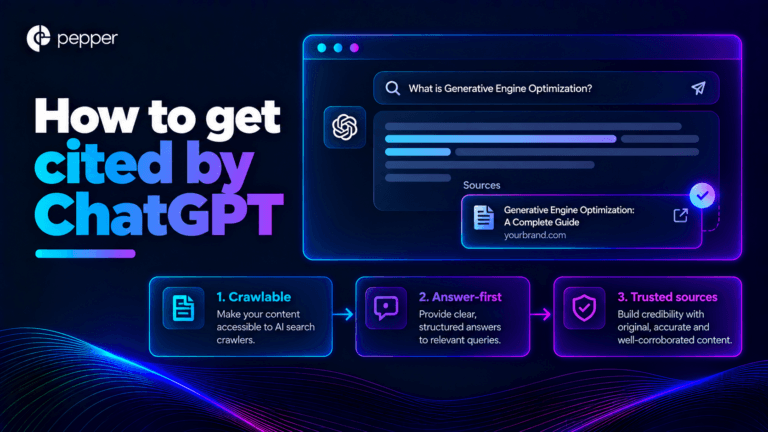
How to get cited by ChatGPT
GEO / AI Search
10 mins read
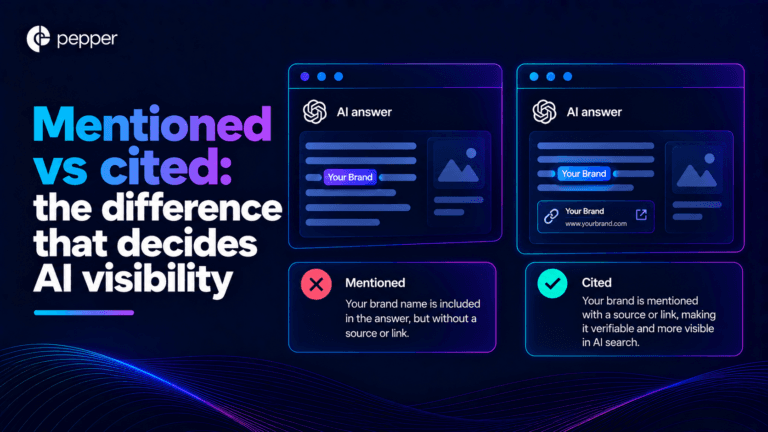
Mentioned vs cited: the difference that decides AI visibility
GEO / AI Search
13 mins read