Brand-to-Domain Match Rate: When AI Gets Your Name Right (or Wrong)
Ever told a friend about your favorite pizza place, and they went to the wrong one? That’s kind of what happens when AI answer engines mention your brand but send people somewhere else. Brand-to-Domain Match Rate tracks exactly this problem.
What is Brand-to-Domain Match Rate? (The Simple Version)
Think of Brand-to-Domain Match Rate like a game of telephone. When someone asks an AI tool like ChatGPT or Google AI Overviews about your brand, does the AI send them to YOUR house (website), or does it send them to your neighbor’s house (a competitor or aggregator site)?
This metric counts how many times the AI gets it right. If AI mentions your toy store but links to Amazon instead of your actual toy store website, that’s a miss. If it mentions your toy store AND links to your real website, that’s a match. You want matches, lots of them.
How Does Brand-to-Domain Match Rate Work?
Here’s what happens behind the scenes. When someone asks an AI a question about your brand, the AI searches through tons of information to build an answer. Then it decides which websites to credit or link to.
Say someone asks, “Where can I buy organic dog treats from BarkSnacks?” The AI might mention BarkSnacks but link to Chewy.com instead of BarkSnacks.com. That’s a mismatch. Tools track these situations across different AI platforms (ChatGPT, Perplexity, Bing Copilot, Google AI Overviews) and calculate what percentage of the time your brand gets matched to your actual domain. A 70% match rate means 7 out of 10 times the AI gets it right, and 3 times it doesn’t.
Why Does Brand-to-Domain Match Rate Matter?
Because when AI sends people to the wrong place, you lose customers. If someone asks about your bakery and AI links to a competitor bakery or a recipe aggregator instead, that person might never find you. Your Brand-to-Domain Match Rate shows how much traffic you’re losing to these AI mix-ups. A low match rate means you’re losing visitors (and sales) to others, even when people specifically ask about YOU.
Brand-to-Domain Match Rate at a Glance
| Feature | Details |
| What It Measures | How often AI tools correctly link your brand name to your website |
| Who It Affects | Any business mentioned in AI-generated answers |
| Good Match Rate | Above 70% means AI usually gets it right |
| Common Problem | AI mentions your brand but links to aggregators or competitors |
| Key Platforms | ChatGPT, Perplexity, Google AI Overviews, Bing Copilot |
| Related Metric | Share of Voice = (Your mentions ÷ Total category mentions) × 100 |
Real-World Examples
When someone asks ChatGPT about Nike running shoes, a good match means ChatGPT links to Nike.com. A mismatch means it links to Foot Locker or Amazon instead.
If a customer asks Perplexity about recipes from AllRecipes, but Perplexity cites Tasty or Food Network, that’s a failed match for AllRecipes.
When Google AI Overviews answers a question about Home Depot but shows links to Lowe’s or independent hardware blogs, Home Depot’s Brand-to-Domain Match Rate takes a hit.
FAQs
Q1: How do you measure AEO performance and brand attribution?
You track how often AI platforms like ChatGPT and Google AI Overviews mention your brand and check where they send users. Tools monitor citation rates and calculate the percentage of correct brand-to-domain links across multiple AI answer engines.
Q2: What is AEO and how does it work for brand visibility?
AEO (Answer Engine Optimization) is how you help AI tools understand and correctly reference your brand. When AI platforms generate answers, they pull from various sources and decide which domains to credit or link to for each brand mentioned.
Q3: How do I implement AEO tracking for my website?
Start by monitoring queries related to your brand across different AI platforms. Track when your brand appears in answers and note whether the AI links to your domain or a competitor’s. Specialized AEO tools can automate this tracking process.
Q4: How does AEO measurement differ from traditional SEO metrics?
Traditional SEO tracks clicks and rankings on search result pages. AEO measurement tracks citations, attribution accuracy, and brand mentions inside AI-generated answers where users might never see a traditional search results page.
Wrapping Up
Brand-to-Domain Match Rate tells you if AI is playing matchmaker correctly with your brand and website. The higher your match rate, the more traffic stays yours instead of wandering off to competitors. Keep an eye on this metric, because in the age of AI answers, getting credit matters more than ever.
Latest Blogs
Engines answer the same question differently each time, so every AI search tracking number is a sample with an error bar. Nobody in this category publishes that error bar. We worked it out from published tracking frequencies, and the result inverts the obvious assumption: moving up a tier buys you more prompts, not more confidence in any one of them. The number most teams act on weekly is the least reliable number the tool produces.
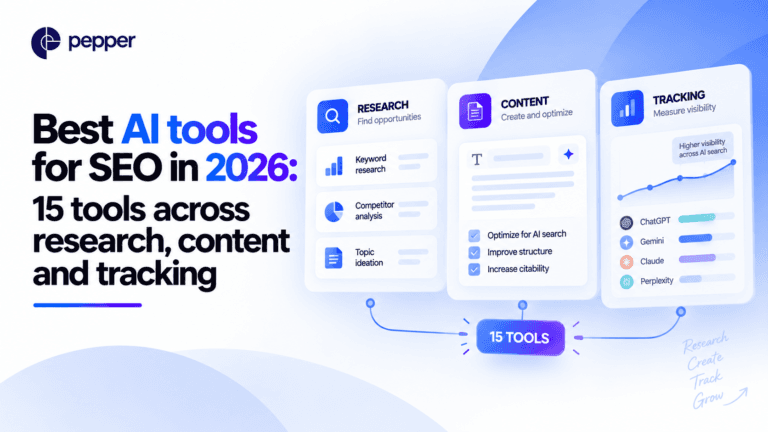
The short answer Fifteen tools, grouped by the three jobs people actually buy for, with every price re-read on 22 September 2026. Two things matter more than the rankings. First, this category rots fast: of the eight external tools on our own August list, two have withdrawn published pricing, one has changed its product line […]
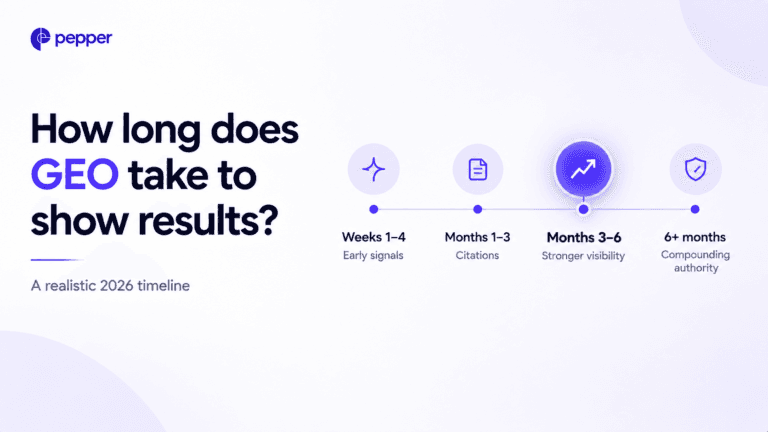
Nobody has published a credible GEO timeline, and the ones being sold are borrowed from SEO. Here is what actually gates the clock, which parts move in days, and what to promise your board instead.
Get your hands on the latest news!

Similar Posts
GEO / AI Search
17 mins read
Best AI tools for SEO in 2026: 15 tools across research, content and tracking
GEO / AI Search
10 mins read
How long does GEO take to show results?
GEO / AI Search
22 mins read