What is Claude? (Anthropic’s Friendly AI Assistant)
Ever asked a really smart friend for help with homework, writing, or figuring something out? Claude is kind of like that friend, except it’s an AI assistant made by a company called Anthropic. And the coolest part? It’s built from the ground up to be helpful without being harmful.
What is Claude? (The Simple Version)
Claude is an AI assistant that talks with you through text. Think of it like having a helpful robot pen pal who can answer questions, write things, help with code, and chat about ideas. The company that made Claude, Anthropic, wanted to build an AI that follows three rules: be helpful, be honest, and don’t cause harm.
It’s kind of like how your parents might teach you to be a good person. Anthropic taught Claude to be a good assistant. When you talk to Claude, it tries to understand what you need and respond in a way that’s actually useful, truthful, and safe.
How Does Claude Work?
When you type a message to Claude, it reads what you wrote and thinks about the best way to respond. The people at Anthropic gave Claude instructions about how to behave-sort of like house rules. These rules tell Claude to prioritize being helpful and honest.
Here’s a simple example: If you ask Claude, “Can you help me write a story about a dinosaur?” it processes your request, understands you want creative writing help, and then generates a story for you. If you ask it something potentially harmful, those built-in rules kick in, and Claude will politely explain why it can’t help with that specific request.
Claude also comes as a developer tool called Claude Code. This version runs in your computer’s terminal (the place where programmers type commands) and can actually read code files, suggest edits, and help you build software. It’s like having a coding buddy who never gets tired.
Why Does Claude Matter?
AI assistants are becoming part of everyday work and life, but not all of them are built the same way. Claude matters because Anthropic designed it with safety as a priority from day one. Instead of just making the smartest AI possible, they focused on making an AI that aligns with what humans actually need and value.
For example, if you’re a student using Claude for research, you want answers that are accurate, not just fast. If you’re a developer using Claude Code to build an app, you want suggestions that actually work. Claude’s design tries to balance being powerful with being responsible.
Claude at a Glance
| Feature | Details |
| Creator | Anthropic (AI safety company) |
| Core Values | Helpful, honest, and harmless |
| Primary Use | Conversational AI assistant and development tool |
| Developer Tool | Claude Code (CLI tool for coding tasks) |
| Design Focus | Values-aligned AI that prioritizes safety |
Real-World Examples
A writer might use Claude to brainstorm article ideas or polish rough drafts. A software developer could use Claude Code to review their codebase, spot potential bugs, and suggest improvements-all from their terminal. A business professional might chat with Claude to summarize long documents or draft professional emails. The key is that Claude adapts to different tasks while keeping those core values intact: helpful, honest, harmless.
FAQs
Q1: Who created Claude and why?
Anthropic created Claude as part of their mission to develop AI systems that align with human values and needs. The company focuses on AI safety, meaning they want their technology to be beneficial and responsible.
Q2: What makes Claude different from other AI assistants?
Claude is specifically designed with character-based guidelines that prioritize being helpful, honest, and avoiding harmful outputs. Anthropic’s developers built these values into how Claude behaves from the start.
Q3: What is Claude Code?
Claude Code is an official command-line tool that lets developers use Claude directly in their terminal. It can read entire codebases, edit files, run commands, and help with programming tasks like an AI coding partner.
Q4: Can anyone use Claude?
Yes, Claude is available as a conversational interface for general users and as an API-accessible platform for developers who want to integrate it into their applications or workflows.
Wrapping Up
Claude represents Anthropic’s approach to building AI that’s not just powerful, but also aligned with what humans actually want from an assistant. Whether you’re chatting, writing, or coding, Claude aims to be that helpful, honest companion you can count on.
Latest Blogs
AI search optimization has four cost layers and only one of them has a price you can look up. Software is published, comparable and the cheapest. Agency retainers are published by exactly two firms. Earned media, which drives most AI citations, is priced by almost nobody. And the fourth layer, doing it with your own people, turns out to have no market rate at all. A study of 3,900 SEO job listings found that just 6.3% of senior roles mention AI search, and published salary figures for the same job title differ by 76% between sources.
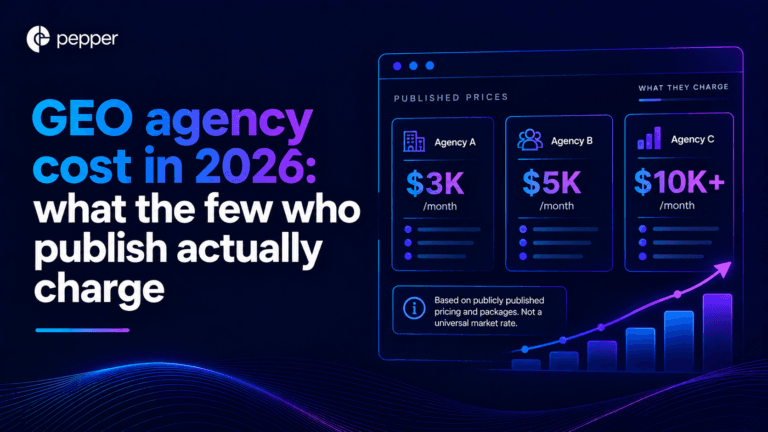
We re-read every published GEO agency price on 25 September 2026, fifteen days after our own benchmark first recorded them. All four held, which is worth knowing on its own because the software side of this market has been withdrawing prices all quarter. The more useful finding came from the one agency that publishes volumes alongside price. Ten blog articles at $3,000 a month and forty at $8,000 works out at $300 and $200 an article. That is a content production contract with a GEO label, and the citation evidence says content you own accounts for a small minority of AI citations.
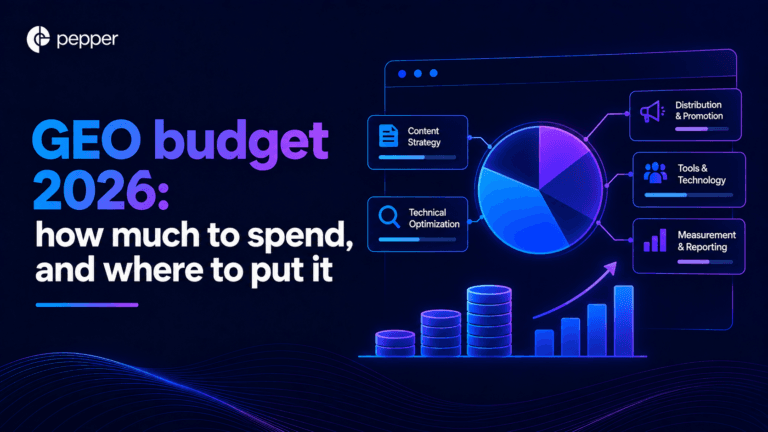
Our own benchmark of 30 published prices already answers what GEO costs. This answers the different question, which is what you should budget and where it should go. Two numbers decide it. A study of more than 25 million cited links found earned media drives 84% of AI citations while paid and advertorial content drives 0.3%. And the Gartner CMO survey of 401 CMOs puts marketing at 7.8% of revenue with SEO the largest single line inside owned and earned digital. Put those together and the answer is that GEO is not a new budget line at all. It is a reallocation, and most teams are making it in the wrong direction.
Get your hands on the latest news!

Similar Posts

GEO / AI Search
16 mins read
AI search optimization cost: the four layers, and the one with a price
GEO / AI Search
16 mins read
GEO agency cost in 2026: what the few who publish actually charge
GEO / AI Search
16 mins read