Click-Through Decay: When AI Answers Steal Your Clicks
Remember when you had to click on websites to find answers? Those days are fading fast. Now, AI gives you answers right in the search results, and websites are watching their visitor numbers drop. That’s click-through decay.
What is Click-Through Decay? (The Simple Version)
Think of your favorite ice cream shop. Before, everyone who wanted to know your shop’s flavors had to walk inside and ask. Now, there’s a big sign outside listing every flavor. People read the sign and walk away happy, but your shop stays empty.
Click-through decay is when AI Overviews (those smart answer boxes at the top of Google) tell people what they need to know without them ever visiting your website. The AI reads your content, summarizes it, and serves it up. Users get their answer. Your website gets ignored. Fewer clicks means fewer visitors, even if your content is still great.
How Does Click-Through Decay Work?
Someone searches “how to fix a leaky faucet.” Google’s AI Overview appears first, pulling information from several websites to create a complete answer. The searcher reads it, fixes their faucet, and closes their browser. Done.
The websites that taught Google’s AI how to answer that question? They provided the knowledge but got zero visitors. Their click-through rate drops because the AI gave away their answer for free. This happens millions of times daily across every topic you can imagine. The better the AI gets at answering questions, the fewer people bother clicking through to source websites.
Why Does Click-Through Decay Matter?
Websites used to measure success by counting visitors. More clicks meant more readers, customers, and revenue. Now, you might create the best content on the internet, and the AI will just scoop it up and serve it to users without sending anyone your way.
Your amazing blog post that took hours to write? It might show up as a citation in an AI Overview, but readers never see your brand, your products, or your newsletter signup. You’re feeding the AI for free while watching your website traffic shrink. That’s a problem when your business relies on those clicks to survive.
Click-Through Decay at a Glance
| Aspect | What It Means |
| What Gets Measured | Drop in click-through rates when AI Overviews appear above your listing |
| Old SEO Focus | Clicks, traffic, conversions from website visits |
| New AEO Reality | Brand mentions and citations in AI responses matter more than clicks |
| Where It Hurts | Lower website traffic even when your content ranks well |
| What You Track Instead | Visibility in AI answers, citation frequency, pre-click brand awareness |
| Business Impact | Revenue tied to website visits declines as zero-click searches increase |
Real-World Examples
A recipe blog used to get 10,000 clicks per day from people searching “chocolate chip cookie recipe.” After AI Overviews launched, that dropped to 6,000 clicks. The AI now displays the full recipe at the top of search results. People get their cookies without ever visiting the blog.
A software company’s help articles taught users how to solve common problems. Those articles drove product trials. Now, AI Overviews answer those questions directly. Fewer people reach the company’s website, so fewer people sign up for trials.
A local plumber ranked first for “how to unclog a drain.” Their website traffic fell by 40% after AI started answering the question inline. People fixed their drains themselves instead of calling for service.
FAQs
Q1: Can you still succeed if people don’t click your website?
Yes, but you need to shift your strategy. Focus on getting cited in AI responses so your brand gets mentioned. Think of it as advertising rather than traffic generation.
Q2: How do you measure success without counting clicks?
Track how often AI Overviews mention your brand, whether your content gets cited as a source, and if users recognize your brand name before they even visit. These are your new scorecards.
Q3: Does click-through decay affect all websites equally?
No. Informational sites (recipes, how-tos, definitions) get hit hardest. Transactional sites (shopping, bookings) still get clicks because AI can’t complete purchases. Entertainment sites also fare better since people want the full experience.
Q4: Is click-through decay permanent or just temporary?
This is the new normal. As AI gets better, it will answer more questions directly. Websites need to adapt by creating content AI can’t replicate or by building brands strong enough that people seek them out specifically.
Wrapping Up
Click-through decay changes the game. Your content can be perfect, but if AI serves it up without sending visitors your way, you need a new playbook. Start thinking about brand visibility in AI responses, not just website traffic.
Latest Blogs
Engines answer the same question differently each time, so every AI search tracking number is a sample with an error bar. Nobody in this category publishes that error bar. We worked it out from published tracking frequencies, and the result inverts the obvious assumption: moving up a tier buys you more prompts, not more confidence in any one of them. The number most teams act on weekly is the least reliable number the tool produces.
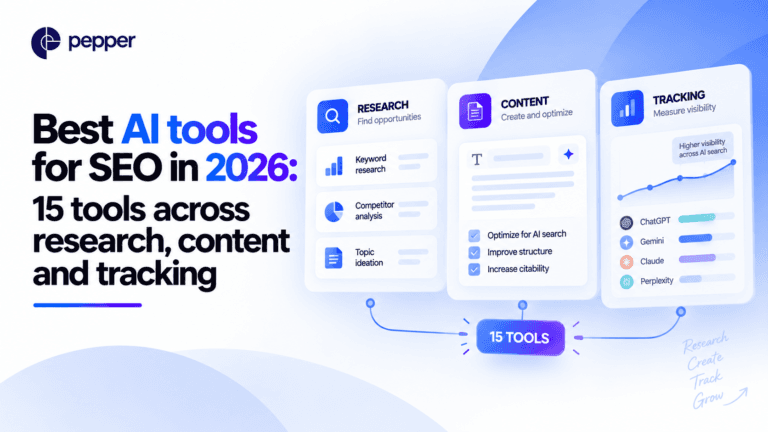
The short answer Fifteen tools, grouped by the three jobs people actually buy for, with every price re-read on 22 September 2026. Two things matter more than the rankings. First, this category rots fast: of the eight external tools on our own August list, two have withdrawn published pricing, one has changed its product line […]
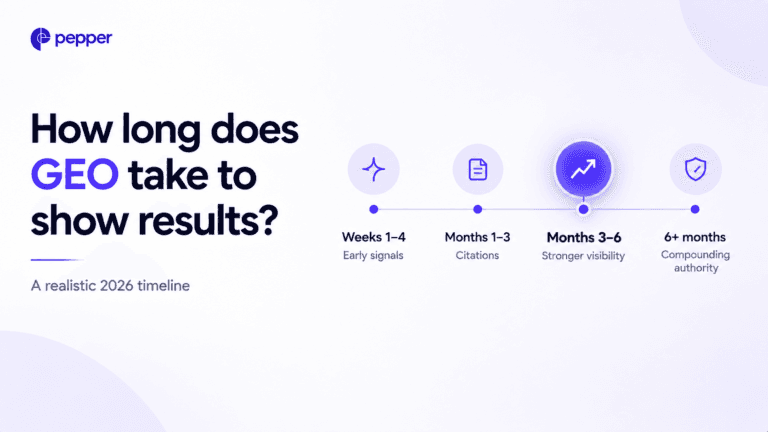
Nobody has published a credible GEO timeline, and the ones being sold are borrowed from SEO. Here is what actually gates the clock, which parts move in days, and what to promise your board instead.
Get your hands on the latest news!

Similar Posts
GEO / AI Search
17 mins read
Best AI tools for SEO in 2026: 15 tools across research, content and tracking
GEO / AI Search
10 mins read
How long does GEO take to show results?
GEO / AI Search
22 mins read