Event Schema: Teaching Google About Your Events (The Simple Way)
You know those cool event cards that pop up when you search for concerts or webinars? The ones showing the date, time, and a “Get Tickets” button? That happens because someone used Event Schema. Think of it as giving Google a cheat sheet about your event.
What is Event Schema? (The Simple Version)
Event Schema is like putting special stickers on your website that only computers can see. These stickers tell search engines exactly what’s happening at your event, when it’s happening, where people need to go, and how they can get tickets. It’s the same as labeling toy boxes in a playroom-“Building Blocks,” “Dinosaurs,” “Race Cars”-so everyone knows what’s inside. Event Schema labels your event information so Google doesn’t have to guess. The information includes the event name, date, location, and ticket details, all organized in a way that makes sense to machines.
How Does Event Schema Work?
You add a special code (usually JSON-LD, which sounds scary but it’s just organized text) to your event webpage. This code sits in the background, invisible to human visitors but crystal clear to search engines. When Google’s robots visit your page, they read this code like reading a recipe card. They see “Event Name: Summer Music Festival” and “Date: June 15, 2024” and “Location: Central Park” and immediately understand what you’re offering. You don’t need to be a programmer to add it-many website builders have plugins that do it for you. Once the code is there, Google can show your event in special search results, calendar features, and even AI-generated answers when someone asks about events near them.
Why Does Event Schema Matter?
Without Event Schema, Google has to guess what your event details mean. Is “June 15” the event date or when tickets go on sale? Is “Central Park” the venue or just mentioned in passing? Schema removes all doubt. When AI systems build answers for users asking “What concerts are happening this weekend?”, they pull from pages with clear Event Schema first. Your event gets shown in rich results with pretty formatting, which means more people click. More clicks mean more ticket sales. It’s that straightforward.
Event Schema at a Glance
| Feature | Details |
| What It Does | Marks up events with date, time, location, and ticket information for search engines |
| Who Needs It | Anyone hosting concerts, conferences, webinars, workshops, sports events, or community gatherings |
| Technical Format | Usually JSON-LD code added to your webpage’s HTML |
| Key Information | Event name, start/end dates, venue address, ticket prices, availability status |
| Visibility Boost | Helps your event appear in Google search features, AI Overviews, and voice assistant results |
Real-World Examples
A local theater adds Event Schema to their “Upcoming Shows” page. Now when someone searches “plays this weekend Boston,” Google shows their production with date, time, and a ticket link right in the search results. A tech conference uses Event Schema on their registration page. When ChatGPT or Perplexity answers “What AI conferences are happening in May?”, the conference gets cited because the AI understood the structured date and topic information. A yoga studio marks up their workshop events with schema. Students searching “meditation workshop near me” see the studio’s events with exact dates and booking buttons, making it easy to sign up on the spot.
FAQs
Q1: Do I need to know coding to add Event Schema?
Not really. Many website platforms (WordPress, Shopify, Wix) have plugins that add Event Schema for you. You just fill in the event details like a form, and the plugin creates the code automatically.
Q2: Will Event Schema guarantee my event shows up in search results?
Schema helps search engines understand your content better, which increases your chances of appearing in special features. However, Google still decides what to show based on relevance and quality. Think of schema as giving yourself a better chance, not a guarantee.
Q3: Can Event Schema help with AI search engines besides Google?
Yes. AI systems like ChatGPT, Perplexity, and Bing’s AI features all benefit from structured data. Schema markup makes your content clearer for any machine trying to understand and cite your events.
Q4: What happens if I get the dates wrong in my Event Schema?
Your event might show incorrect information in search results, confusing potential attendees. Always double-check that your schema matches what’s visible on your page. Search engines trust the structured data you provide.
Wrapping Up
Event Schema is your event’s best friend in the search engine world. It turns messy event information into neat, organized data that both Google and AI systems can read and share. Add it once, and watch your events get noticed.
Latest Blogs
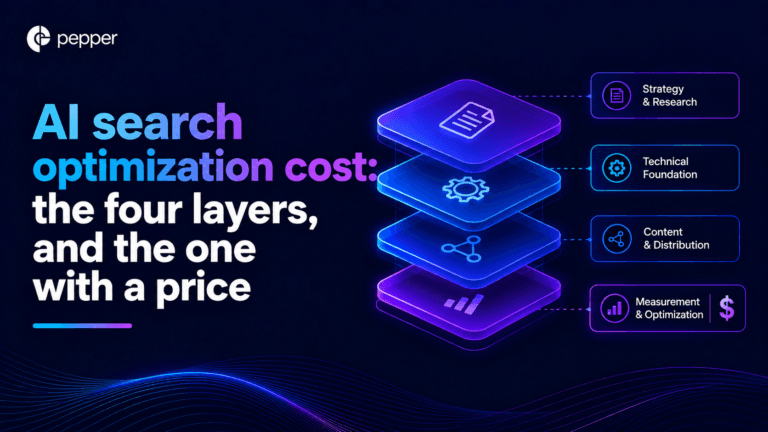
AI search optimization has four cost layers and only one of them has a price you can look up. Software is published, comparable and the cheapest. Agency retainers are published by exactly two firms. Earned media, which drives most AI citations, is priced by almost nobody. And the fourth layer, doing it with your own people, turns out to have no market rate at all. A study of 3,900 SEO job listings found that just 6.3% of senior roles mention AI search, and published salary figures for the same job title differ by 76% between sources.
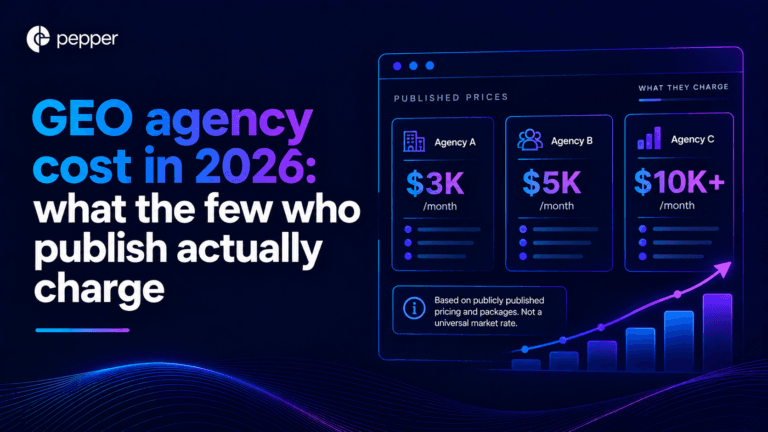
We re-read every published GEO agency price on 25 September 2026, fifteen days after our own benchmark first recorded them. All four held, which is worth knowing on its own because the software side of this market has been withdrawing prices all quarter. The more useful finding came from the one agency that publishes volumes alongside price. Ten blog articles at $3,000 a month and forty at $8,000 works out at $300 and $200 an article. That is a content production contract with a GEO label, and the citation evidence says content you own accounts for a small minority of AI citations.
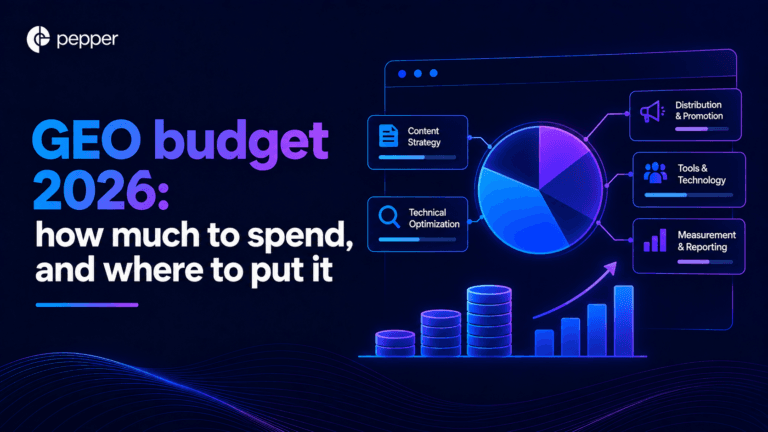
Our own benchmark of 30 published prices already answers what GEO costs. This answers the different question, which is what you should budget and where it should go. Two numbers decide it. A study of more than 25 million cited links found earned media drives 84% of AI citations while paid and advertorial content drives 0.3%. And the Gartner CMO survey of 401 CMOs puts marketing at 7.8% of revenue with SEO the largest single line inside owned and earned digital. Put those together and the answer is that GEO is not a new budget line at all. It is a reallocation, and most teams are making it in the wrong direction.
Get your hands on the latest news!

Similar Posts
GEO / AI Search
16 mins read
AI search optimization cost: the four layers, and the one with a price
GEO / AI Search
16 mins read
GEO agency cost in 2026: what the few who publish actually charge
GEO / AI Search
16 mins read