What is Meta AI? Your New Friend Inside Facebook, Instagram, and WhatsApp
You know how you have a friend who seems to know everyone at the party? Meta AI is kind of like that friend, but instead of a party, it lives inside your favorite social apps.
What is Meta AI? (The Simple Version)
Think of Meta AI as a helpful robot buddy that lives inside Facebook, Instagram, and WhatsApp. When you have a question or need help, you can chat with it just like texting a friend. But here’s the cool part: because it lives inside these apps, it already knows about the people you follow, the pages you like, and the things you care about. It’s like having a super-smart assistant who already understands your circle of friends and interests, without you having to explain everything from scratch. For businesses and brands, this means they can reach customers through an AI that already understands who those customers are connected to.
How Does Meta AI Work?
Meta AI lives right inside the apps you already use every day. When you open Facebook, Instagram, or WhatsApp, you can start chatting with it. Say you’re shopping for sneakers and want recommendations. Meta AI can help because it sees what brands you follow and what your friends are talking about. This “seeing who you know and what you like” is called social graph integration-think of it like a map of all your friendships and interests. For brands trying to reach you, Meta AI becomes a new way to connect. Instead of just seeing an ad, you might ask Meta AI “What’s a good restaurant nearby?” and it can suggest places based on where your friends have been or what local businesses are popular in your network.
Why Does Meta AI Matter?
For regular people, Meta AI means getting help inside apps you’re already using-no need to switch to another app or website. For businesses and brands, this changes the game. Before, a bakery could only hope you saw their Instagram post. Now, if Meta AI knows you love cupcakes and you ask “Where can I get dessert?”, that bakery could show up in the answer. The social graph part is huge: the AI knows your connections, so brands can show up when you’re asking questions about things your friends care about too. It’s brand visibility that feels helpful, not pushy.
Meta AI at a Glance
| Feature | Details |
| Where It Lives | Built directly into Facebook, Instagram, and WhatsApp apps |
| Social Graph Integration | Accesses your connections, follows, and interests to give personalized answers |
| For Users | Get instant help with questions, recommendations, and tasks without leaving your app |
| For B2C Brands | New channel to reach customers through helpful AI responses tied to social connections |
| Platform Ecosystem | Part of Meta’s larger family of apps, governed by Meta’s platform terms and policies |
Real-World Examples
A clothing brand on Instagram can now appear when someone asks Meta AI “What should I wear to a beach wedding?” if that person follows the brand. A local coffee shop gets mentioned when someone asks “Where do people in my area get good coffee?” because Meta AI sees that their friends check in there. A skincare company shows up when someone asks Meta AI beauty questions, and their friends already follow that brand. The AI connects the dots between what you ask and who you’re already connected to online.
FAQs
Q1: Where can I find Meta AI?
Meta AI lives inside Facebook, Instagram, and WhatsApp. You can start a chat with it directly in those apps-no separate download needed.
Q2: Does Meta AI see my private messages?
Meta AI works within Meta’s platform terms and privacy policies. It uses your social connections and public interactions to help answer questions, but operates under the same rules as the apps themselves.
Q3: How can brands use Meta AI to reach customers?
Brands can show up in Meta AI responses when users ask relevant questions. If someone follows your brand or their friends engage with it, the AI can suggest your business as a helpful answer.
Q4: Is Meta AI different from ChatGPT or other AI assistants?
Yes—Meta AI is specifically built into Meta’s social apps and uses your social graph (your connections and interests) to give personalized answers. Other AI assistants don’t have access to that social context.
Wrapping Up
Meta AI brings helpful AI right into the apps you’re already scrolling through every day. For brands, it opens a new door to reach people through answers, not just ads-and the social graph makes it personal.
Latest Blogs
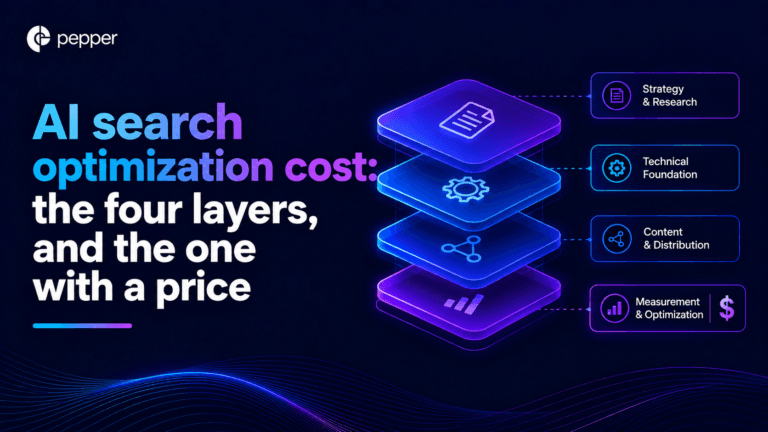
AI search optimization has four cost layers and only one of them has a price you can look up. Software is published, comparable and the cheapest. Agency retainers are published by exactly two firms. Earned media, which drives most AI citations, is priced by almost nobody. And the fourth layer, doing it with your own people, turns out to have no market rate at all. A study of 3,900 SEO job listings found that just 6.3% of senior roles mention AI search, and published salary figures for the same job title differ by 76% between sources.
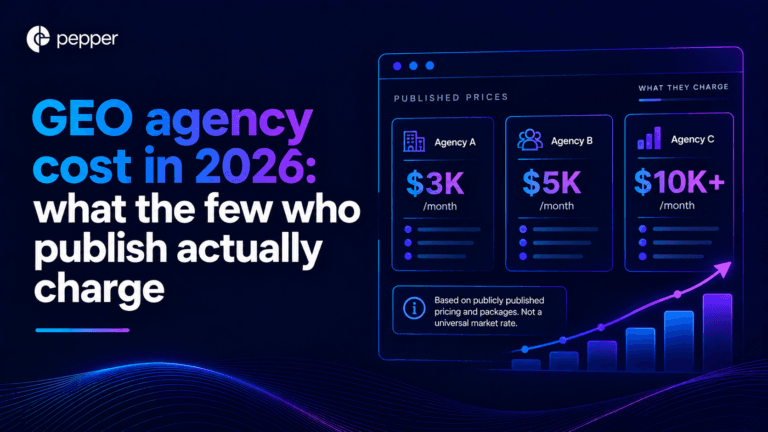
We re-read every published GEO agency price on 25 September 2026, fifteen days after our own benchmark first recorded them. All four held, which is worth knowing on its own because the software side of this market has been withdrawing prices all quarter. The more useful finding came from the one agency that publishes volumes alongside price. Ten blog articles at $3,000 a month and forty at $8,000 works out at $300 and $200 an article. That is a content production contract with a GEO label, and the citation evidence says content you own accounts for a small minority of AI citations.
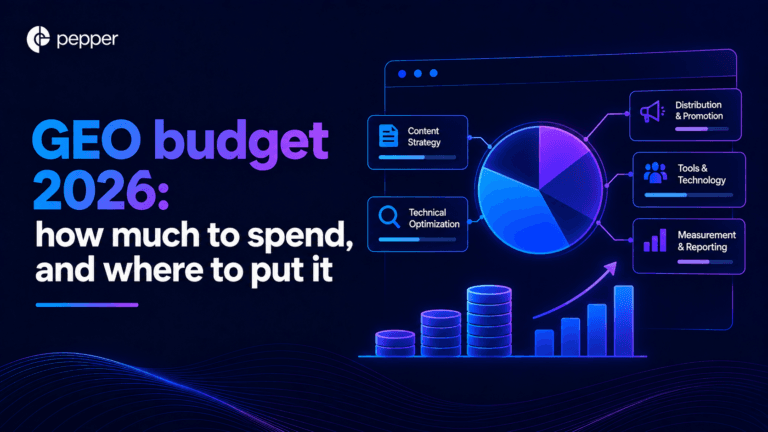
Our own benchmark of 30 published prices already answers what GEO costs. This answers the different question, which is what you should budget and where it should go. Two numbers decide it. A study of more than 25 million cited links found earned media drives 84% of AI citations while paid and advertorial content drives 0.3%. And the Gartner CMO survey of 401 CMOs puts marketing at 7.8% of revenue with SEO the largest single line inside owned and earned digital. Put those together and the answer is that GEO is not a new budget line at all. It is a reallocation, and most teams are making it in the wrong direction.
Get your hands on the latest news!

Similar Posts
GEO / AI Search
16 mins read
AI search optimization cost: the four layers, and the one with a price
GEO / AI Search
16 mins read
GEO agency cost in 2026: what the few who publish actually charge
GEO / AI Search
16 mins read