Person Schema: The Digital Name Tag That Gets You Credit with AI
Ever written something brilliant online and wondered if anyone knows YOU wrote it? That’s where Person Schema comes in.
What is Person Schema? (The Simple Version)
Person Schema is like putting a digital name tag on your content. When you write a blog post, article, or any web content, Person Schema is the code that tells search engines and AI tools: “Hey, this person wrote this, and here’s who they are.”
Think of it this way: when you draw a picture in kindergarten, you write your name on it so the teacher knows it’s yours. Person Schema does the same thing for grown-up content on the internet. It’s a special format (from a system called Schema.org) that includes your name, job title, where you work, and other details that prove you’re a real human with real credentials.
How Does Person Schema Work?
Here’s the simple version: you add a snippet of code to your website that describes you. This code sits behind the scenes (visitors don’t see it), but search engines and AI systems read it like instructions.
For example, if Dr. Sarah Chen writes a medical article, her Person Schema might say: “Name: Dr. Sarah Chen. Job: Cardiologist. Works at: Metropolitan Heart Center.” When Google or ChatGPT scans that page, they can see a credentialed expert wrote it, not just some random internet person.
The code uses specific labels (called “properties”) that machines understand. Name goes in the name field. Job title goes in the job title field. Contact info goes in the contact field. Everything has its place, making it super easy for AI to understand who you are.
Why Does Person Schema Matter?
Here’s the big deal: AI systems are now deciding what content to trust and quote. When an AI tool like ChatGPT answers a question, it’s more likely to cite content from identified experts than anonymous posts.
Anonymous content is at a serious disadvantage. If AI can’t tell who wrote something or verify their credentials, that content gets passed over. But when you have Person Schema showing you’re Dr. Chen the cardiologist, your medical advice suddenly carries weight. Your ideas get quoted. Your name gets shared. You build a reputation as a thought leader.
Person Schema at a Glance
| Feature | Details |
| Purpose | Identifies content authors with credentials and contact info |
| Common Properties | Name, job title, employer, email, social profiles, bio |
| Where to Use | Author bio pages, team member profiles, blog bylines |
| Format | JSON-LD code added to page HTML |
| Related Schemas | Organization Schema (for companies), Article Schema (for content) |
| Main Benefit | Helps AI systems verify expertise and attribute ideas correctly |
Real-World Examples
A tech blog uses Person Schema on every author’s bio page. When writers publish articles, the schema shows their credentials (senior developer, UX designer, etc.). ChatGPT now cites their articles when answering coding questions, mentioning them by name.
A law firm adds Person Schema to attorney profile pages. Each lawyer’s education, bar admissions, and practice areas are marked up. When potential clients Google legal questions, AI-generated answers reference the firm’s lawyers as credible sources.
An independent consultant adds Person Schema to their About page. The schema includes speaking engagements, published books, and industry certifications. When AI tools summarize their field, the consultant gets mentioned as an authority.
FAQs
Q1: Who needs Person Schema on their website?
Anyone creating content who wants credit for their expertise. Writers, consultants, doctors, lawyers, researchers, business owners, and thought leaders all benefit. If you want AI to recognize you as the source of ideas, you need it.
Q2: Does Person Schema help with regular Google search?
Yes, but differently. It can trigger rich results (like author photos in search listings) and helps Google understand content authorship. The bigger win is with AI citation and knowledge graph inclusion.
Q3: Is Person Schema hard to add to my website?
Not really. Most website platforms have plugins or built-in tools for adding schema markup. You can also hire a developer for about an hour of work. The code itself is just a few lines.
Q4: What happens if I don’t use Person Schema?
Your content still exists, but AI systems might treat it as anonymous or less credible. You miss out on author attribution in AI-generated answers, and your personal brand doesn’t get the visibility boost from being cited as an expert.
Wrapping Up
Person Schema is your ticket to getting recognized in an AI-powered world. It’s simple to add, but the payoff (getting cited, building authority, claiming your ideas) is huge. Put your digital name tag on your work.
Latest Blogs
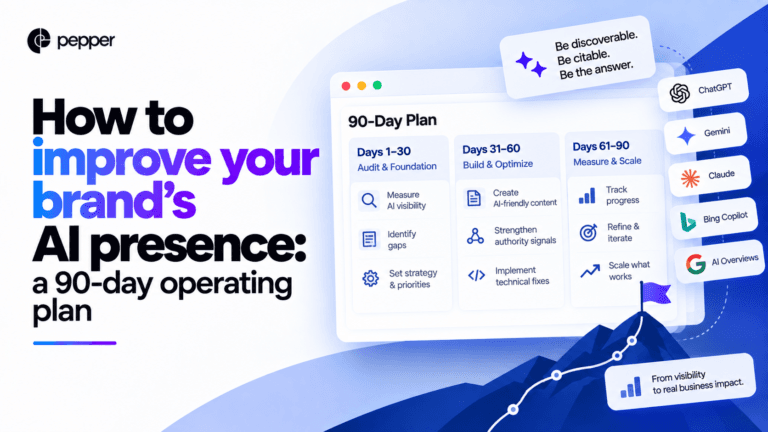
Most 90-day AI plans are sequenced by how hard the work feels rather than by how long it takes to land. So they spend week one on an llms.txt file that Google states it does not use, and they schedule earned media for phase three, which guarantees no result inside the quarter. This plan inverts that. It orders the work by lead time, starts the slowest thing on day one, and cuts four tactics Google explicitly says are unnecessary.
We priced this category nine days ago. Today we went back to the same four pricing pages to check the numbers before publishing. Three of the four had changed, and two had stopped publishing prices altogether. That is the real answer to what AEO costs in 2026: not a number, but a meter that moves, measured in prompts and responses and engines that are billed separately. Here is how each pricing model works, what unit it charges you for, and which incentive that unit creates.
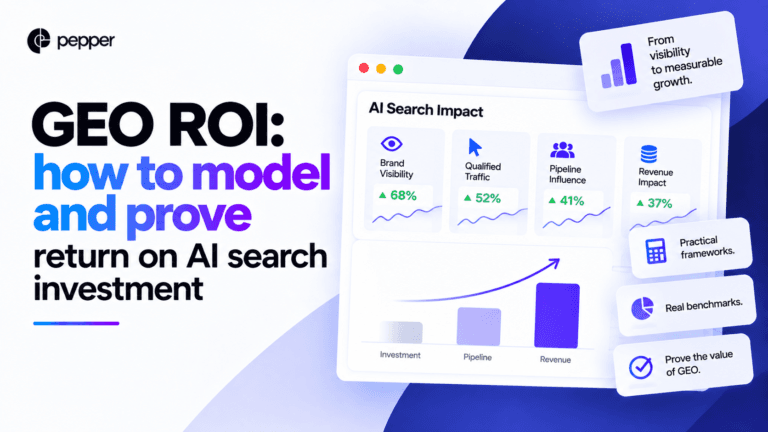
Ask what AI search traffic is worth and you will be handed a multiplier. The ones in circulation right now run from 13% worse than organic search to 23 times better, a spread of roughly twenty-six fold on the single input your whole business case depends on. They disagree because they are measuring the same behaviour under different attribution models. So this is not a guide to finding the right multiplier. It is a guide to building a model whose assumptions are visible, and to being honest about the half you cannot prove.
Get your hands on the latest news!
Similar Posts
Artificial Intelligence
16 mins read
How to improve your brand’s AI presence: a 90-day operating plan
Artificial Intelligence
16 mins read
What does AEO cost in 2026? Pricing models explained
Artificial Intelligence
17 mins read