Query Fan-Out Tracking: How AI Turns One Question Into Ten

You ask your AI assistant one simple question. But behind the scenes? It’s actually asking 10 more questions you never typed. That’s query fan-out, and tracking it is becoming essential for anyone who wants their content found by AI.
What is Query Fan-Out Tracking? (The Simple Version)
Think of it like this: You tell your friend you want ice cream. A good friend doesn’t just find the nearest ice cream shop. They ask themselves: “What flavor do they like? Do they want a cone or a cup? Are they lactose intolerant? What shops are open now?” Your one request becomes five questions in their head.
That’s exactly what AI search does. You type one question. The AI breaks it into 8-12 smaller questions and searches for all of them at once. Query fan-out tracking means watching which specific mini-questions the AI creates from your original prompt. This helps content creators understand all the angles an AI considers relevant when someone searches your topic.
How Does Query Fan-Out Work?
Here’s a real example. You ask ChatGPT: “best CRM software.”
The AI doesn’t just look up those three words. Instead, it generates sub-queries like:
- “CRM features to look for”
- “top CRM vendors 2026”
- “CRM pricing comparison”
- “CRM integration capabilities”
- “CRM for small business vs enterprise”
Each sub-query runs simultaneously. The AI gathers results from all of them, then combines everything into one answer for you. This happens in seconds. The AI uses reinforcement learning to figure out which related questions matter most for your original prompt. It’s not just swapping synonyms (like “best” to “top”). It’s exploring different interpretations of what you actually need.
Why Does Query Fan-Out Matter?
In old-school SEO, you ranked for one keyword at a time. Someone searched “what is SEO,” and Google showed pages with that exact phrase.
With AI search, everything changes. That same question now fans out into queries about SEO definition, SEO techniques, SEO tools, and SEO benefits. One search becomes dozens of opportunities.
If your content only targets the exact phrase someone types, you miss the other 11 questions the AI is actually searching. Tracking fan-out shows you which related angles to cover so the AI pulls your content into its final answer.
Query Fan-Out at a Glance
| Feature | Details |
| Average sub-queries per prompt | 8-12 related questions generated automatically |
| Traditional SEO | 1 keyword = 1 ranking opportunity |
| AI search with fan-out | 1 query = dozens of search opportunities |
| Driving technology | Reinforcement learning explores user intent |
| Major platforms using it | Google AI Mode, ChatGPT, Perplexity |
| Content impact | Must cover multiple angles, not just exact keywords |
Real-World Examples
Example 1: Someone asks Google AI Mode “what is SEO.” The AI doesn’t just define SEO. It fans out to search “SEO techniques,” “SEO vs SEM,” “how SEO works,” “SEO tools,” and “SEO benefits” all at once. Your SEO guide better cover those angles, not just the definition.
Example 2: A user types “how to bake sourdough bread.” The AI generates sub-queries about starter recipes, fermentation times, oven temperatures, and troubleshooting common problems. If your recipe only lists ingredients without explaining why the dough won’t rise, you miss a key sub-query.
Example 3: Ask an AI assistant about “project management tools.” It expands this into searches for tool comparisons, pricing tiers, integration options, team collaboration features, and use cases for different industries. Content that only lists tool names gets outranked by content answering those deeper questions.
FAQs
Q1: How many sub-queries does AI typically generate from one user prompt?
Most AI search engines create 8-12 related sub-queries from a single question. Complex prompts can generate even more, while very simple queries might produce fewer.
Q2: What’s the difference between query fan-out and traditional keyword expansion?
Keyword expansion swaps synonyms (like “best” to “top”). Query fan-out explores different angles and interpretations of user intent using reinforcement learning, creating entirely new related questions.
Q3: Which AI search platforms use query fan-out?
Google AI Mode, ChatGPT, Perplexity, and most modern AI search engines use some form of query fan-out. Each platform has slightly different patterns for how it expands queries.
Q4: How can I track what sub-queries an AI generates from my content topics?
Test your main topics in different AI platforms and note what angles appear in responses. Tools for AEO measurement can also help identify common fan-out patterns for your industry keywords.
Wrapping Up
Query fan-out changes the game. Your content needs to answer not just the question someone asks, but the 10 questions the AI generates behind it. Start tracking those patterns, and you’ll show up in more AI answers.
Latest Blogs
Engines answer the same question differently each time, so every AI search tracking number is a sample with an error bar. Nobody in this category publishes that error bar. We worked it out from published tracking frequencies, and the result inverts the obvious assumption: moving up a tier buys you more prompts, not more confidence in any one of them. The number most teams act on weekly is the least reliable number the tool produces.
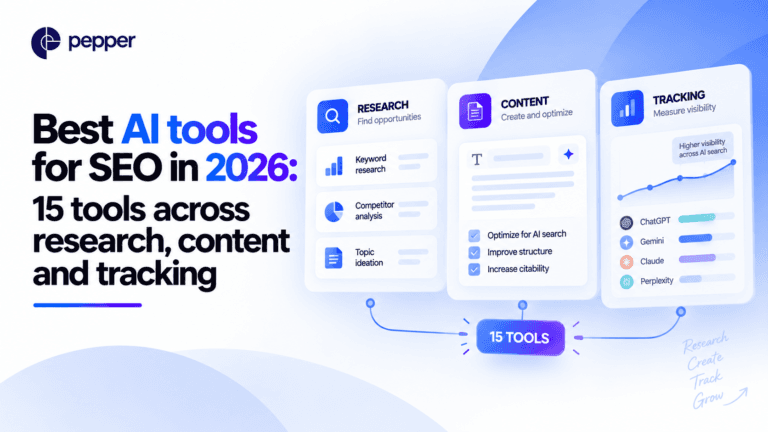
The short answer Fifteen tools, grouped by the three jobs people actually buy for, with every price re-read on 22 September 2026. Two things matter more than the rankings. First, this category rots fast: of the eight external tools on our own August list, two have withdrawn published pricing, one has changed its product line […]
Nobody has published a credible GEO timeline, and the ones being sold are borrowed from SEO. Here is what actually gates the clock, which parts move in days, and what to promise your board instead.
Get your hands on the latest news!

Similar Posts
GEO / AI Search
17 mins read
Best AI tools for SEO in 2026: 15 tools across research, content and tracking

GEO / AI Search
10 mins read
How long does GEO take to show results?

GEO / AI Search
22 mins read