SoftwareApplication Schema: The Secret Label That Helps Google Find Your App
Ever tried to find your favorite toy in a messy toy box? Now imagine if each toy had a clear label telling you exactly what it is, what it does, and how fun it is. That’s what SoftwareApplication schema does for your app or software on the internet.
What is SoftwareApplication Schema? (The Simple Version)
Think of schema as a special sticker you put on your app’s webpage. This sticker is written in a language that Google and other search engines can read super easily. It tells them: “Hey, this is a software app! Here’s the name, here’s what it runs on, here’s how much it costs, and here’s what people think about it.”
Your webpage already has this info, but it’s written for humans. Schema translates it into robot-speak. When Google’s robots visit your page, they can quickly grab all the important details without getting confused. It’s like putting a nutrition label on a cereal box-standardized, clear, and easy to read.
How Does SoftwareApplication Schema Work?
You add a small chunk of code to your webpage, usually in a format called JSON-LD (sounds fancy, but it’s just a specific way to organize information). This code sits in the background, invisible to human visitors but crystal clear to search bots.
Here’s what happens: Google’s robot visits your app page. It sees your schema code and thinks, “Oh great! Here’s the app name, the operating system it runs on, the price, and the rating-all neatly packaged!” The robot takes this info and can show it in search results as a rich snippet, or share it with AI answer engines like ChatGPT or Perplexity.
Without schema, the robot has to guess what’s important on your page. With schema, you’re handing it a cheat sheet.
Why Does SoftwareApplication Schema Matter?
Pretend you’re selling lemonade at a stand. One stand has a big sign listing the flavor, price, and size. Another stand just has a messy handwritten note. Which stand do customers understand faster?
Schema helps your app stand out in search results and makes it easier for AI systems to recommend your software when someone asks a question. While schema isn’t required, it gives you a serious advantage. Your app is more likely to appear with star ratings, pricing, and other eye-catching details right in Google Search.
SoftwareApplication Schema at a Glance
| Feature | Details |
| Purpose | Helps search engines and AI understand your app details |
| Format | JSON-LD (most common), Microdata, or RDFa |
| Key Properties | name, operatingSystem, applicationCategory, offers, aggregateRating |
| Benefits | Rich snippets in search, better AI visibility, clearer app info |
| Difficulty | Beginner-friendly; copy-paste code template and customize |
Real-World Examples
A project management tool adds SoftwareApplication schema to its homepage. Google now shows the app name, 4.5-star rating, and “Free trial available” right in search results-before anyone even clicks.
A mobile fitness app uses schema to tell Google it runs on iOS and Android, costs $9.99/month, and falls under the “Health & Fitness” category. When users search for fitness apps, this one appears with all the key details visible.
A SaaS platform targeting small businesses implements schema markup. AI-powered answer engines like Perplexity now cite this tool when users ask for affordable business software, because the schema provided clear semantic context.
FAQs
Q1: What is SoftwareApplication schema?
It’s a type of structured data code you add to your webpage to help search engines and AI understand your app or software details. Think of it as a clear label for robots.
Q2: Is schema markup necessary for my app to rank?
No, it’s not required. But it helps a lot. Schema gives search engines a clearer picture of your app, which can improve visibility and make your listing more attractive in search results.
Q3: What’s the easiest way to add schema?
Use JSON-LD format-a simple code snippet you paste into your page’s HTML. There are free schema generators online that create the code for you. Just fill in your app details and copy-paste.
Q4: How does this help with AI search engines?
Schema provides semantic context that AI systems can easily process. When someone asks ChatGPT or Perplexity about software solutions, schema helps these AI engines understand and potentially recommend your app.
Wrapping Up
SoftwareApplication schema is like giving Google a perfectly organized fact sheet about your app. It takes just a few minutes to set up, but the payoff-better search visibility, richer listings, and AI-friendliness-is huge. Go add that label to your app page.
Latest Blogs
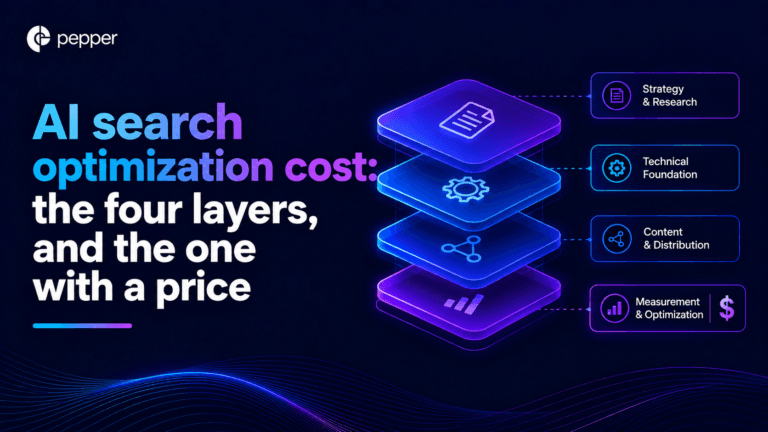
AI search optimization has four cost layers and only one of them has a price you can look up. Software is published, comparable and the cheapest. Agency retainers are published by exactly two firms. Earned media, which drives most AI citations, is priced by almost nobody. And the fourth layer, doing it with your own people, turns out to have no market rate at all. A study of 3,900 SEO job listings found that just 6.3% of senior roles mention AI search, and published salary figures for the same job title differ by 76% between sources.
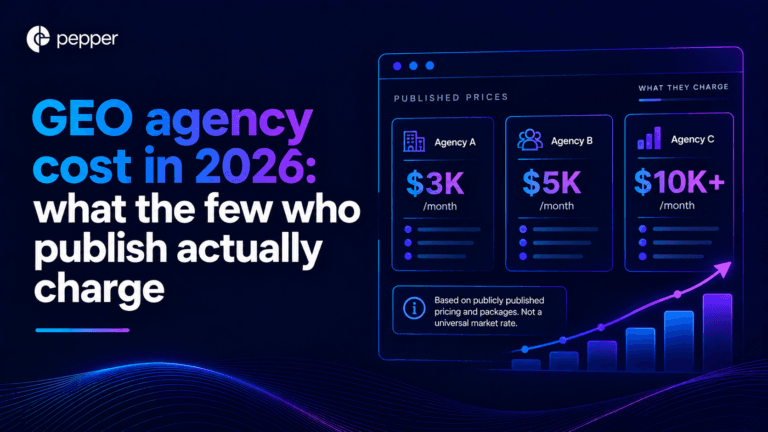
We re-read every published GEO agency price on 25 September 2026, fifteen days after our own benchmark first recorded them. All four held, which is worth knowing on its own because the software side of this market has been withdrawing prices all quarter. The more useful finding came from the one agency that publishes volumes alongside price. Ten blog articles at $3,000 a month and forty at $8,000 works out at $300 and $200 an article. That is a content production contract with a GEO label, and the citation evidence says content you own accounts for a small minority of AI citations.
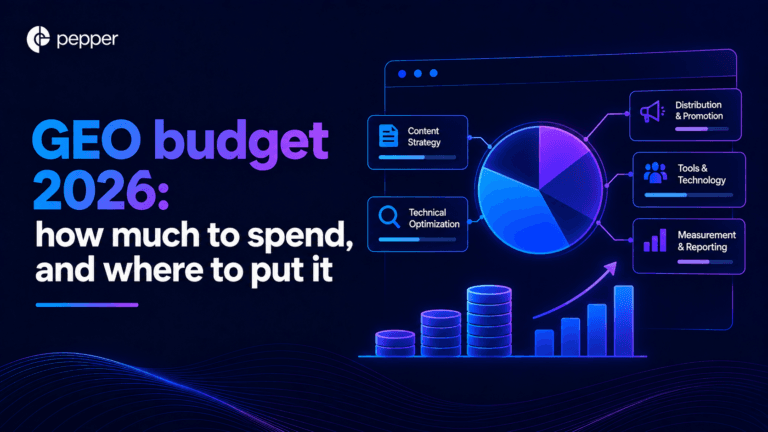
Our own benchmark of 30 published prices already answers what GEO costs. This answers the different question, which is what you should budget and where it should go. Two numbers decide it. A study of more than 25 million cited links found earned media drives 84% of AI citations while paid and advertorial content drives 0.3%. And the Gartner CMO survey of 401 CMOs puts marketing at 7.8% of revenue with SEO the largest single line inside owned and earned digital. Put those together and the answer is that GEO is not a new budget line at all. It is a reallocation, and most teams are making it in the wrong direction.
Get your hands on the latest news!

Similar Posts
GEO / AI Search
16 mins read
AI search optimization cost: the four layers, and the one with a price
GEO / AI Search
16 mins read
GEO agency cost in 2026: what the few who publish actually charge
GEO / AI Search
16 mins read