Synthetic Prompt Auditing: Your Brand’s Report Card for AI Engines
Think about how you check your kid’s homework every day to see if they’re learning. Synthetic prompt auditing does the same thing-but for AI engines. You’re checking to see if ChatGPT, Google’s AI, and other smart robots are saying the right things about your brand.
What is Synthetic Prompt Auditing? (The Simple Version)
Imagine you have a toy box full of questions about your favorite superhero. Every morning, you ask your friends the same questions: “Who’s the coolest hero?” “What’s their superpower?” “Where do they live?”
Synthetic prompt auditing works exactly like that. You create a list of specific questions (we call them “prompts”). Then, every single day, you ask these same questions to different AI engines-ChatGPT, Perplexity, Google AI Overviews, and others. You write down their answers and check: Did they mention your brand? Did they get the facts right? Did they say nice things?
This daily check-up helps you see if AI engines are treating your brand fairly.
How Does Synthetic Prompt Auditing Work?
Here’s the simple breakdown. You pick 20-50 questions that matter to your business. Maybe you sell sneakers. Your questions might be: “What are the best running shoes?” or “Which shoes last longest?”
Every day, an automated system (kind of like a robot helper) asks these exact same questions to multiple AI platforms. The robot saves all the answers. Then you compare them side by side. Did ChatGPT mention your brand today? Did Google’s AI recommend your competitor instead?
You track all this data in a dashboard. Over weeks and months, you spot patterns. Maybe your visibility dropped on Tuesday. Or maybe after you published that helpful guide, your mentions doubled. That’s how you measure what’s working.
Why Does Synthetic Prompt Auditing Matter?
Remember when Google was the only place people searched for stuff? Now millions of people ask AI chatbots instead. If these AI engines never mention your brand, you’re invisible to a huge audience.
Synthetic prompt auditing tells you where you stand. It’s like checking your grades in school. If your visibility score is low, you know you need to work harder (maybe write better content, earn more citations, or fix wrong information). If your score goes up, you’re doing something right.
Brands using platforms like Pepper can automate this entire process, running daily tests and getting clear visibility scores without manual work.
Synthetic Prompt Auditing at a Glance
| Feature | Details |
| What It Measures | Brand mentions, citation presence, positioning, and sentiment in AI responses |
| Platforms Tested | ChatGPT, Google AI Overviews, Perplexity, Claude, and other answer engines |
| Testing Frequency | Daily automated runs with the same fixed prompt set for consistency |
| Key Metrics | Mention rate (Tier 1), accuracy/sentiment (Tier 2), conversions (Tier 3) |
| Primary Goal | Track AEO performance over time and identify visibility gaps across engines |
Real-World Examples
A running shoe brand runs 30 prompts daily like “best marathon shoes” and “comfortable running shoes for beginners.” They discover ChatGPT mentions them 60% of the time, but Perplexity only mentions them 15% of the time. Now they know where to focus their optimization efforts.
A software company tests prompts about “project management tools” across five AI engines. After publishing detailed how-to guides and getting cited by tech blogs, their visibility score jumps from 22% to 68% in six weeks. The synthetic audits showed exactly when the improvement happened.
A local bakery uses prompts like “best birthday cakes near me” to check if AI engines recommend them. When Google AI Overviews stops mentioning them, the daily audits catch it immediately-allowing them to fix the issue fast.
FAQs
Q1: How often should I run synthetic prompt audits?
Run them daily for accurate tracking. AI engines update constantly, and daily tests help you catch visibility drops or improvements quickly, just like checking website uptime.
Q2: What’s the difference between synthetic audits and organic monitoring?
Synthetic audits use your own fixed test prompts. Organic monitoring tracks real user queries. Synthetic gives you controlled, consistent data; organic shows actual user behavior.
Q3: How many prompts should I test?
Start with 20-30 prompts covering your key topics and products. Group them into topic clusters to measure visibility across specific subject areas, not just individual questions.
Q4: Can I measure ROI from synthetic prompt auditing?
Yes, track three levels: visibility metrics (mentions), quality metrics (accuracy), and business metrics (conversions from AI traffic). Connect visibility improvements to revenue changes over time.
Wrapping Up
Synthetic prompt auditing is your daily health check for AI visibility. Run the same questions every day, track your scores, and watch how different AI engines treat your brand. The data shows you exactly where to improve.
Latest Blogs
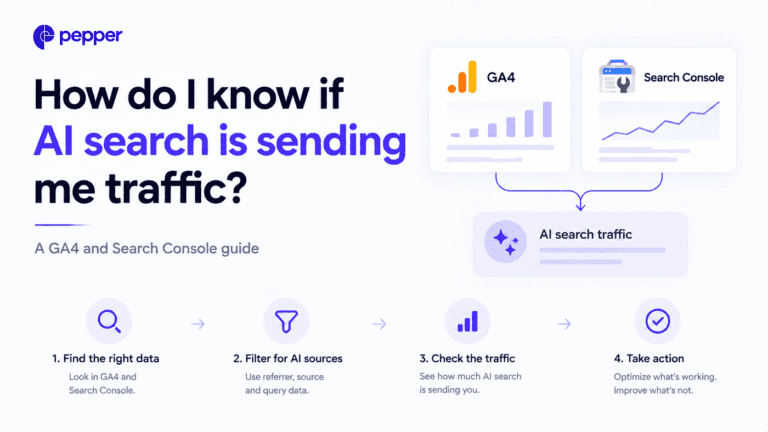
Google now reports AI search two ways, and neither one joins to the other. Search Console shows impressions with no clicks. GA4 shows arrivals from a source list Google does not publish. Here is how to read both
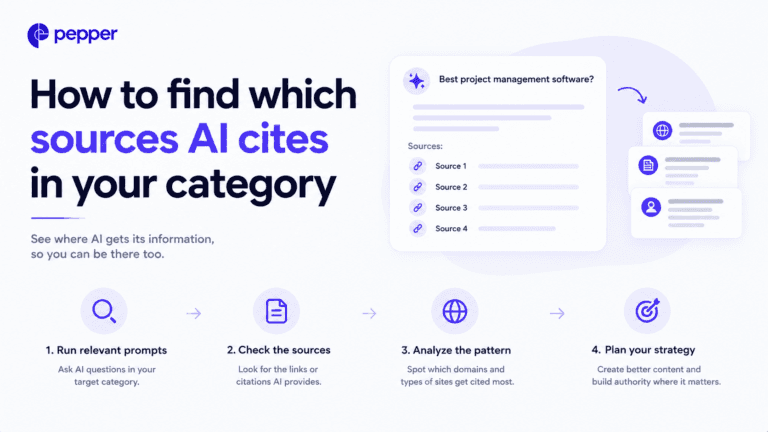
You do not need a study to find out which sources AI cites in your category. You need forty prompts and an afternoon. Here is the procedure, and why the published figures are worth less than your own list.
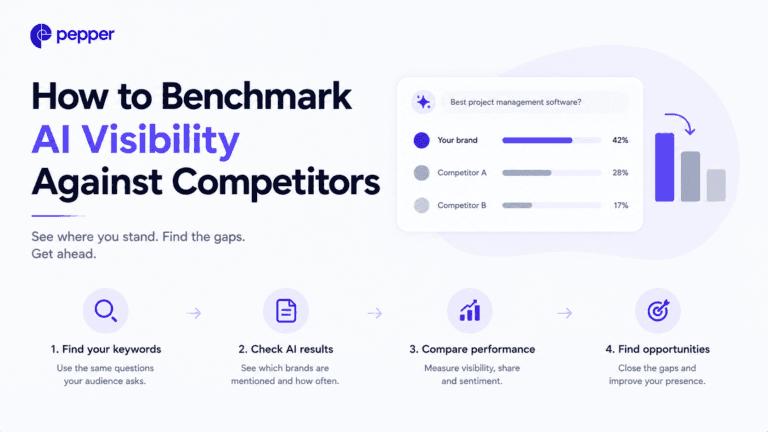
A competitor benchmark in AI search measures your prompt set, not the market. Change the prompts and the ranking changes. Here is how to build one that survives that fact.
Get your hands on the latest news!

Similar Posts
GEO / AI Search
9 mins read
How do I know if AI search is sending me traffic? A GA4 and Search Console guide
GEO / AI Search
8 mins read
How to find which sources AI cites in your category
GEO / AI Search
9 mins read