Prompt Analysis: See the Exact AI Answers You’re Losing
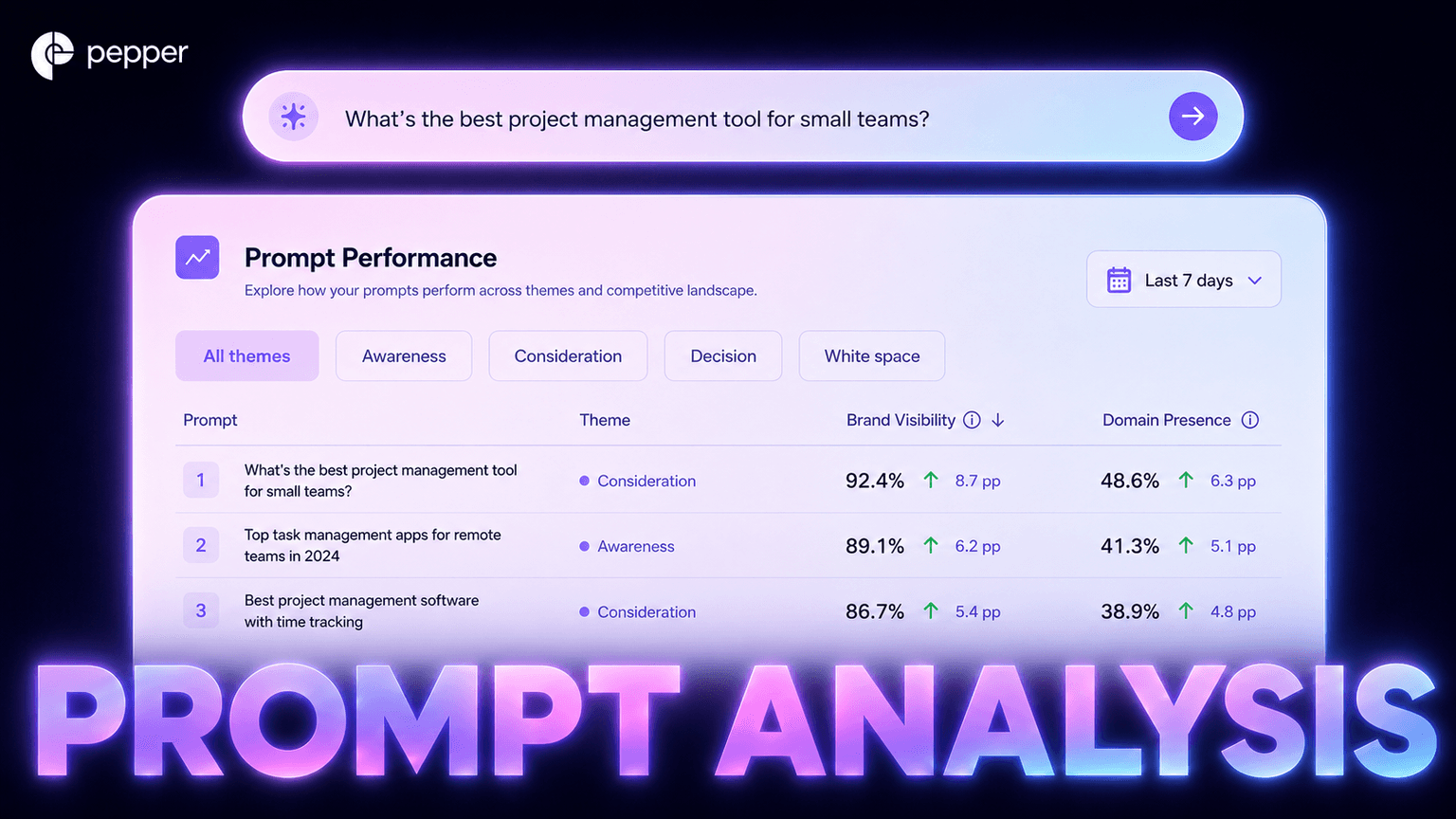
TL;DR A single AI visibility score tells you almost nothing about where you are winning or losing. The real story is a level down, in the individual questions buyers ask AI and the exact answers those engines give back. This is how Prompt Analysis in Pepper’s GEO platform works: every tracked question, whether AI named you, whether it cited you, which competitor took your place, and the verbatim answer behind each one. And because we have spent eight years running content and SEO for more than 250 enterprises, the platform does not just flag the question you are losing. It tells you what to do about it.
Almost every marketing leader I meet opens the AI search conversation the same way. How visible are we, just give me the number.
It is a fair thing to want, and it is also the fastest way to fool yourself.
An AI visibility score is an average, and averages are kind to you. Yours can sit there looking healthy for a whole quarter while you lose the handful of questions that were actually going to turn into deals. The score notices that something moved. What it cannot tell you is which questions slipped, or why. You are reading a summary of a story you have not actually opened.
So we stopped reading summaries. We went to where the story is actually written, which is the single question a buyer types.
We call that a prompt. It is the raw thing someone asks ChatGPT, Claude, Perplexity, Copilot, or Google’s AI Overviews, and it is where a deal quietly goes one way or the other. Pepper’s GEO platform runs thousands of them every day across every major engine, so you are not squinting at a sample. You are looking at the whole board.
Every question that matters, in one place
For each question you track, the platform answers the three things that decide whether you are even in the running: did AI name you, did it cite your site, and who turned up instead of you.
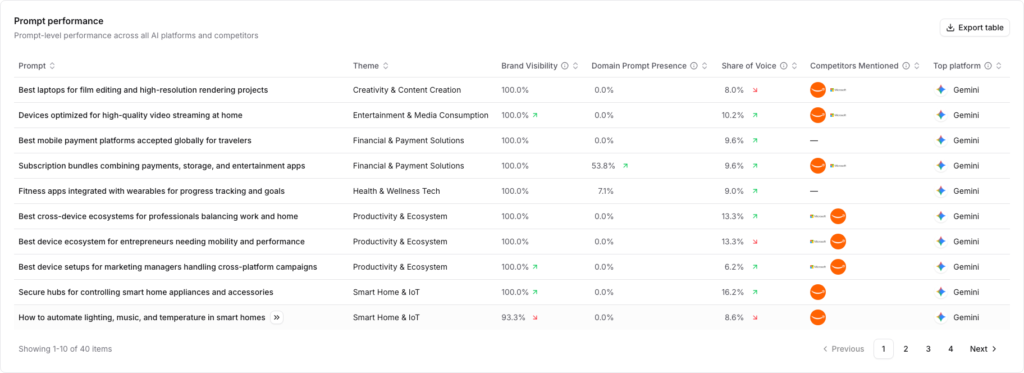
Watch that last column. It is a live list of exactly which brands are walking off with the answers you wanted, one question at a time.
The move here runs against instinct. Instead of chasing the average up, sort by visibility with the worst first. The questions where you are nowhere rise to the top. That is not a vague worry anymore, it is a to-do list.
Then read what AI actually said
Here is the part no scorecard will ever give you. Open a prompt, drop into a single run, and you are reading the real answer a buyer would have seen, on that engine, on that day. Not a number standing in for it. The actual words.
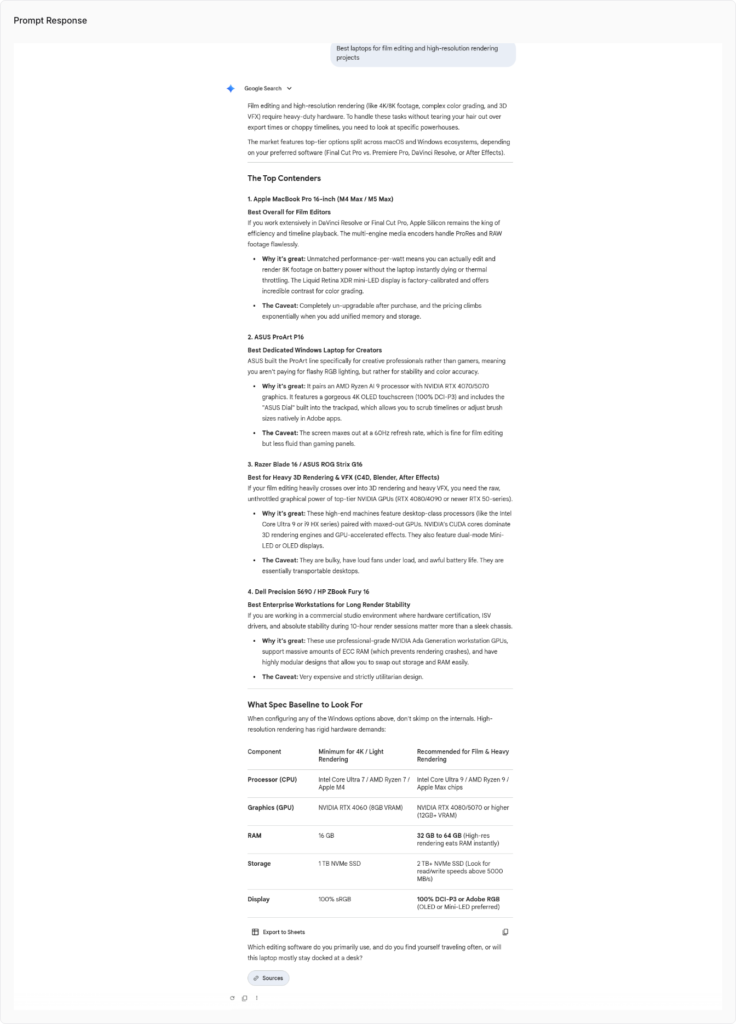
And it keeps going past the answer, into what the engine leaned on to write it.
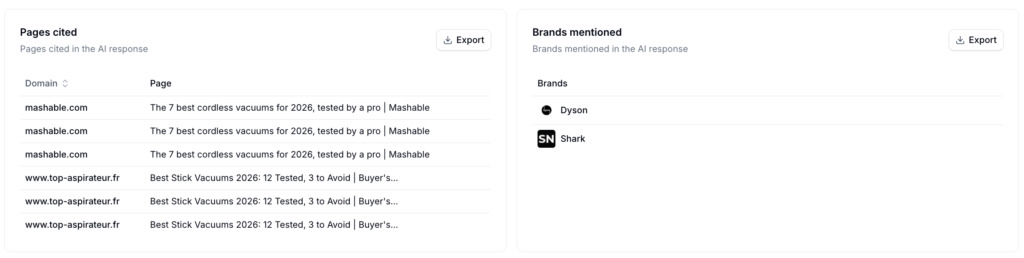
You see the exact pages it cited and the brands it named. This is the moment a loss stops being abstract. You can open the competitor page that got the citation, see what earned it, and go build something better. And when an engine says something about you that is simply not true, which happens more often than most brands want to believe, you catch it here and fix the record before it costs you.
Watch the moment your standing starts to move
Because the prompts run every day, you are never stuck with a single snapshot. You get a trend, early enough to do something with it.
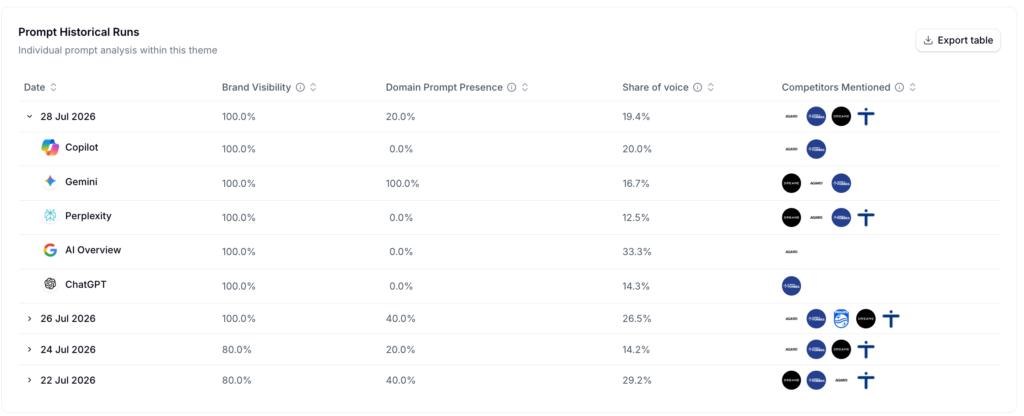
A competitor starts creeping into an answer you used to own. A citation you counted on slips. You see it happening while there is still room to respond, instead of finding out a quarter later when it finally drags the average down.
Then get told what to do about it
Reading the loss is useful. Being handed the fix is the part that saves your week. Open any prompt and the platform generates a short, ranked list of moves to win that exact question, each one tagged with a priority and the specific engine it applies to.
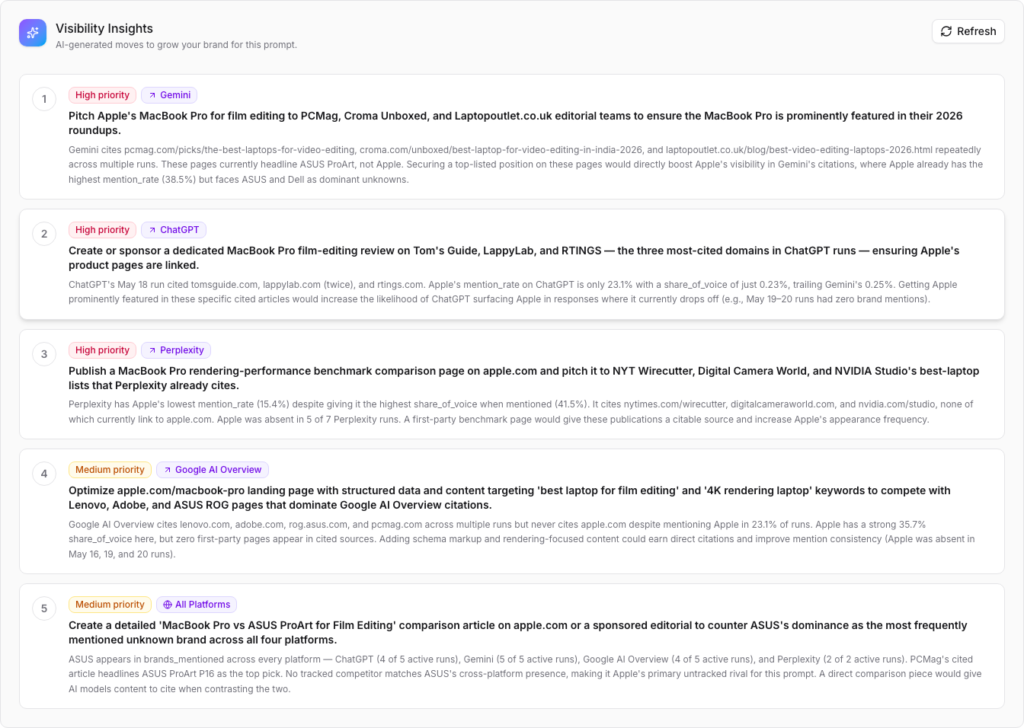
The engine tag matters more than it looks. The work that wins you an answer on Perplexity is often not the work that wins one on Google’s AI Overviews, and a generic to-do list hides that. These are not guesses. The ranking comes from eight years of moving brands up these answers, encoded into the platform.
Why the prompt is the thing that matters
Here is the whole point. A headline number can tell you something changed and nothing more. A prompt tells you the question, the real answer, the sources behind it, and the competitor in your place, which is enough to actually go and fix it.
A dashboard you check on Monday and a system you act on are not the same thing, and this is where they part ways.
And reading the loss is where most tools quietly stop. They hand you the number and leave you alone with it. We do not, and there is a plain reason why. Eight years of running content and SEO for more than 250 enterprises means we know what to do with a losing prompt, not just how to spot one. The platform that surfaces the question is backed by the team that has already won questions like it, and can win yours.
Every number in Pepper’s GEO platform is built up from these real answers. So you are never guessing what AI thinks of your brand. You are reading it, in its own words, and seeing exactly where you slip and why.
FAQ
What is a prompt in AI search? A prompt is one real question a buyer asks an AI engine like ChatGPT, Claude, Perplexity, Copilot, or Google’s AI Overviews. In Pepper’s GEO platform, each tracked prompt is measured every day, so you can see whether your brand was named, whether it was cited, and how you compare to competitors on that exact question.
Why isn’t a single AI visibility score enough? Because it is an average, and it can stay flat while you lose the specific questions that drive purchase decisions. Working at the prompt level shows you which questions you are losing instead of blending them into one figure.
What does the prompt run view show? The verbatim answer an AI engine gave for a single run, on a specific engine and date, with the pages the engine cited and the brands it named.
How do I find the questions where I’m weakest? Sort by brand visibility, lowest first. The prompts where you barely show up rise to the top, which is the list worth starting with.
Can I see when my visibility on a question changes? Yes. Prompts run daily, so the historical view shows performance over time, and you can catch a competitor gaining or a citation slipping while it still matters.
See it on your own category
Right now buyers are asking AI about your category, and every answer either has you in it or a competitor. Pepper’s GEO platform shows you which, question by question, and the real answer sitting behind each one. See how it works, and get a read on where your brand actually stands, at Pepper homepage and the case-study hub.
Book a demo to see your brand’s real standing across every major engine.
Latest Blogs
Most advice on this is inference dressed as fact. OpenAI documents exactly one thing clearly, which is access. Here is what is documented, what is inferred, and how to verify the rest for yourself.
Being named in an AI answer and having your page used as its source are different outcomes with different causes and different fixes. The gap between them is the most useful diagnostic in AI search, and most reporting collapses it into one number.
Every platform reports share of voice and almost none of them define it the same way. Here is the definition worth using, the three choices that change the number, and how to measure it yourself without buying anything.
Get your hands on the latest news!