
Pepperfry
How Pepperfry grew organic revenue by 75% with Pepper
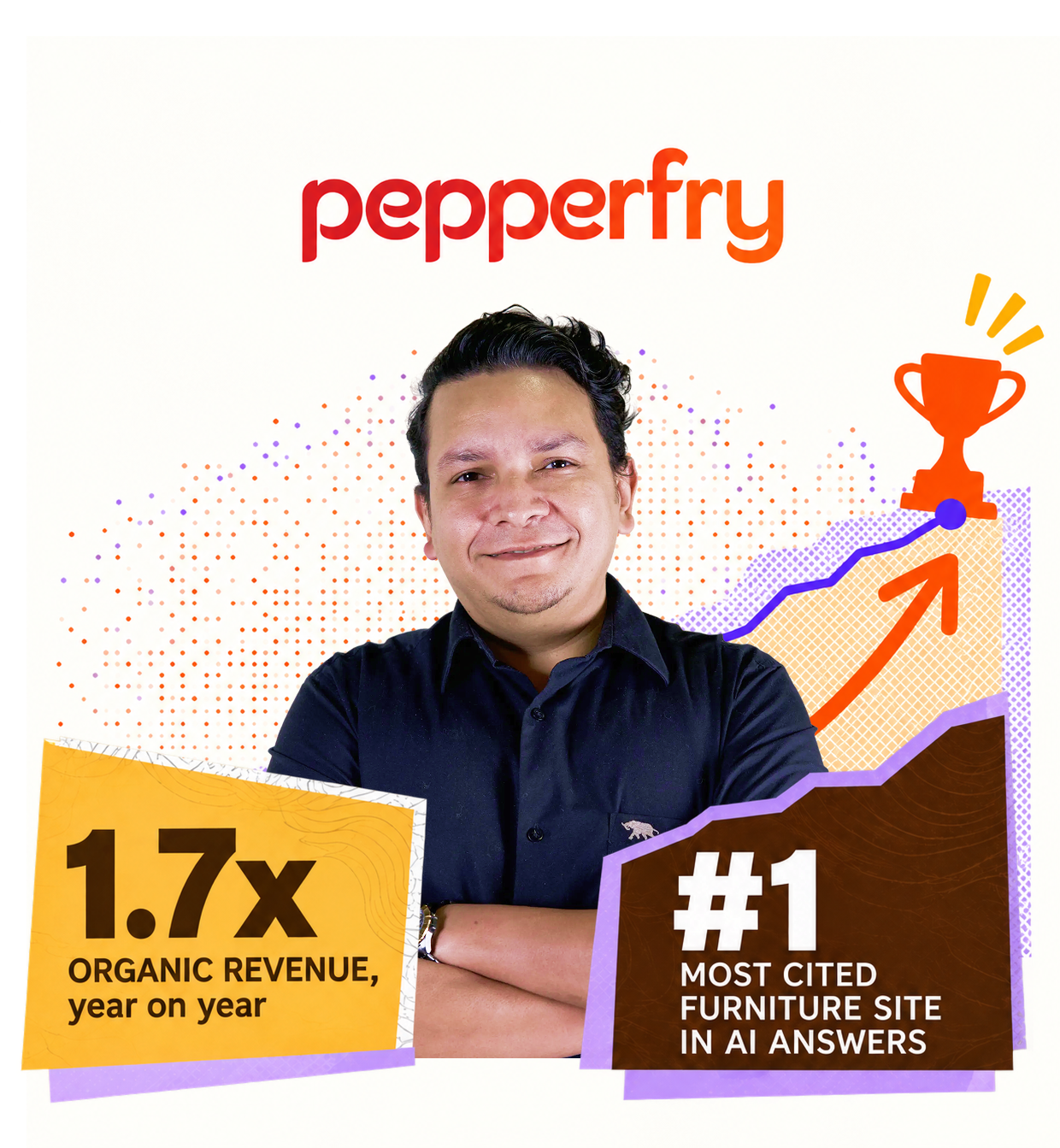
Pepperfry is one of India's leading furniture and home destinations. Furniture is a considered purchase, and shoppers research for weeks before they buy. More and more of them now start that research by asking AI, not Google. They partnered with Pepper to make organic its strongest growth channel. It took a year of fixing foundations before scaling. Today it earns 75% more organic revenue and is the most cited furniture site in AI answers.
1.7x
ORGANIC REVENUE, year on year
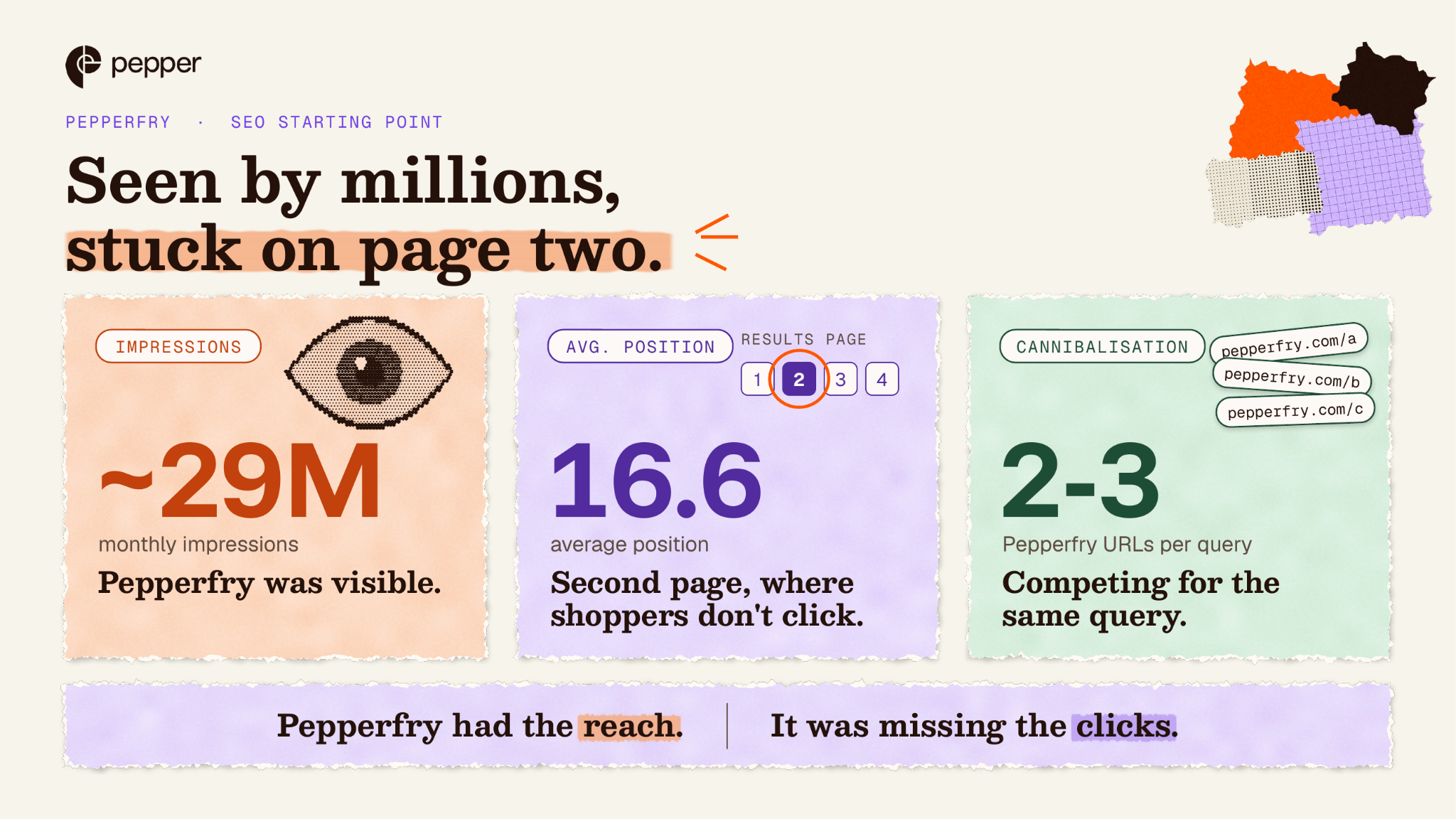
16.6 → 8.6
AVERAGE RANK, roughly halved
#1
MOST CITED FURNITURE SITE IN AI ANSWERS
INDUSTRY
Retail & E-comm
Country
India
Company Type
Enterprise
Champion
Deepak Sharma
See what a search-intelligent content engine could do for your funnel.

“There are a lot of dashboards I’ve been privy to. They have a lot of information, but very little of it is actionable. That’s where working with the Pepper team has been like a breath of fresh air, because the orientation is almost entirely outcome-oriented.”
Deepak Sharma
Chief of Staff & Chief Product Officer, Pepperfry
Seen everywhere. Bought from the wrong pages.
Pepperfry never had a visibility problem. Shoppers saw it all the time. They just weren’t buying from the pages they landed on. Pepper fixed the foundations, rebuilt the pages that sell and made Pepperfry the furniture site AI quotes most. The traffic Pepperfry wins now is smaller, sharper and far more valuable.
THE CHALLENGE
Lots of impressions, very little revenue
Pepperfry already ranked for a huge set of furniture queries. The problem was where it ranked and which pages ranked. Its average position was 16.6, which is the second page of Google. The pages with real buying intent, like category pages for sofas, beds and wardrobes, were hit hardest.
The audit found three things holding it back:
- Google couldn't find the deep pages. Header and footer navigation wasn't being crawled, so category pages deep in the site got very little authority.
- Keyword cannibalisation. Two or three Pepperfry URLs were competing for the same query across sofa, bed, wardrobe and more, so none of them ranked as well as one strong page would.
- Thin, duplicated copy. Around 2,250 category pages had little or repeated text, so Google couldn’t tell them apart or see why any should rank. 100 of them were bad enough to drag down the rest of the site. And no page had schema markup, the code that tells search engines and AI what a page is about.
AI was quoting someone else
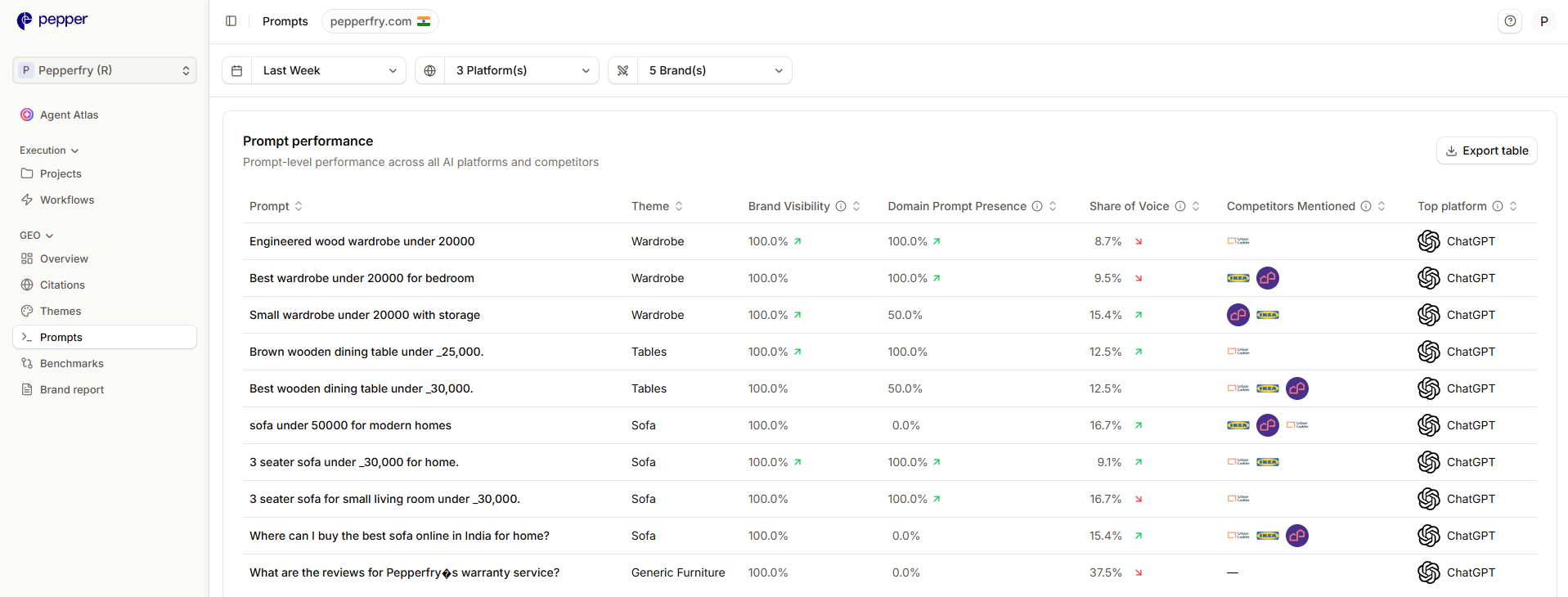
Buyers had started asking AI first, with long, specific questions like “best king size bed under ₹50,000”. On those answers, Pepperfry was losing. ChatGPT cited it in fewer than one in five furniture answers, and in one in four for that king size bed question. Much of the answer was being decided on sites Pepperfry doesn’t own, like Reddit, Quora and review sites.
“A lot of queries now start with AI, and they tend to be very long-tail. That’s a very difficult problem to crack, because most traditional companies tend to focus on the head queries.”
Deepak Sharma, Chief of Staff & CPO, Pepperfry
What Pepperfry needed:
- Fix the foundations so Google could find, trust and rank its money pages
- Fix the cannibalisation so one strong page ranks per query
- Get AI engines to cite Pepperfry's pages on the buying questions that lead to a sale
THE INSIGHT
Fix it once. Win twice.
Most teams run Google and AI as two projects with two vendors. Pepper’s audit showed they are one problem.
The foundations that win on Google are crawlable pages, one clear page per query, structured data and content that answers the question. They are the same things AI reads before it picks a source. So Pepper fixed them once, for both.
THE STRATEGY: FIX THE FOUNDATIONS, THEN SCALE WHAT WORKS
Agent Atlas tracked 350+ real furniture buying questions across ChatGPT, Gemini, Perplexity and AI Overviews. It showed which questions Pepperfry was losing, which competitor was cited instead and which Pepperfry pages were getting picked up. Then the team got to work.
“Their Atlas tool helps us synthesise all the queries where we currently rank and where we might also rank in AI search. They helped us identify these queries and then worked with us to create an entire content framework, on platform and off platform, to ensure that all the content we put out is honest and helpful to consumers.”
Deepak Sharma, Chief of Staff & CPO, Pepperfry
Off the site, Pepper worked on how Pepperfry shows up on Reddit, Quora and review sites, where so much of the AI answer gets decided.
THE RESULTS
Pepperfry moved on both surfaces at once, the blue link on Google and the cited source inside the AI answer.
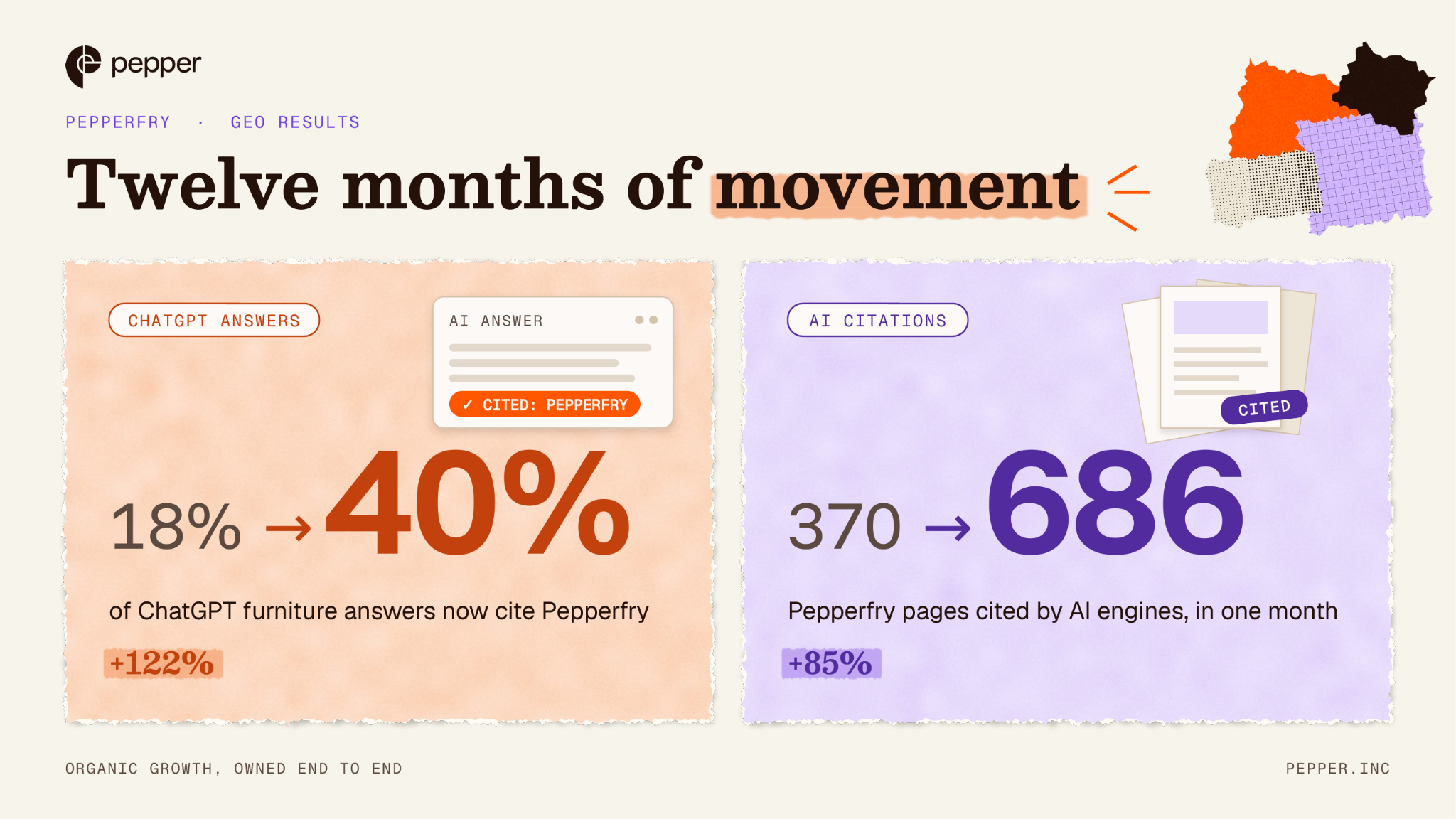
Fewer clicks. Far more revenue.
This is the result that matters most. Pepperfry gets slightly fewer organic clicks than last year, yet it earns 1.7x the organic revenue. The questions it now wins are long and specific, the kind a buyer asks when they’re close to deciding. Each organic visit is worth nearly 2x what it was.
It also took patience. Revenue dipped while the foundations were being rebuilt. Rankings moved first, revenue followed, and the latest month was the strongest of the year.
“AI-based queries are largely long-tail queries. That means the intent is very, very high. The users that we get from these kind of questions tend to be very high-intent users.” Deepak Sharma, Chief of Staff and Chief Product Officer, Pepperfry
#1 cited furniture site in AI answers
Pepperfry is now the most cited furniture site in AI answers across the buying questions Agent Atlas tracks.
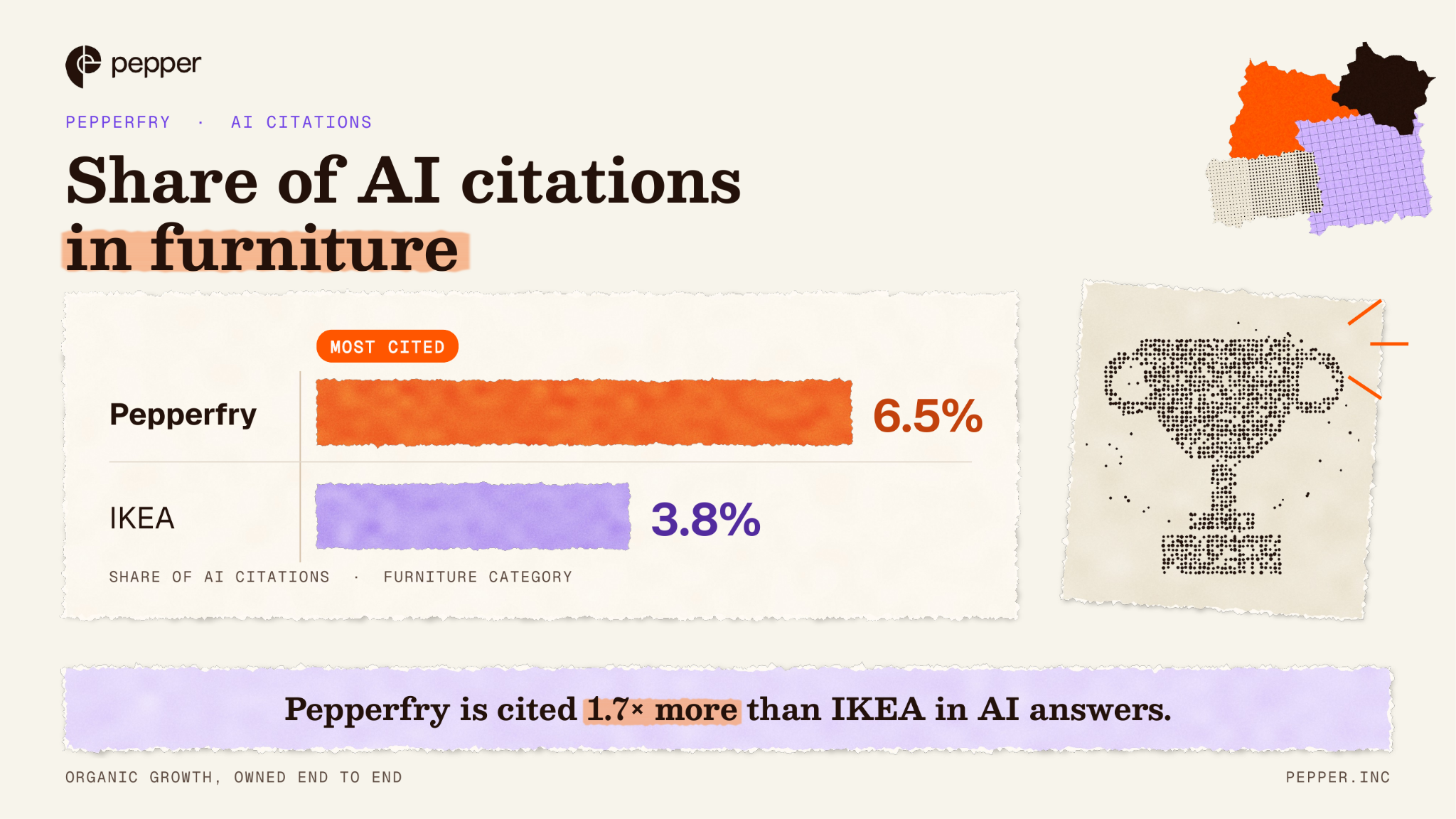
Winning the buying questions
The biggest gains came on the questions closest to a purchase.
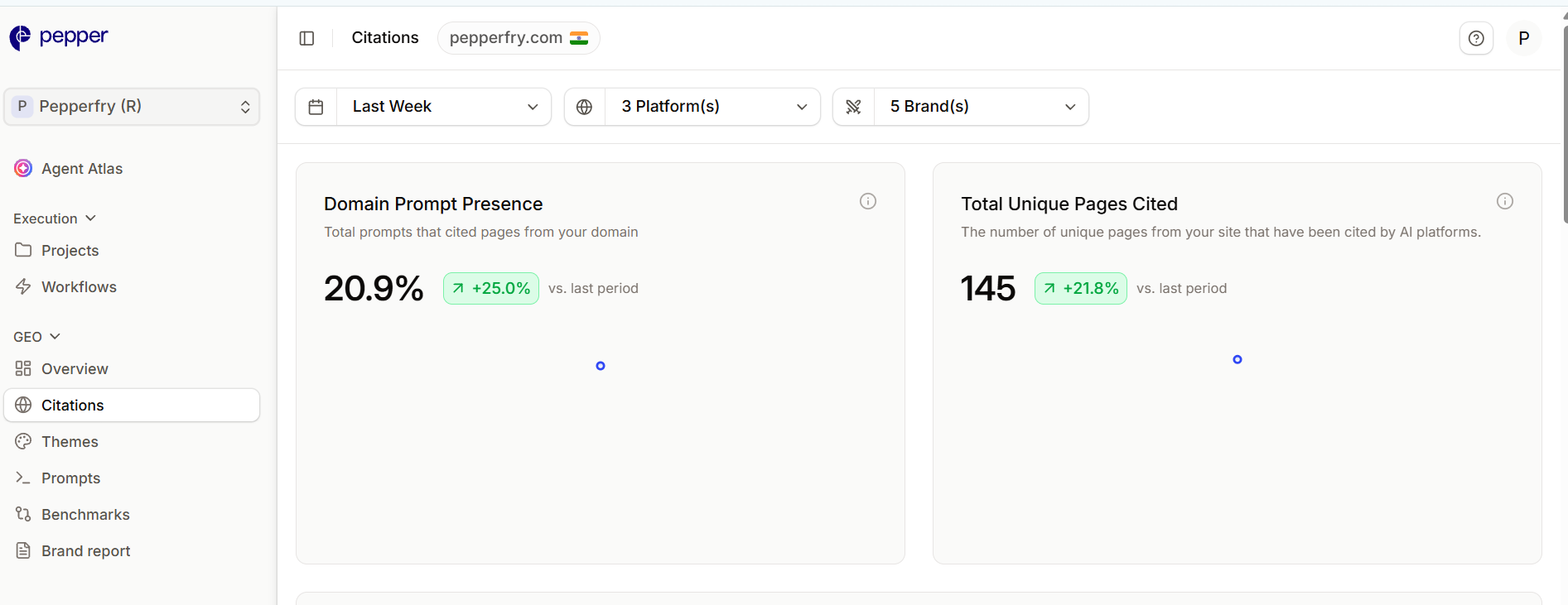
The Discover pocket
Pepperfry’s Discover (design-intent) pages became the programme’s best-performing corner. Built almost entirely on Pepper’s content and keyword work, the cluster grew its clicks nearly 2.5x in four months.
THE IMPACT BEYOND TRAFFIC
1. Content built for real buyers
Pepperfry now has a content framework, on its site and off it, that answers the specific questions families ask before they buy. Not the broad ones everyone else is chasing.
2. Foundations that keep paying
Crawlable pages, schema, one page per query and answers up front are now part of the site. They lifted Google rankings first, and they are what AI reads today.
3. More growth already queued
23 more recommendations are delivered and waiting to go live, including five cannibalisation fixes and the schema rollout. On their own, they are sized at a further 25–30% traffic uplift. None of the growth above depends on them.
WHY IT WORKED. THE PEPPER DIFFERENCE
Pepperfry chose Pepper for three reasons.
1. One roof, not a stack of vendors. Agent Atlas shows where Pepperfry is losing. The same team ships the fix.
2. Actions speak louder than dashboards. The programme was judged on revenue and citations, not on a visibility score.
3. Built for the long game. The first six months looked like a drop. Pepper kept going, because foundations come before results. Twelve months in, organic is Pepperfry’s strongest growth story.
“The core actions that make you valuable on Google are the same actions right now that help you also rank on AI. So find the right partner who can do both. Someone who’s accountable for the result and not just the report.”
Deepak Sharma, Chief of Staff & CPO, Pepperfry

For businesses playing the long game, Pepper turns your earned authority visible to search & AI, making
organic growth winnable again.
Get a strategy presentation with real projections before you sign up.
i
*the long game is not about waiting.
It is about building something that keeps winning after everyone else's quick win wore off. And you will see it work within a quarter.