A TRADITIONAL SEO AGENCY
An agency brings you people
1
/3
PIECES COVERED
STRATEGY
TECHNOLOGY
TALENT
vs

Pepper brings the whole function.
3/3
PIECES COVERED
STRATEGY
TECHNOLOGY
TALENT
Running organic now takes three things: a strategy for where to compete, software that does the work at scale, and people senior enough to judge what comes out. Most suppliers have one of the three.
01
Who each one is for
HIRE A TRADITIONAL AGENCY
When you already have the strategy and need people to execute it. Your own team keeps the number and reports on it internally, most of your organic work happens on Google and on your own site, and you want a six to twelve month commitment you can walk away from.


HIRE PEPPER
When nobody currently owns organic as a whole function, your buyers are asking AI before they ask you, and you want the target agreed and written down before you start. It takes a year to judge properly, and we'll ask you to commit to one.
02
Three things, and most suppliers have one.
Organic used to be a channel one person could run. Doing it properly now takes all three of these at once.
AN AGENCY
Strategy
Technology
Talent
An agency brings talent and executes the strategy you hand them.
A PLATFORM
Strategy
Technology
Talent
A platform brings technology and leaves you to operate it.
+
Strategy
Deciding where you can realistically win, which topics to take and in what order. The category moves, so this gets revisited every quarter rather than settled once at kickoff.
+
Technology
Tracking what AI answers say about you across six engines every day, and running the work that changes it. Software you rent gives you the first half of that.
+
Strategy
Senior strategists and specialists who can tell good work from filler, with industry writers, editors and designers behind them.
=

Pepper holds all three, which is why one team can answer for the result.
03
Compare side by side
Only the places the two genuinely differ. Both do keyword research, content, links and technical fixes.
What changes
OTHERS
A traditional agency
US

WHAT GETS MEASURED
Whether AI answers mention your brand
Only if they buy a separate tool

Daily, across ChatGPT, Gemini, Claude, Perplexity, Copilot and Google AI Overviews
Which sources get cited instead of you
Not usually
Every domain cited in your category, ranked
What to do next
Their judgement, once a month
Ranked actions, per prompt and per engine
HOW THE WORK HAPPENS
How much work fits in a month
Limited by headcount
Agents run it at volume, people approve it
Who is on your account
An account manager across several clients
A named strategist working inside your team
Time from finding a problem to fixing it
Next sprint, if there's room
The same session
COMMITMENT
Minimum term
Six to twelve months
Twelve months, with a six-month out-clause
How quickly you can start
Often within a week or two
Slower. We build the strategy and the projected number first
04
Who carries the Number
This is the difference that decides the others. An agency is paid to deliver work, so the contract describes work. We're paid against a result, so the contract describes the result.
BEFORE YOU SIGN
IN THE CONTRACT
EVERY WEEK
THE OUTCOME
AN AGENCY
Accountable for activity
Scope and a monthly fee
A scope of work, priced by the month.
A deliverables count
Deliverables, and how many of each.
An activity report
A monthly report on work completed.
Journey ends at
deliverables.
The work is done, whether or not the number moved.

Accountable for the result
A strategy and a projected number
Built before anything issigned.
The KPI,
written in
Agreed with your team andpart of the contract.
A review
against baseline
A named strategistanswers for it.
THE NUMBER MOVES
Pepper owns
the KPI, week
after week.
If the number doesn't move, an agency has still done what the contract asked.
We haven't.
05
Numbers we stood behind.
Both accounts ran on the same combination: our strategy, our platform, our team.
SalesHood
Sales enablement, as buyers moved to AI answers.
CASE STUDY 02

Frequently Asked Questions
A traditional SEO agency bills for hours and delivers an agreed list of work each month. Pepper runs your whole organic growth function across Google and AI answers, on its own platform, and the KPI is written into the contract. You pay an agency for the work it does. You pay Pepper against an agreed outcome.
Pepper is a service with the platform built in. Senior strategists and specialists run your organic growth on Agent Atlas, Pepper's platform, set up on your data. Agents handle volume, people make the judgment calls, and one team owns the number.
AI engines recommend the brands that the sources they trust already talk about, such as Reddit, YouTube, G2 and industry publications. Most of that sits off your website. Pepper checks what ChatGPT, Gemini, Claude, Perplexity, Microsoft Copilot and Google AI Overviews say about you every day, plus Google Search. Then we work on your Citation Core: the small set of sites AI engines cite most often in your industry.
Yes, the same as an agency would. Pepper measures that work against your visibility in Google and in AI answers, and agents run it at volume while strategists approve what ships.
No. The work at Pepper runs on the platform. Agents do the volume, and senior strategists direct it and approve what goes out. Adding AI tools to a retainer still leaves the risk with you if the number stays flat.
Yes. Paid and organic are separate disciplines with separate numbers, so splitting them across two suppliers doesn't cause the accountability problem that splitting organic does. Many Pepper accounts run this way.
An agency retainer is a flat monthly fee for a list of deliverables. A Pepper engagement is annual and priced against an outcome. The KPI is in the contract, and your senior strategist reviews progress against your baseline every week. If the number isn't moving, you can leave at six months.
Pepper doesn't publish pricing. Engagements are annual and priced against the outcome. Before you sign anything, you see a full strategy and a projected number.
Expect early movement in the first three months and meaningful results between months six and nine. A lot of your authority sits on sites you don't own, and those sites update on their own schedule.
You do. Everything we produce is yours, and you can export your brand and prompt tracking data at any time. Engagements are annual, with an out-clause at six months.
You'll see it early, because a named strategist reviews progress against your baseline every week. If the number isn't moving, we change the plan with you. If it still isn't on track at six months, you can use the out-clause and keep everything we've built.
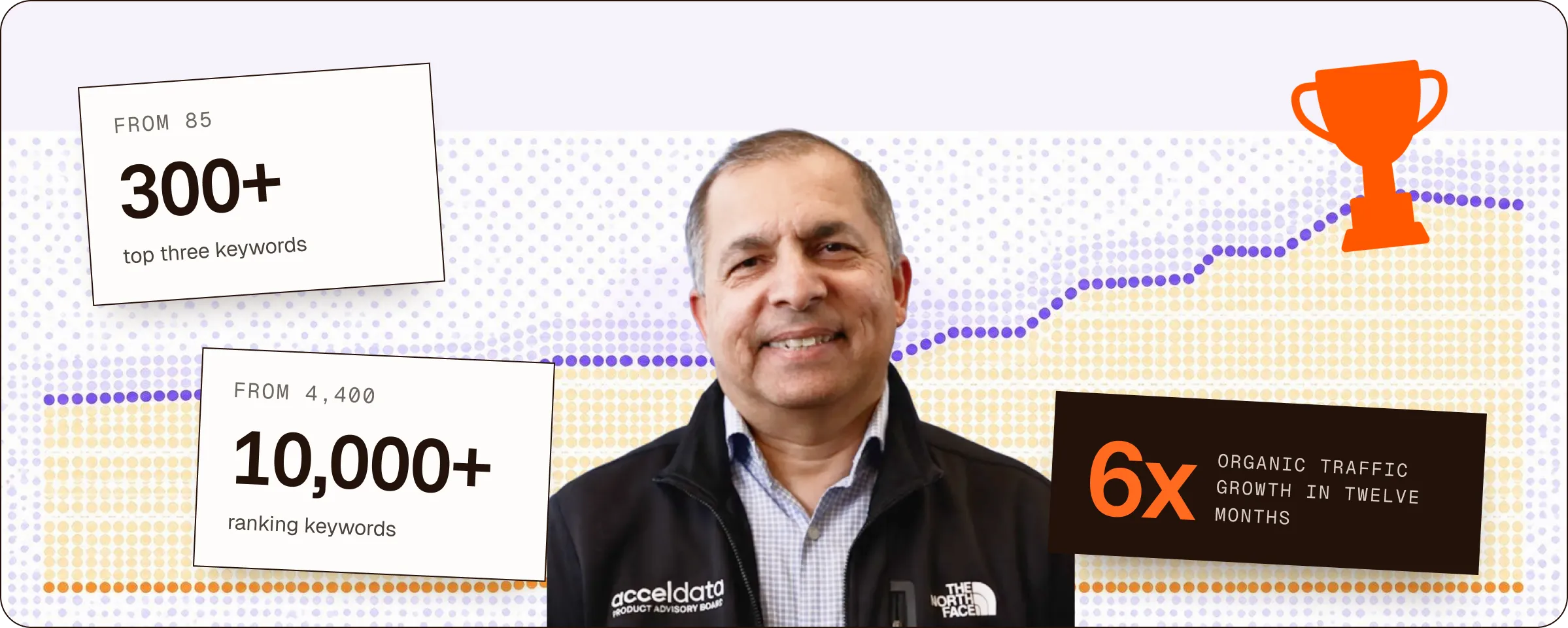
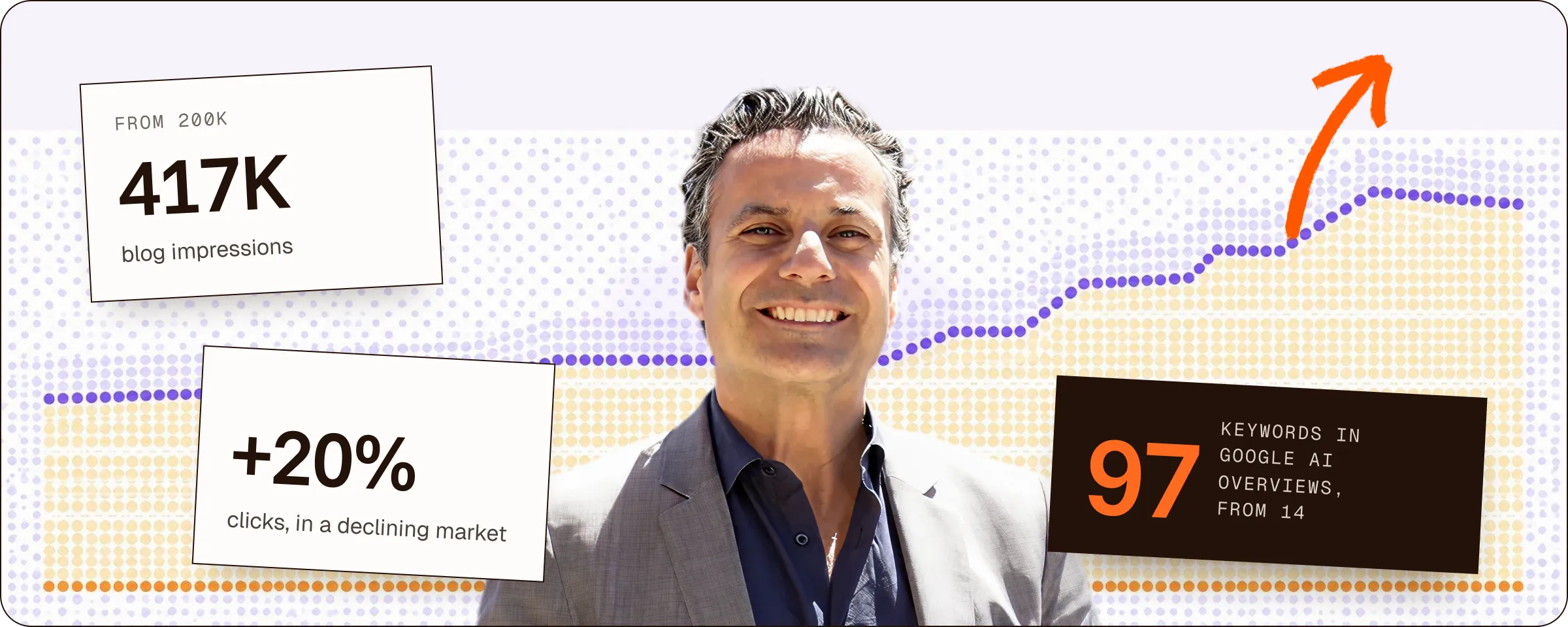
Acceldata grew organic traffic 6x within twelve months, and its keywords in Google's top three went from 85 to 300+. SalesHood went from 14 to 97 keywords in Google AI Overviews in six months, while blog impressions rose from about 200,000 to 417,000.

For businesses playing the long game, Pepper turns your earned authority visible to search & AI, making
organic growth winnable again.

Get a strategy presentation with real projections before you sign up.
i
*the long game is not about waiting.
It is about building something that keeps winning after everyone else's quick win wore off. And you will see it work within a quarter.