GEO Agencies for Perplexity Visibility: The 2026 Shortlist
The short answer
Perplexity is the most tractable AI engine to optimise for, because it shows its working. In addition, every answer ships with numbered inline citations pointing at source URLs, so you can see exactly which pages won and which did not.
Key takeaways
- Perplexity rewards citable third-party sources more than polished brand pages. If the roundups and review sites in your category do not describe you, Perplexity has nothing to cite.
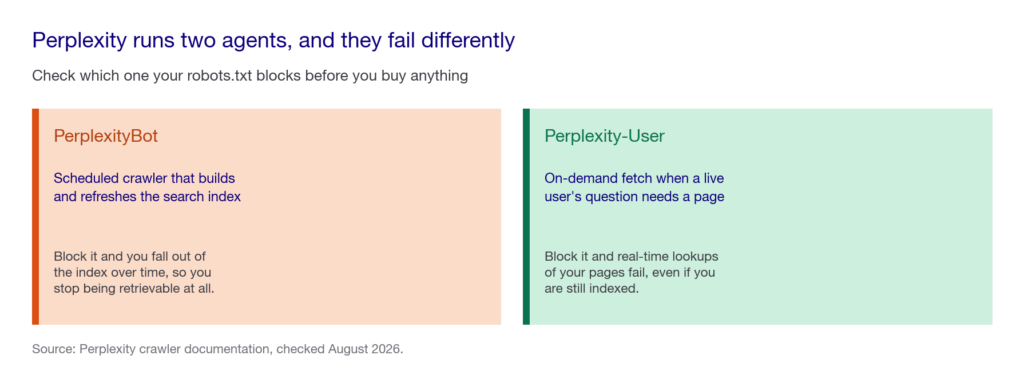
- Two crawlers, two jobs. PerplexityBot builds the index on a schedule. Perplexity-User fetches pages on demand when a person asks a question. Blocking them has different consequences, and most teams do not know which they have blocked.
- The specialists worth shortlisting are the ones doing off-site authority work, not the ones adding a Perplexity column to an SEO report.
- Because citations are visible, Perplexity is the best engine to run your first measurement baseline on. You can verify a provider’s claims yourself.
- Most providers quote custom. Very few publish rates.
A note on where this comes from. And we run organic for more than 250 enterprises and track over 10 million prompts across every major engine. Also, the view below is shaped by that, by the client reviews we sit in every week. And by the conversations we have with buyers and operators at the events we run. As a result, this is our read on the category, not a neutral directory.
What is a Perplexity GEO agency?
A Perplexity GEO agency builds the third-party citations Perplexity draws on, makes your pages retrievable to its crawlers. What is more, tracks which of your URLs get cited for which prompts. Because Perplexity attaches numbered citations to every answer, its work is unusually easy to audit from the outside.
What makes Perplexity different
Perplexity answers questions by retrieving from an index and then generating an answer with numbered citations attached. The citations are the product: users click them, and Perplexity’s whole positioning rests on showing receipts. So that single design decision changes the optimisation job in three ways.
You can audit it directly. Ask Perplexity twenty questions your buyers ask, and read the citations. You now know your baseline and your competitive set, at no cost. On engines that cite less consistently, you are inferring. Here you are reading. See how to get your brand cited on Perplexity for the audit method.
Source authority outweighs page polish. Perplexity leans on sources it can attribute. And a well-regarded third-party roundup that mentions you will usually beat your own landing page, because the model treats an independent source as stronger evidence. That means this is the same pattern across engines, but it is more visible here.
Crawler access is a live gate. Perplexity runs two agents with different jobs, and the distinction matters more than most teams realise.
| Agent | What it does | If you block it |
|---|---|---|
| PerplexityBot | Scheduled crawler that builds and refreshes the search index | You fall out of the index over time and stop being retrievable at all |
| Perplexity-User | On-demand fetch when a live user’s question needs a specific page | Real-time lookups of your pages fail, even if you are indexed |
Teams block AI crawlers for defensible reasons, then wonder why they are absent from answers. So check what your robots.txt actually does before you buy anything. In practice, our breakdown of PerplexityBot covers the user agents in detail, and robots.txt for AI crawlers covers the syntax.
Perplexity versus ChatGPT: what actually changes
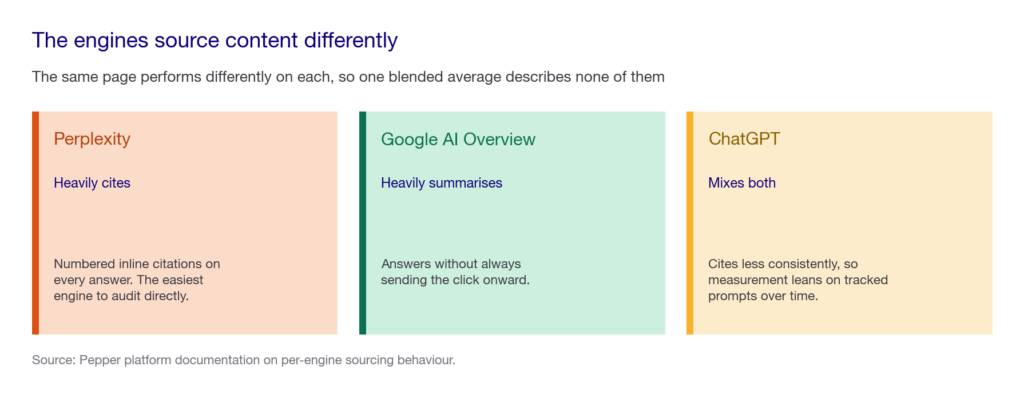
The engines are not interchangeable, and a provider who treats them as one surface is measuring an average that describes neither. In practice, Perplexity heavily cites, Google AI Overview heavily summarises, and ChatGPT mixes both, so the same content performs differently on each.
| Perplexity | ChatGPT | |
|---|---|---|
| Citation visibility | Numbered inline, on every answer | Present but less consistent |
| Auditability | High, you can read the sources | Lower, more inference required |
| Weight on third-party sources | Heavy | Heavy, less transparently |
| Practical first move | Read your citations, find the gap | Track prompts over time |
A fuller comparison lives in Perplexity vs ChatGPT brand visibility.
What makes an agency Perplexity-ready
Four things separate a genuine Perplexity practice from a Perplexity column in a spreadsheet.
- Off-site authority as core scope, not an upsell. Perplexity cites sources. If the engagement lives entirely in your CMS, it cannot move the thing that decides the answer.
- Crawler and retrievability competence. Someone on the team should be able to talk about user agents, robots.txt and structured data without reaching for a partner.
- Citation-level tracking, not just brand mentions. The distinction is measurable: being named is one metric, being cited is another, and Perplexity is where the gap shows up most clearly.
- “You were mentioned” is a weaker signal than “you were cited, at position three, alongside these four competitors.”
- An honest account of variance. Perplexity’s answers change. A provider who promises a fixed position is selling something they cannot deliver.
See where you show up. Pepper’s GEO platform tracks Brand Visibility, Domain Prompt Presence and Share of Voice across ChatGPT, Perplexity, Gemini, Claude and Google AI Overviews. Equally, a growth team works the account with you. Book a growth audit or see where you show up.
Our methodology: how we evaluated these agencies
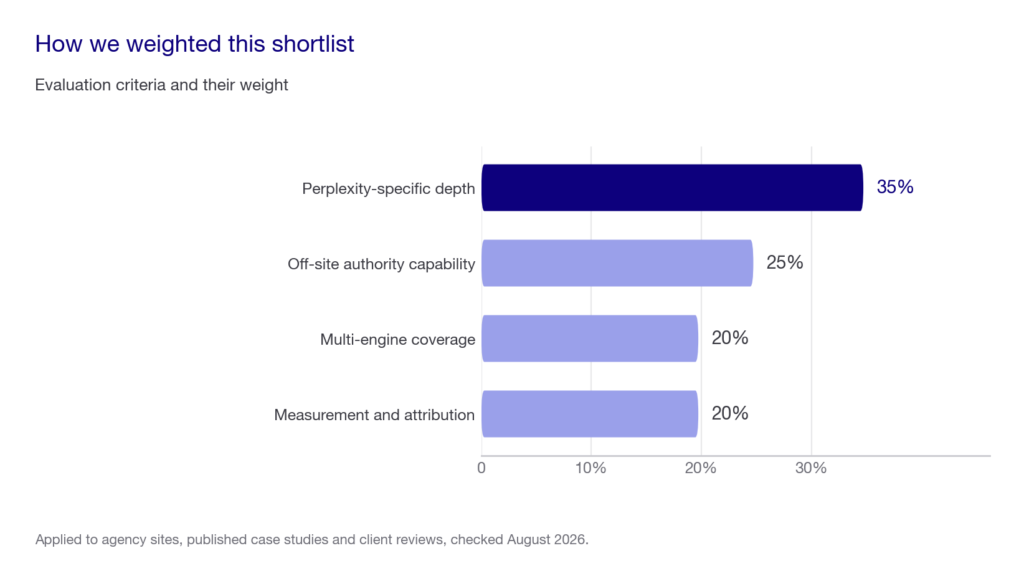
Applied to publicly verifiable information: agency sites, published case studies, client reviews and the engines each provider states it tracks. The full weighting model is set out in our GEO agency ranking methodology.
| Factor | Weight | What we looked for |
|---|---|---|
| Perplexity-specific depth | 35% | Citation strategy and crawler competence, not a tracking checkbox |
| Off-site authority capability | 25% | Digital PR, roundups, review and community presence |
| Multi-engine coverage | 20% | Perplexity tracked alongside ChatGPT, Gemini, Claude, AI Overviews |
| Measurement and attribution | 20% | Citation-level tracking tied to something downstream |
What we could not verify. Pricing, for almost every provider. Where a rate is published we say so; where it is not, we write “not publicly disclosed” rather than guessing.
At a glance
| Provider | Best for | Perplexity focus | Model | Pricing |
|---|---|---|---|---|
| Pepper | Teams wanting the whole function run | Citations tracked across five engines | Platform plus growth team | Custom, annual |
| First Page Sage | Enterprise and mid-market | GEO sold as a named service; engines not specified | Agency, SEO plus GEO | Not publicly disclosed |
| Omniscient Digital | Content tied to pipeline | Optimises across Perplexity, ChatGPT, AI Overviews | Managed service | Not publicly disclosed |
| Animalz | Premium thought leadership | Multi-engine, lighter on platform tracking | Agency, AEO practice | Not publicly disclosed |
| Graphite | Editorial clarity | Public emphasis skews ChatGPT and AI Overviews | Agency | Not publicly disclosed |
| Minuttia | SaaS above 10M ARR | Multi-engine, strategy-first | Boutique | Not publicly disclosed |
| TripleDart | Full-funnel B2B tech | Perplexity via Slate platform | Agency plus platform | Not publicly disclosed |
| Intero Digital | Regulated, multi-channel | GRO framework across engines | Agency | Not publicly disclosed |
| GrowthX | Growth-stage B2B wanting a system | Tracks Google, ChatGPT, Claude, Perplexity | GrowthOS platform | $6,000/mo, published |
The shortlist
1. Pepper
What it is. Pepper is an agentic organic growth engine. Atlas is the platform underneath, and a growth team runs the organic function with you. In practice, you get the platform and a growth team on the account. Your team can log in, connect Search Console and GA4, manage the prompt set, read the analytics. And build and run agents in the Agent Atlas. In practice, our growth team works the same account alongside you, so the work still happens when your week fills up.
How the Perplexity work is structured. Around three levers: Visibility, Citability and Retrievability. In practice, Perplexity is usually a citability problem rather than a visibility one: brands get mentioned and the citation goes to a third party. Closing that lives in PR and partnerships as much as in the CMS. More than 10 million tracked prompts across every major engine sit behind the strategy. Eight years, 250 plus enterprises. In practice, our work with Acceldata grew organic traffic sixfold and took top-three keywords from 85 to more than 300.
Where it falls short. Custom annual pricing on an outcome-pegged model. So it suits companies treating organic as core rather than teams wanting a cheap monthly tool. Organic only. At the same time, if you have a capable in-house operator with spare capacity who needs better data rather than more hands, a tracking platform is the cheaper answer.
2. First Page Sage
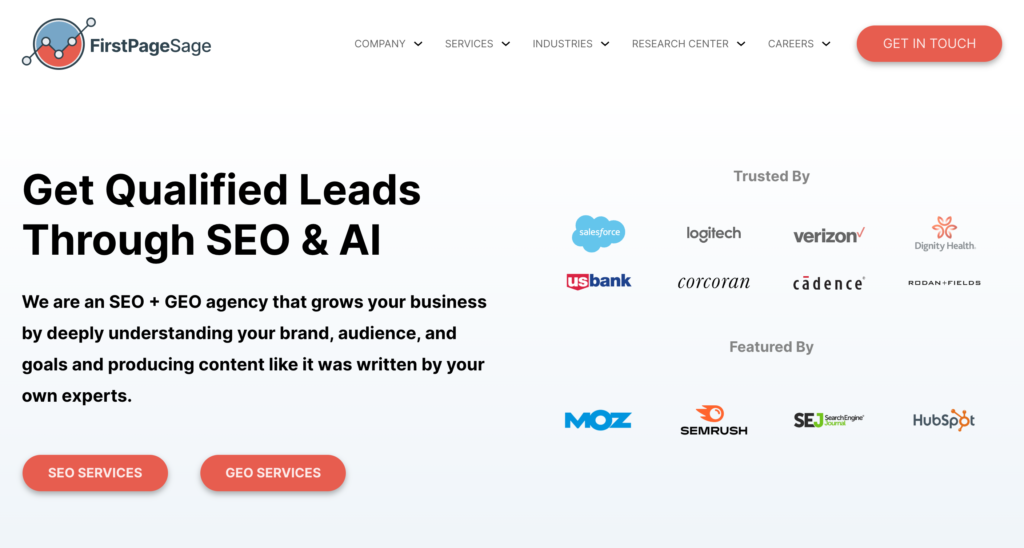
What they do. Describes itself as an SEO and GEO agency, with GEO sold as a named service rather than an add-on. Published clients are enterprise and mid-market, including Salesforce, Verizon and US Bank.
Best for. Enterprise and regulated categories with long sales cycles.
Where they fall short. Its own site does not name Perplexity or any specific engine, so engine-level coverage has to be established in a call rather than assumed. No published engagement model or pricing.
3. Omniscient Digital
What they do. B2B organic growth with GEO built into core SEO, actively optimising across Perplexity, ChatGPT and Google AI Overviews. Ties content to pipeline rather than traffic.
Best for. SaaS teams that want organic measured against pipeline and are prepared to run a longer programme.
Where they fall short. Managed service only, with no platform layer. For that reason, visibility into the work depends on their reporting rather than a system you can query.
4. Animalz
What they do. Editorial-led B2B SaaS content with Answer Engine Optimization sold as a named service, plus proprietary tooling for content refresh it calls Revive. Published clients include Airtable, Amplitude and Intercom.
Best for. Categories won on ideas, where an original point of view is the differentiator.
Where they fall short. Lighter on platform-level citation tracking, so Perplexity reporting may be less granular than a tracking-first provider. Premium positioning and cost.
5. Graphite
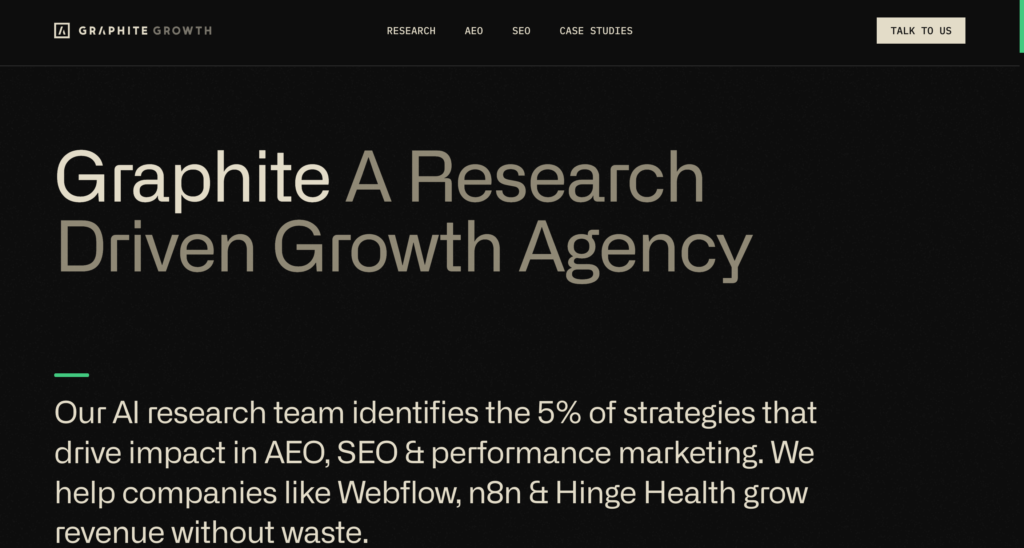
What they do. Intent-driven content and persona mapping, combining answer engine optimisation, SEO and performance marketing.
Best for. Teams that value editorial clarity and want content decisions justified by intent data.
Where they fall short. Public emphasis skews toward ChatGPT and Google AI Overviews. If Perplexity is your priority engine, ask directly how it is tracked before signing.
6. Minuttia
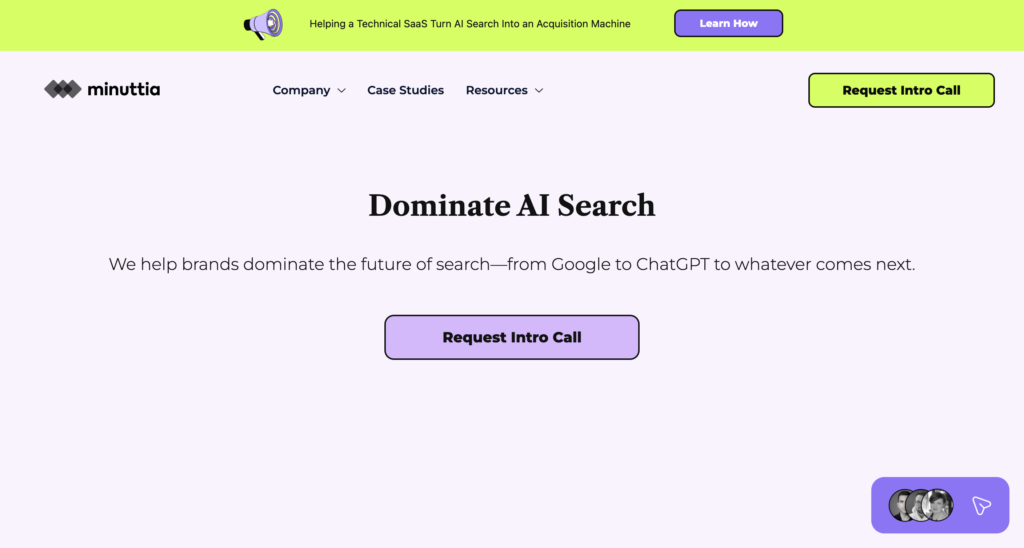
What they do. SaaS and tech specific, built for companies past roughly 10 million in ARR, strategy-first with integrated content and AEO.
Best for. Established SaaS wanting a senior strategic partner rather than an execution vendor.
Where they fall short. Boutique capacity limits how fast they scale, and the ARR threshold rules out earlier-stage companies.
7. TripleDart
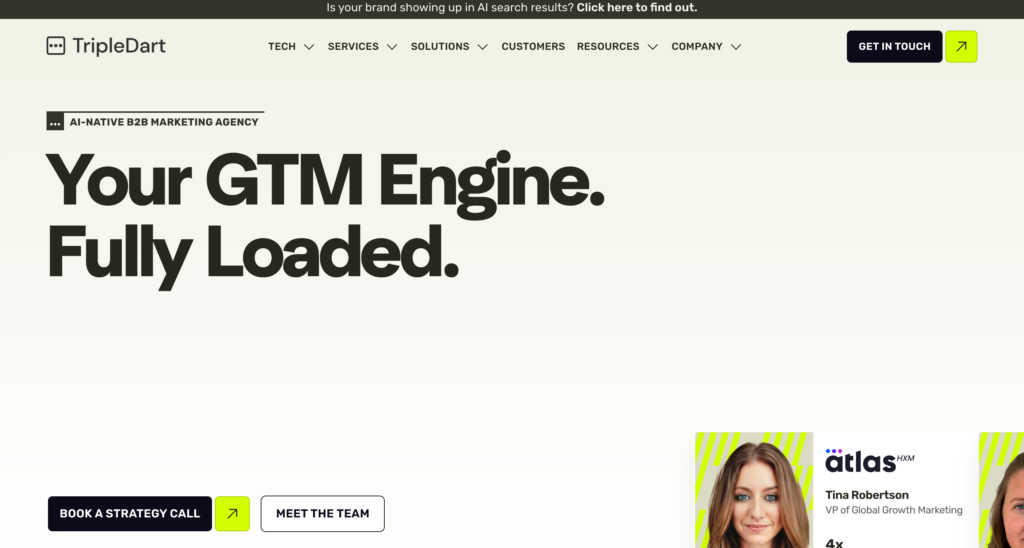
What they do. B2B tech exclusive, running GEO through its proprietary Slate platform with attention to how shortlists form inside conversational AI.
Best for. B2B tech companies wanting full-funnel marketing with GEO alongside paid and lifecycle.
Where they fall short. Full-funnel by design, so organic is one priority among several. Specialists tend to win the answer in a given category.
8. Intero Digital
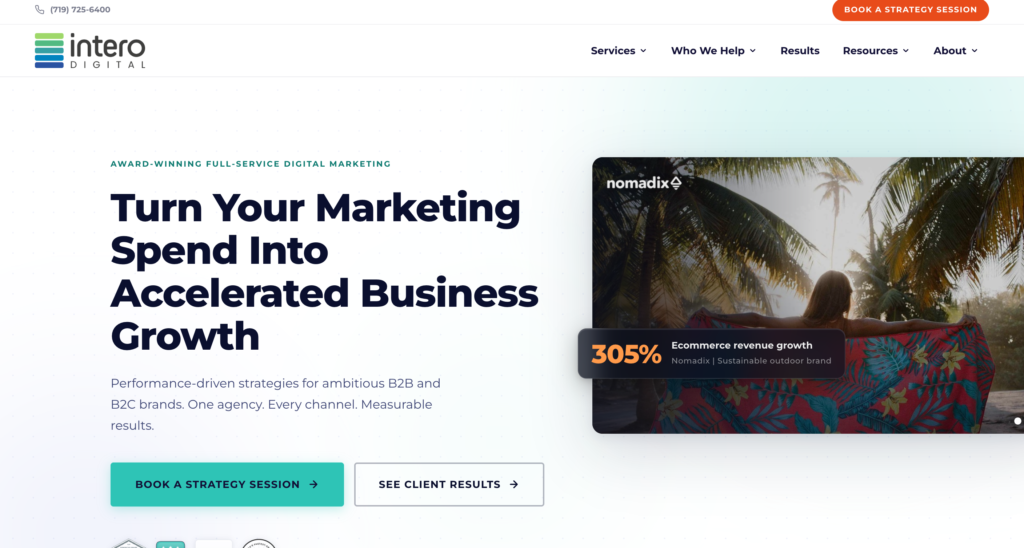
What they do. Formalises AI search work as a proprietary GRO framework, integrated across channels, with depth in regulated industries.
Best for. Mid-market and enterprise teams in regulated sectors wanting GEO integrated with the wider mix.
Where they fall short. Public case studies often skew toward broader SEO wins rather than engine-specific citation gains. So ask for Perplexity-specific evidence.
9. GrowthX
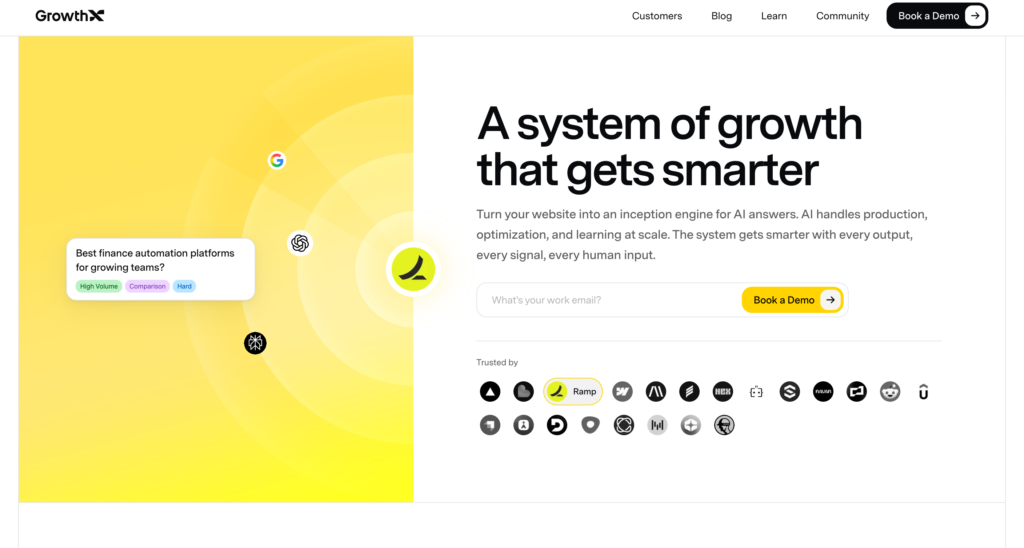
What they do. GrowthX now sells GrowthOS, a subscription platform built around treating your website as the source AI answers draw on, with visibility planning, tracking and citation monitoring across Google, ChatGPT, Claude and Perplexity.
Best for. Growth-stage B2B companies with an established site who want a system to run. Pricing is published at $6,000 a month.
Where they fall short. It is a platform, so someone internally still has to drive it. The model centres on your own site as the truth layer, which understates how much of a Perplexity answer is decided on third-party sources.
What this costs
Almost nobody publishes rates for Perplexity-specific work, because it is rarely sold separately. It arrives inside a broader GEO engagement.
| Engagement type | Typical range | Notes |
|---|---|---|
| Tracking platform only | 800 to 1,500 USD per month | You read the citations and act yourself |
| Boutique or specialist GEO | 3,000 to 8,000 USD per month | Most common shape for mid-market |
| Full organic function, owned | Custom, usually annual | Strategy, execution and accountability |
Ask what share of the fee goes to off-site authority. Perplexity cites third-party sources. Consequently, a proposal that lives entirely in your CMS is priced for the wrong work. See tool vs agency vs platform for how the models differ.
How to choose a Perplexity GEO partner
Perplexity is the easiest engine to evaluate a partner on, because it shows its working. And every answer carries numbered citations, so a provider’s claims are checkable in the room. Beyond that, we would use that.
In May 2026 Google published its first official guidance on optimising for its AI features and filed it under SEO fundamentals. In practice, its position: AEO and GEO are part of SEO for Google, AI Overviews and AI Mode run on the core Search ranking systems. And there is no separate AI index. It also mythbusts several things GEO vendors sell hard, including llms.txt, content chunking and AI-specific rewrites. In addition, we think that is right about Google and only about Google. In practice, Perplexity behaves differently: it cites heavily where AI Overviews summarises. That is why a single blended visibility number tends to hide more than it reveals.
The scorecard we would use
Score each shortlisted partner out of 100 using the weights below, before the pricing conversation rather than after it. And a partner who scores well on measurement and badly on execution is a research vendor, whatever the deck says.
| Area | Weight | What a strong partner demonstrates |
|---|---|---|
| Citation measurement | 25% | Tracks cited URLs, competitors and share of voice across a real prompt set, at URL level rather than brand level |
| Off-site authority | 25% | Can name the sources deciding your category and has a route into them. Perplexity cites third parties more than brand pages |
| Query and demand intelligence | 20% | Knows what your buyers ask across the funnel and where you are absent |
| Technical retrievability | 15% | Comfortable with crawler user agents, robots.txt, entity clarity and structure |
| Multi-engine capability | 10% | Tracks Perplexity alongside the engines your buyers also use |
| Business attribution | 5% | Travels from citations through to referral traffic and pipeline |
Off-site carries the same weight as measurement here, which it does not in every category. So that is deliberate. In the accounts we take over, a Perplexity problem is almost never a page-quality problem.
The ten-minute test
Give each shortlisted partner 20 to 30 real commercial questions your buyers ask. Not branded ones. Things like “best enterprise content marketing platforms”, “best alternatives to our closest competitor”, “which platform should I use for this use case” and “how should a company like ours improve visibility in ChatGPT”.
Then ask them to come back with five answers: where do we appear, which competitors appear instead, which sources are influencing those answers, why are those sources winning. Also, what exactly would you change in the first 90 days?
Do this before any proposal lands. Open Perplexity, ask fifteen questions your buyers actually ask, and read the citations. You now know your baseline, your competitive set, and which domains decide your category.
Then hand the same fifteen prompts to each shortlisted partner and ask for five answers:
- Where do we appear across these prompts?
- Which competitors appear instead?
- Which sources are influencing those answers?
- Why are those sources winning?
- What would you change in the first 90 days?
Because Perplexity publishes its sources, you can grade their homework yourself. Very few categories give you that.
Expect a good partner to volunteer that answers move between runs. Research across generative engines finds substantial variation and low overlap in cited sources, so one run proves nothing. And a provider showing you a single screenshot either does not know that or is counting on you not knowing.
The distinction that decides it: weak playbook against strong
The weaker playbook in this category runs: find prompts, rewrite blogs, add FAQs, add statistics, hope the engines cite you. What is more, it is cheap to sell and it plateaus in about a quarter.
The stronger model, and the one we run, sequences it: demand intelligence, then technical discoverability, then entity and brand authority, then content, then earned-media authority, then distribution, then visibility measurement, then revenue attribution.
That difference matters because generative engines synthesise an answer from several sources rather than ranking one page. Being retrieved, being cited, and actually influencing the answer are three different things worth measuring separately.
Red flags
- “We guarantee Perplexity citations.” Nobody controls the output. Google gives the same warning about providers guaranteeing rankings.
- Branded prompts only. Your name surfaces your brand. That is not the test.
- No answer on crawlers. If they cannot tell you the difference between PerplexityBot and Perplexity-User, they cannot diagnose why you are missing.
- CMS-only scope. Perplexity cites third parties. A proposal that never leaves your site is priced for the wrong work.
- Citation counts with no competitor share of voice. Your number rising while a competitor rises faster is a loss reported as a win.
- Volume as the plan. Hundreds of AI-written articles is the tactic Google’s guidance warns against.
The five questions we would spend the meeting on
- Run five of our prompts live and read the citations. Anyone competent can do this in ten minutes. It is the fastest competence filter in this category.
- Take one prompt where a competitor is cited and explain why. This separates people who understand source authority from people reselling a dashboard.
- How much of your scope is off-site, and who owns those relationships?
- How do you handle variance between runs? Listen for a method, not reassurance.
- What in your methodology do you expect to be obsolete in a year? A thoughtful answer beats a confident one.
Reduced to one principle: hire the partner who can explain why someone else is being cited. And has a plan to change it. Everything else is reporting.
One honest closing note. Very few firms are equally strong across measurement, execution, earned authority and attribution, ours included. The good ones will tell you which is their weakest without being asked. If a partner claims to be excellent at all four, you have learned something about how they answer questions.
What nobody should promise you
A guaranteed position in a Perplexity answer. As a result, ask the same question repeatedly and the response set moves. Brand Visibility and Domain Prompt Presence, measured across a tracked prompt set over time, are real numbers that can be held to. In practice, Pepper reports this as three numbers: Brand Visibility (how often engines mention you by name), Domain Prompt Presence (how often they cite a page from your domain) and Share of Voice (your slice of all brand mentions in the category). Visibility rising while Share of Voice falls means competitors rose faster. Equally, a single screenshot is not. We go further into this in AI visibility scores.
Frequently asked questions
What does a Perplexity GEO agency do?
It builds the third-party citations Perplexity draws on, makes your pages retrievable to its crawlers. And tracks which of your URLs get cited for which prompts. The off-site authority work usually matters more than on-page changes.
How is optimising for Perplexity different from ChatGPT?
Perplexity attaches numbered citations to every answer, so you can audit exactly which sources won. ChatGPT cites less consistently, so measurement leans more on tracked prompts over time. The underlying authority work is largely shared.
How do agencies track Perplexity visibility?
By running a fixed set of buyer prompts on a schedule and recording which domains get cited, in what position, alongside which competitors. So ask whether they track citations at URL level or only brand mentions.
Should I block PerplexityBot?
Only if you have decided you do not want to appear in Perplexity answers. Blocking the scheduled crawler removes you from the index over time. Blocking Perplexity-User breaks real-time lookups. Decide deliberately rather than by default.
How long until Perplexity results show?
Most providers report first citations within four to eight weeks, with compounding visibility across three to six months. Timelines depend on your existing third-party authority more than on how fast anyone publishes.
Can I do Perplexity optimisation in-house?
The auditing, yes, and you should, because reading your own citations costs nothing. The off-site authority work is harder, since it depends on relationships with publications, reviewers and communities that take months to build.
Does Perplexity traffic actually convert?
Reported conversion rates for AI-referred traffic run well above standard organic, though the published studies are vendor-run and sample narrow industries. That means treat the direction as reliable and the specific multiple as unproven for your category.
Which matters more, my site or third-party sources?
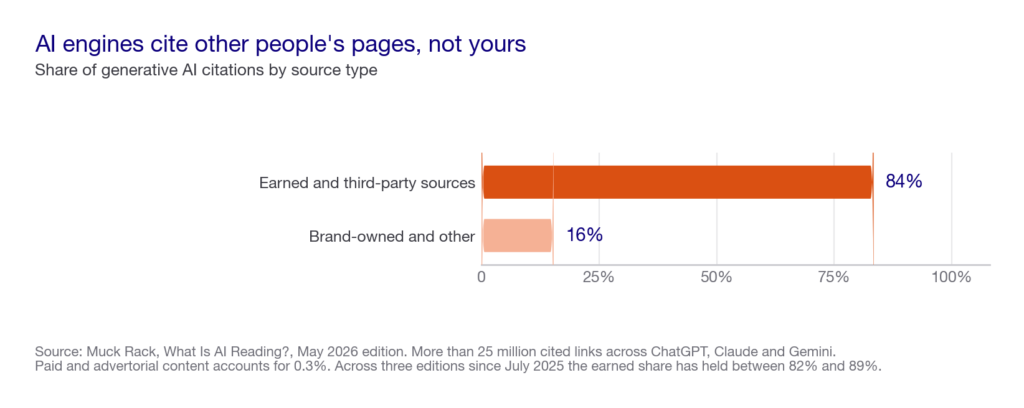
Third-party sources, for most brands. Muck Rack’s May 2026 study of more than 25 million cited links found earned media accounts for 84 percent of AI citations, against 0.3 percent for paid and advertorial (Muck Rack, May 2026). Your site still needs to be retrievable and accurate.
You may not need an agency for this
The answer that costs us the sale. In practice, Perplexity publishes its sources, so the auditing genuinely is something you can do yourself in an afternoon. If your gap turns out to be a handful of category roundups that do not mention you, you do not need an agency yet. So that is a PR problem you can brief directly, not a retainer. For that reason, hire a partner when the gap is structural and sustained, not when it is three articles.
Where to go next
Before you shortlist anyone, spend twenty minutes with Perplexity and your own buyer questions. So read the citations. In practice, you will learn which sources decide your category. At the same time, whether your problem is that you are absent or that someone else is being cited in your place.
Those are different problems with different price tags.
See where you show up · Book a growth audit
Sources and further reading
- Perplexity crawler documentation and user-agent behaviour, summarised in our PerplexityBot guide.
- Muck Rack, “What Is AI Reading?”, May 2026 edition. More than 25 million cited links across ChatGPT, Claude and Gemini: earned media accounts for 84 percent of citations, paid and advertorial for 0.3 percent. Link
- Agency pricing and feature pages, checked 11 August 2026.
Latest Blogs
Yes, and it will not show up in your pipeline report. Those two statements are not in tension, they are the same fact stated twice. A survey of more than 1,000 B2B software buyers found 82% had sourced software recommendations from an AI chatbot in the last two years, and about half said AI mattered most when they were narrowing and comparing options. That is precisely the stage that produces no click. Meanwhile the conversion multiples circulating for AI traffic run from 22% better than organic to five times better, and the only peer-reviewed study says worse. Here is how to tell which is true for you.
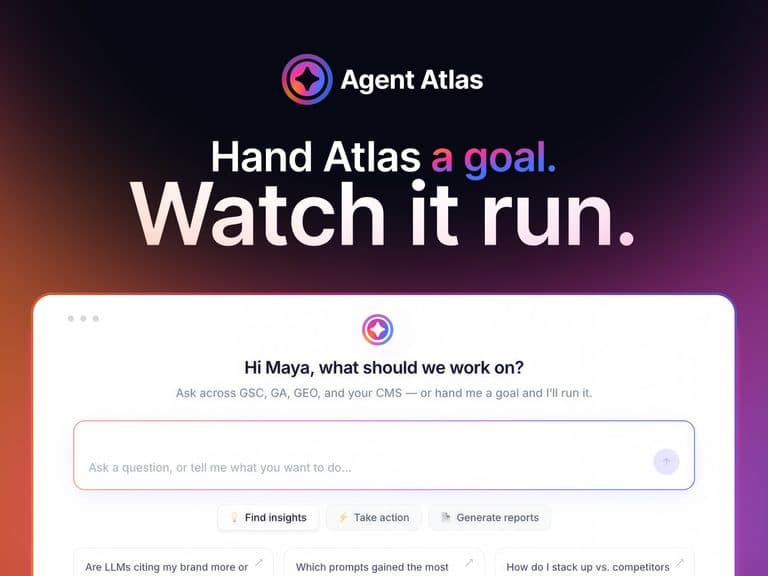
Agent Atlas is the chat-first layer of Pepper’s platform: you ask in plain language, it reasons across your connected sources, and it runs the work. Here is exactly what it does, and what V1 does not.
The short answer The fork is who the buyer is, and it changes everything about what you should be buying. Both are legitimate, and the wording problem underneath them is one we traced in AEO, GEO, AIO and LLMO explained. They are not swaps, and a list that ranks them together is comparing an Indian […]
Get your hands on the latest news!

Similar Posts
GEO / AI Search
17 mins read
GEO pipeline: does generative engine optimisation actually drive deals?
GEO / AI Search
11 mins read
What is Agent Atlas? The complete guide
GEO / AI Search
13 mins read