Top GEO agencies in 2026: the ranked shortlist
The short answer
Almost every list of top GEO agencies is a list of agencies that publish lists. Ours included. So the useful thing is not the ranking, it is the test you can run yourself in an afternoon.
Key takeaways
- The category has converged. Nearly everyone now claims measurement plus execution, so features no longer separate these firms. What separates them is whether they do off-site authority work and who actually does the work.
- Two firms publish pricing: Draft.dev from $9,000 a month and GrowthX at $6,000. Everyone else quotes custom, which is worth noticing when you compare claims.
- Google settled the definitional argument in May 2026. AEO and GEO are part of SEO for Google, with no separate AI index. Fundamentals are the floor.
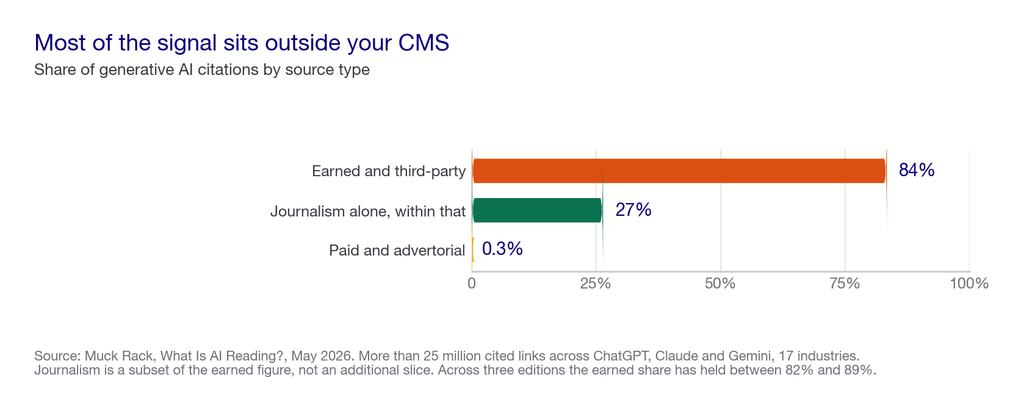
- 84 percent of AI citations come from earned sources, so any proposal that lives entirely in your CMS is priced for the wrong job.
- The honest ranking criterion is not who is best. It is who is best at the specific thing you are missing.
A note on where this comes from. We run organic for more than 250 enterprises at Pepper and track over 10 million prompts across every major engine. Also, this is shaped by that, by weekly client reviews, and by conversations with operators at the events we run. It is our read on the category, not a neutral directory, and we are on the list.
What is a GEO agency?
A GEO agency structures your content, entities and third-party authority so generative engines cite your brand when buyers ask about your category. Generative Engine Optimization is the practice of earning those citations across ChatGPT, Perplexity, Gemini, Claude and Google AI Overviews.
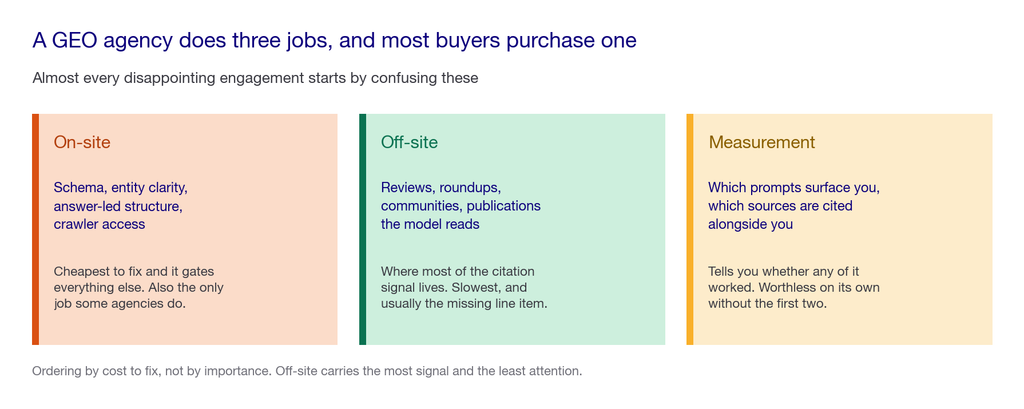
The work divides into three jobs. In addition, almost every disappointing engagement comes from buying one and assuming you bought all three.
There is on-site work: schema, entity clarity, answer-led structure, crawler access. There is off-site work: the reviews, roundups, communities and publications a model reads when deciding who to name. And there is measurement: which prompts surface you. That sources get cited alongside you, and whether any of it reaches pipeline, which our note on AI visibility scores covers further.
An agency doing only the first is doing technical SEO with a new label.
Is GEO actually different from SEO?
Worth settling, because half this category’s marketing depends on the answer being yes.
In May 2026 Google published its first official guidance on optimising for its AI features and filed it under SEO fundamentals. Its position is direct: AEO and GEO are part of SEO, AI Overviews and AI Mode run on the core Search ranking systems. What is more, there is no separate AI index or AI ranking algorithm. The same guidance names llms.txt, content chunking and AI-specific rewrites as things site owners can stop doing.
We think that is correct and incomplete. It is correct about Google. But Muck Rack’s May 2026 study of more than 25 million cited links found ChatGPT carries a citation in 96 percent of responses, Gemini in 82 percent and Claude in just 55 percent (Muck Rack, May 2026). Those are not the same surface, and a single blended visibility number averages away the difference.
So the honest position: fundamentals are the floor, the engines diverge above it. In addition, any agency whose pitch contradicts Google’s published guidance owes you an explanation.
See where you show up. Pepper’s GEO platform tracks Brand Visibility, Domain Prompt Presence and Share of Voice across all five engines. Equally, a growth team works the account alongside you. Book a growth audit or see where you show up.
Where the answer actually gets decided
The same Muck Rack study found earned media accounts for 84 percent of AI citations, with paid and advertorial content at 0.3 percent and journalism alone at 27 percent. Across three editions since July 2025 the earned share has held between 82 and 89 percent.
Read that against a typical proposal. If the entire scope is publishing on your own domain, it is addressing the minority of the signal. That single number is the fastest way to sort serious operators from content vendors with a new deck.
Our methodology: how we ranked them
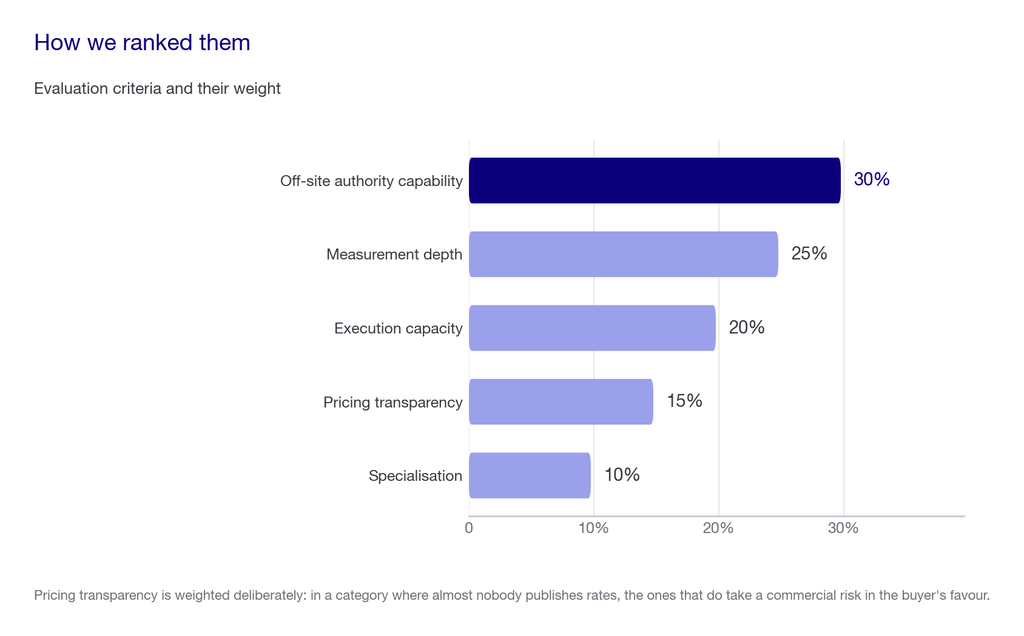
Applied to what each firm publishes on its own site, checked on 24 August 2026, rather than to another roundup.
| Factor | Weight | What we looked for |
|---|---|---|
| Off-site authority capability | 30% | A route into the sources that decide categories, not just a CMS plan |
| Measurement depth | 25% | Cited URLs, competitors and share of voice per engine, not one blended score |
| Execution capacity | 20% | Whether the work happens, or you receive a prioritised list |
| Pricing transparency | 15% | Published rates, because gated pricing makes comparison impossible |
| Specialisation | 10% | Depth in a category, since specialists tend to win the answer |
Pricing transparency carries real weight here deliberately. In a category where almost nobody publishes rates, the firms that do are taking a commercial risk in the buyer’s favour. In addition, that tells you something.
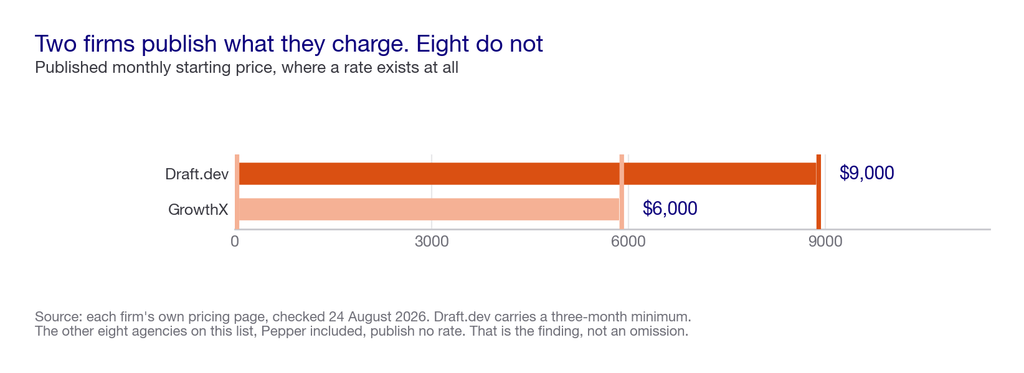
What we could not verify. Rates for most of this list, and outcome claims generally. Agencies rarely publish citation-level results, so treat every capability statement here, ours included, as something to test.
The shortlist at a glance
| Agency | Best known for | Model | Published pricing |
|---|---|---|---|
| Draft.dev | Developer tools content at depth | 300+ engineer-writers | From $9,000/mo, 3-month min |
| GrowthX | Website as the source AI answers draw on | GrowthOS platform | $6,000/mo |
| Omniscient Digital | Content tied to pipeline | Managed service | Not published |
| Animalz | Editorial quality in B2B SaaS | Agency plus Revive tool | Not published |
| TripleDart | Full-funnel B2B tech | Agency plus Slate platform | Not published |
| Intero Digital | Regulated sectors, multi-channel | Agency, GRO framework | Not published |
| Omnius | Technical GEO and LLMO | Boutique plus Atomic tracker | Not published |
| Minuttia | Established SaaS above $10M ARR | Boutique, strategy-first | Not published |
| First Page Sage | Enterprise clients, GEO as a named service | Agency | Not published |
| Pepper | Organic run as a function | Platform plus growth team | Not published |
The shortlist
1. Pepper
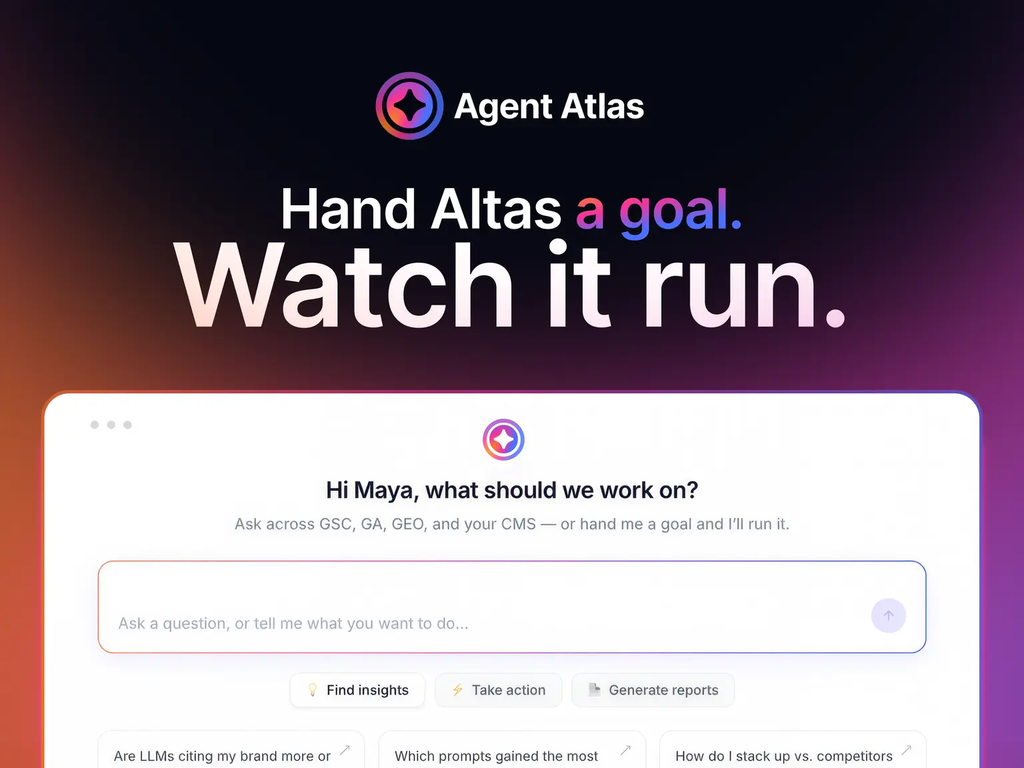
Pepper is an agentic organic growth engine. Atlas is the platform underneath. In addition, it works two ways: your team can log in, connect Search Console and GA4, define competitors and personas, manage the prompt set and build and run your own agents in the Agent Atlas, while a growth team works the same account alongside you. Agents for scale, experts for judgement, one team accountable for the number.
We work the three levers of Visibility, Citability and Retrievability and report Brand Visibility, Domain Prompt Presence and Share of Voice across ChatGPT, Perplexity, Gemini, Claude and Google AI Overviews. The gap between the first two is the diagnostic most teams never see: named often, cited rarely.
The evidence, since capability claims are cheap. At SalesHood, AI Overview visibility went from 14 keywords to 97, blog impressions from 200,000 to 417,000. Also, rich results grew 291 percent in five months while clicks rose 20 percent against an industry decline. At Apollo 24/7 we built digital presence for 400 doctors and produced 200 doctor-authored articles, with organic traffic up 200 percent and organic revenue up 177 percent. At Acceldata, organic traffic grew sixfold and top-three keywords went from 85 to over 300.
Eight years, 250 plus enterprises, more than 10 million tracked prompts.
Where we are not the answer: we do not publish pricing. As a result, budget discovery is a conversation rather than a page. We sell organic only, so if you want one partner across paid and lifecycle this is the wrong shape. And we work on annual, outcome-pegged engagements. That suits teams treating organic as a long-term function and suits nobody running a one-quarter test.
2. Draft.dev
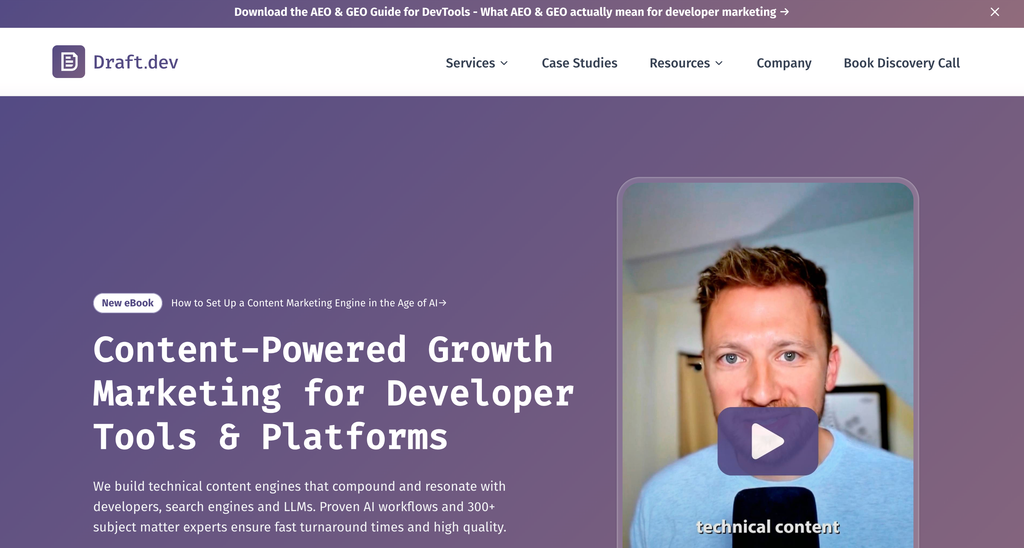
Built exclusively for developer tools and platforms, with a network of more than 300 vetted engineer-writers whose work is reviewed by subject matter experts and technical editors. Published clients include Docker, Cloudflare, Supabase, JetBrains and Auth0. It publishes an AEO and GEO guide for devtools. As a result, aI search is not an afterthought, and it publishes pricing from $9,000 a month with a three-month minimum.
Where it gets thin: the output is content. Beyond that, the site does not name which engines it tracks or how citation measurement works. If you need per-engine visibility reporting, that is a separate purchase. It is also devtools only, so most readers of this list are out of scope.
3. GrowthX
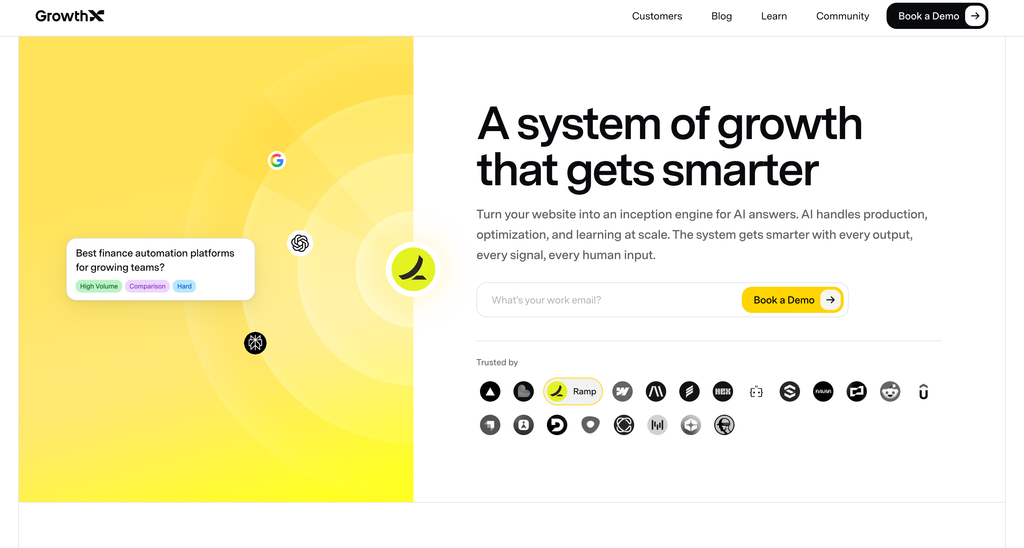
GrowthX sells GrowthOS, a subscription platform rather than a service, built around treating your website as the source AI answers draw on. It covers visibility planning, tracking and citation monitoring across Google, ChatGPT, Claude and Perplexity, is explicitly built for marketers rather than engineers. In addition, publishes pricing at $6,000 a month.
The limitation is the premise. Centring your own site understates how much of the answer is decided elsewhere. That the 84 percent figure above makes plain. It is also a platform, so someone internally has to drive it.
4. Omniscient Digital
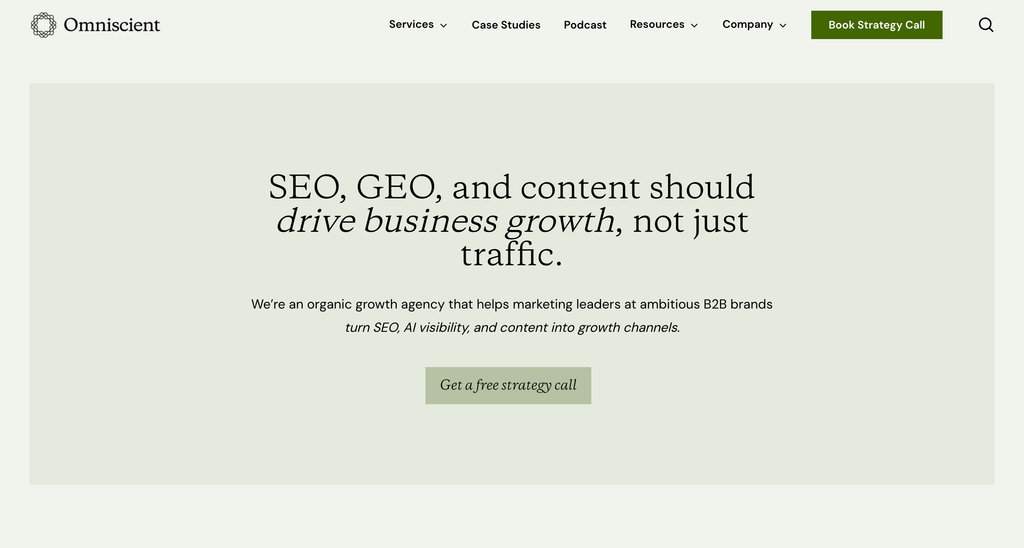
Founded in 2019 in Austin, Omniscient originated the Barbell Content Strategy, pairing high-intent conversion content with long-form thought leadership. On top of that, ties content to pipeline rather than traffic. That measurement orientation is genuinely uncommon and it survives a CFO conversation better than most.
It is a managed service with no platform layer. As a result, your view of the work depends on their reporting cadence rather than a system you can query, and it is a generalist across B2B software.
5. Animalz
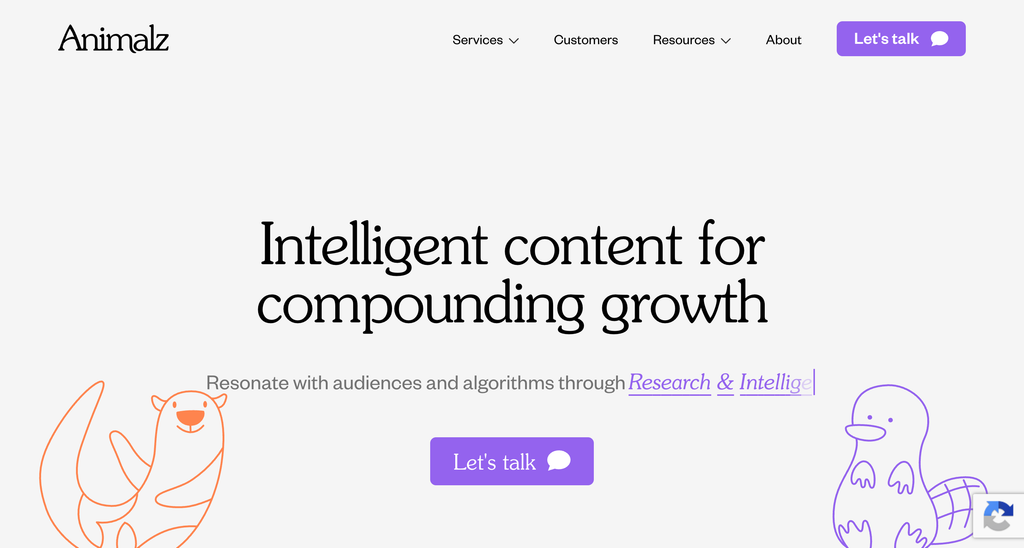
Animalz describes itself as a content marketing and SEO agency for leading B2B SaaS brands, sells Answer Engine Optimization as a named service. In addition, has a content refresh tool called Revive. Published clients include Airtable, Amplitude and Intercom. If your category is won on ideas, the editorial standard here is the highest on the list.
The question is whether editorial quality is your gap. If you are absent from the roundups and comparison sites that decide your category, a better essay does not fix it.
6. TripleDart
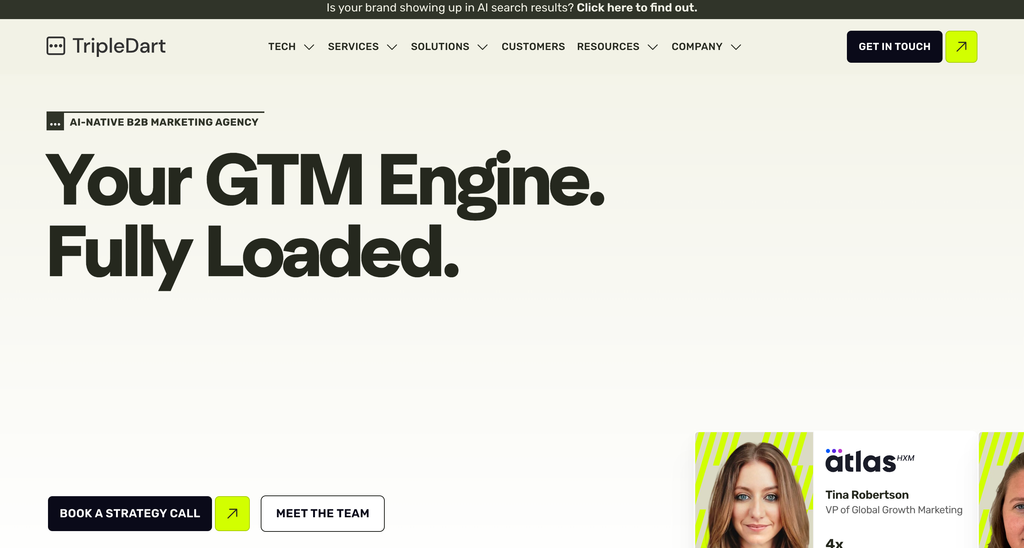
B2B tech exclusive, running GEO through Slate, its own platform, covering content structuring, schema and prompt testing across buying scenarios, with named practices spanning fintech, dev tools, HR tech and security. Good if you want one partner across the whole funnel.
The trade is focus. Full-funnel means organic competes internally with paid and lifecycle, and specialists tend to win the answer in a given category.
7. Intero Digital
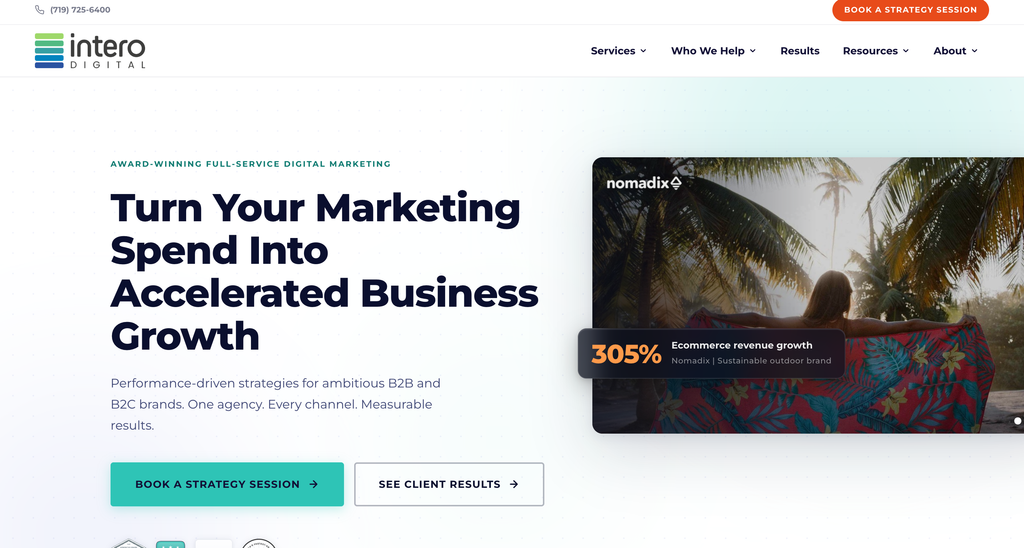
Founded in 1996, Intero formalises its AI search work as Intero GRO, its own framework, and runs it across channels. It names cybersecurity, healthcare and fintech. That puts it in the small group claiming regulated depth rather than learning it on your account.
Its public case studies lean toward broader SEO wins rather than engine-level citation gains. As a result, ask for evidence specific to AI visibility. Large multi-channel agencies also mean more layers between you and the work.
8. Omnius
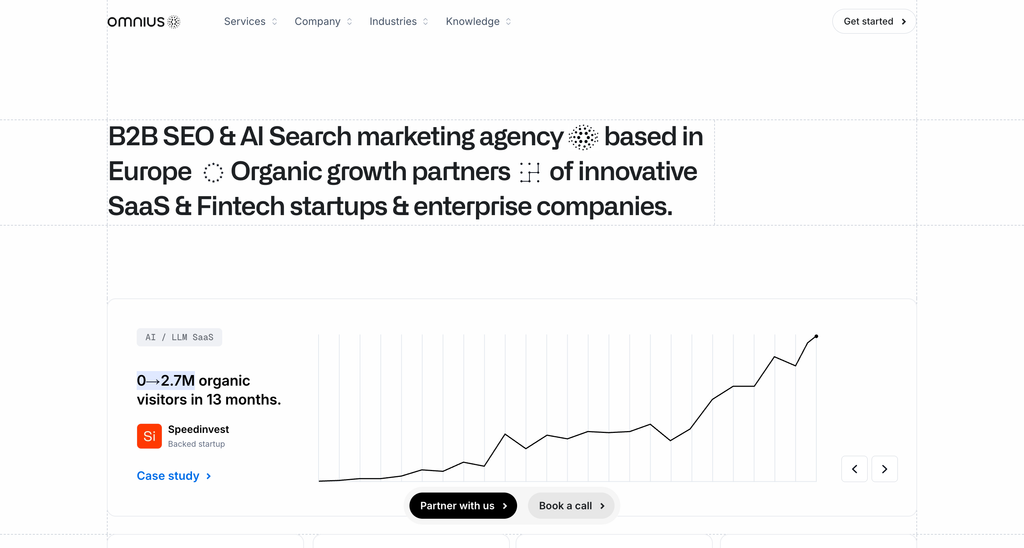
A boutique focused on B2B SaaS and fintech, built around technical GEO and LLMO, with its own tracker called Atomic. The emphasis is crawlability, entity clarity and citation tracking rather than volume. That suits a team that already produces good content.
Less editorial firepower, and a European base that may matter for US-specific regulatory questions. If your content itself is the weak link, this is the wrong starting point.
9. Minuttia
SaaS and tech specific, built for companies past roughly $10 million in ARR, strategy-first with integrated content and AEO. Suits an established company that wants a senior partner rather than an execution vendor.
Boutique capacity limits how fast it scales, and the ARR threshold rules out earlier-stage teams.
10. First Page Sage
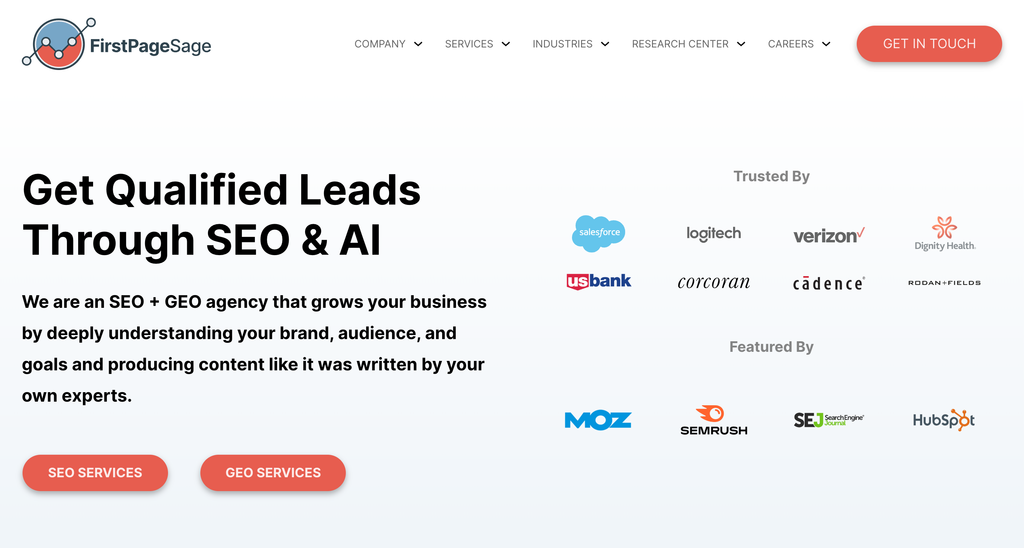
Describes itself as an SEO and GEO agency, selling both as named services rather than treating GEO as an add-on, with an enterprise and mid-market client list including Salesforce, Verizon, US Bank and Dignity Health.
It publishes no engagement model, no volume expectation, no pricing, no vertical specialism and no engine coverage. That is a lot to establish in a first call. Similarly, it is the main reason it sits where it does here rather than higher.
What GEO agencies cost
| Shape of engagement | Typical range | What it buys |
|---|---|---|
| Tracking platform only | $99 to $1,500 a month | You read the data and act yourself |
| Platform with published pricing | $6,000 a month, per GrowthX | A system to run, internal capacity assumed |
| Specialist content engine | From $9,000 a month, per Draft.dev | Expert-written content at volume |
| Specialist GEO retainer | $3,000 to $8,000 a month | The common mid-market shape |
| Organic run as a function | Custom, usually annual | Strategy, execution and accountability |
The number matters less than what it buys. Ask what share of the fee goes to [off-site authority](https://www.pepper.inc/blog/how-to-get-cited-in-llms/), because that is where most of the citation signal lives and it is the line item most commonly missing.
How to choose a GEO agency
Most shortlists get decided on deck quality and logo walls, which measure sales capability rather than delivery. Here is what I would actually do.
Start with the framing above: Google says AEO and GEO are part of SEO with no separate index. In addition, the engines still diverge above that floor. Hold both.
The scorecard I would use
Score each firm out of 100 before the pricing conversation, not after.
| Area | Weight | What a strong partner should demonstrate |
|---|---|---|
| AI visibility measurement | 25% | Tracks brand mentions, cited URLs, competitors and share of voice across a real prompt set, per engine, with history rather than a screenshot |
| Off-site authority | 25% | Can name the ten to twenty sources deciding your category and describe how they get you into them |
| Content and technical execution | 20% | Will change architecture, entity clarity, schema and structure themselves rather than handing over recommendations |
| Query and demand intelligence | 15% | Knows what your buyers ask across the funnel and can show where you are absent |
| Business attribution | 10% | Connects visibility to traffic and pipeline instead of stopping at citation counts |
| Pricing clarity | 5% | You can forecast what this costs at your volume |
The single most useful hour in the process, and it costs nothing. Give each shortlisted firm 20 to 30 real commercial questions your buyers ask. Not branded ones. Things like “best enterprise content marketing platforms”, “best alternatives to our closest competitor”, “which platform should I use for this use case” and “how should a company like ours improve visibility in ChatGPT”.
Then ask for five answers: where do we appear. That competitors appear instead, which sources are influencing those answers, why are those sources winning, and what would you change in the first 90 days.
That last question is where the field thins. Plenty can produce the data. Very few can answer the fifth with anything beyond “publish more”.
Ask for two runs on different days. Engines are probabilistic, so one run on one engine establishes nothing.
The weak playbook against the strong one
The weaker sequence: find prompts, rewrite blogs, add FAQs, add statistics, hope for a citation. It is cheap to sell and it plateaus in about a quarter.
The stronger sequence: demand intelligence. Then technical discoverability, then entity and brand authority, then content, then earned-media authority, then distribution, then visibility measurement, then revenue attribution.
The difference matters because generative engines synthesise an answer from several sources rather than ranking one page. Being retrieved, being cited and actually influencing the answer are three different things worth measuring separately.
Red flags
- “We guarantee citations” or guaranteed rankings. Nobody controls the output, and Google warns against exactly this.
- The whole proposition is a dashboard. It shows the gap. Someone still has to close it.
- Branded prompts only. Your own name surfaces your own brand.
- One engine. Winning ChatGPT and vanishing on AI Overviews is winning by luck.
- Hundreds of AI-generated articles. The tactic Google’s guidance warns against directly.
- No stated method for choosing the prompt set. Then the reporting is arbitrary.
- Citation counts with no competitor share of voice. Your number rising while a competitor rises faster is a loss reported as a win.
- No technical, digital PR or execution capability. Then they are a research vendor, whatever the deck says.
The five questions I would spend the meeting on
- “Show me exactly how you measure GEO visibility.” Real prompts, competitors, cited URLs, engines and movement over time.
- “Take one query where a competitor beats us and explain why.” This separates people who understand retrieval and source authority from people reselling software.
- “What will you actually change?” Look for technical, owned content and earned authority. If it is only blog production, most of the job is missing.
- “How will you prove this reached the business?” Should travel through branded demand and pipeline, not stop at a visibility percentage.
- “Which part of your methodology do you expect to be obsolete in twelve months?” A thoughtful answer beats a confident one.
Reduced to one principle, it comes down to this: choose the partner that treats GEO as a measurable growth system, not a new name for content services.
One honest closing note. Very few firms are equally strong across measurement, execution, earned authority and attribution, ours included. The good ones will tell you which is their weakest without being asked. As a result, if a firm claims excellence across all four, you have learned something about how they answer questions.
What nobody should promise you
A guaranteed position or citation in an AI answer. Nobody controls the output.
A single composite AI visibility score sold as a ranking. Ask a model the same question repeatedly and the answers move. Brand Visibility, Domain Prompt Presence and Share of Voice across a fixed prompt set over time are real numbers. One screenshot is not.
A universal benchmark. There is no good number that holds across categories: 30 percent visibility might be excellent in a fragmented market and poor in a concentrated one. Track the trend and the category leader instead.
And clean attribution from citation to closed revenue. Every link in the chain is observable, but it is not a straight line.
You may not need an agency at all
The answer that costs us the sale. If your category has fewer than roughly 30 meaningful monthly buyer prompts, or nobody internally has capacity to act on what a partner finds, you do not need a GEO agency yet. Spend the money on earned media and on fixing your own pages, and revisit in two quarters. Hiring someone to generate findings nobody can action is the most expensive way to learn that lesson. What is more, we have watched companies do it.
Frequently asked questions
What is a GEO agency?
A GEO agency structures your content, entities and third-party authority so generative engines cite your brand. The work spans on-site schema and structure, off-site authority in the sources models trust, and citation tracking across multiple engines.
How much do GEO agencies charge in 2026?
Most quote custom. Two publish rates: Draft.dev from $9,000 a month with a three-month minimum, and GrowthX at $6,000 monthly. Specialist retainers commonly run $3,000 to $8,000, and enterprise programmes higher.
Is GEO different from SEO?
For Google, no. Its May 2026 guidance states AEO and GEO are part of SEO, that AI Overviews run on core Search ranking systems. In addition, that there is no separate AI index. Across other engines the practical work diverges.
How long does GEO take to work?
Structural fixes often move within four to eight weeks. Earned authority compounds over three to six months and longer in contested categories. Anyone promising results in two weeks is describing luck.
How do I tell a real GEO agency from a rebranded SEO shop?
Ask what share of the scope is off-site. Since 84 percent of AI citations come from earned sources, a proposal living entirely in your CMS is addressing the minority of the signal, whatever it is called.
Should I hire an agency or build in-house?
It depends which of the three jobs you are missing. Buy measurement if you lack visibility, execution if you have findings you cannot action. Equally, authority if you are absent from the sources that decide your category. Our comparison of tool versus agency versus platform goes deeper.
Which AI engines should we track?
Track them separately rather than blended. Muck Rack found ChatGPT carries a citation in 96 percent of responses, Gemini 82 percent and Claude 55 percent. As a result, one number hides very different performance.
What should we fix before hiring anyone?
Crawler access for AI user agents, structured data on key pages, accuracy of product claims. In addition, a written list of the 50 to 100 prompts your buyers actually ask. All internal time rather than licence fees.
Where to go next
Before shortlisting anyone, run the audit yourself. Twenty buyer questions, three engines, read the citations. You will learn which sources decide your category and whether your problem is absence or displacement.
Those are different problems with different price tags. Beyond that, knowing which one you have is worth more than any ranking, including this one.
Book a growth audit · See where you show up
Sources and further reading
- Google Search Central. First official AI search optimisation guidance, published 15 May 2026, filed under SEO fundamentals.
- Muck Rack. “What Is AI Reading?” May 2026 edition. More than 25 million cited links across ChatGPT, Claude and Gemini, 17 industries. Link
- Pepper. SalesHood, Apollo 24/7 and Acceldata case studies. Metrics as published on each page.
- Agency claims and pricing taken from each firm’s own website, checked 24 August 2026.
Latest Blogs
Is Google sending less traffic than before? On queries where AI features appear, yes, and a randomised experiment published in August 2026 puts the effect at 18.8 percentage points of click-through. Across a whole site the picture is much softer, because most queries do not trigger those features and impressions have grown. The traffic is also not migrating to AI engines, which still account for under 1% of referrals. This article ranks every 2026 study by how well it identifies the effect, rather than by how large its headline is.
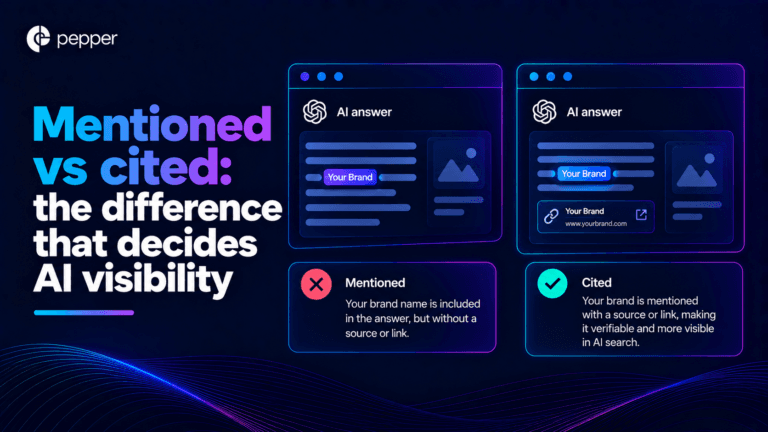
Mentioned vs cited is the distinction most AI visibility reporting collapses, and the data says it should not. Across 3,981 brand appearances studied in June 2026, 61.7% were citations with no brand name in the answer, 25.1% were names with no citation, and only 13.2% were both. The split also inverts by engine: Gemini named brands in 83.7% of appearances but cited sources in 21.4%, while ChatGPT did almost the opposite. A single visibility score averages two different things across engines that behave in opposite ways.
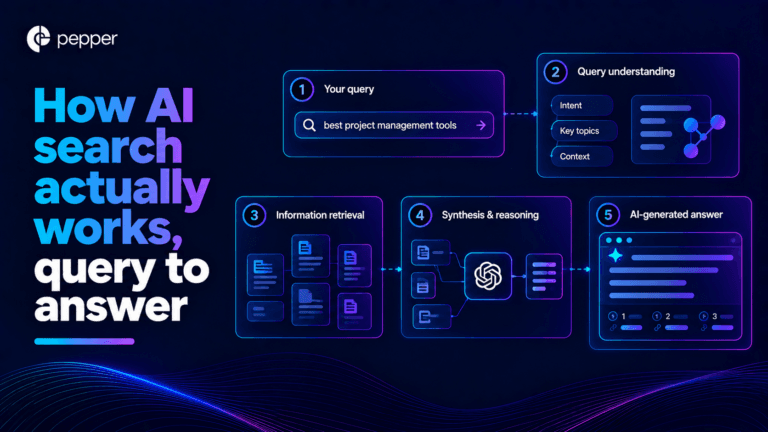
How AI search actually works is usually described as a tidy pipeline: you ask, it searches, it reads, it answers, it cites. Each of those five stages behaves differently from the description. In one 2026 pilot the engine searched the web on only 42% of buying prompts. When it did search, it ran an average of 6.3 queries nobody wrote. And in a 2,100-question evaluation across six chatbots, retrieval rather than reasoning drove more than 70% of all errors. This article walks the real pipeline and marks what breaks at each step.
Get your hands on the latest news!

Similar Posts
GEO / AI Search
15 mins read
Is Google sending less traffic than before? What the data actually shows
Artificial Intelligence
15 mins read
Mentioned vs cited: the difference that decides AI visibility
GEO / AI Search
16 mins read