
Being cited and recommended in Google and AI answers

Organic Growth /
Digital PR, link building & off-page SEO
Digital PR agency for link building and off-page SEO
Known by the sources you keep. Pepper's digital PR services get your brand mentioned, cited and linked on the third-party sites your buyers and AI models already trust. PR services, white-hat link building and off-page SEO, run from one map of the sites that get cited for your category. A model answering a question reads those sites before it reads you, and this is the phase that decides what it finds there.
What is digital PR?
Digital PR is the work of earning mentions, citations and links for a brand on third-party websites: industry publications, analyst and review sites, directories, expert commentary and Wikipedia where the subject qualifies. It covers finding which sites matter for a category, pitching stories and commentary to them, keeping listings accurate, and tracking which placements get cited when a search engine or an AI model answers a buying question.
What changed with AI search is what a placement is for. ChatGPT, Gemini, Claude, Perplexity, Microsoft Copilot and Google AI Overviews read the page itself and repeat what it says about you, whether or not it links to you.
What is off-page SEO, and where does link building fit?
Off-page SEO is everything done away from your own website to build its authority: earned links, brand mentions, directory listings and expert coverage. Link building is the part of off-page SEO that earns links from other sites to yours.
Classic link building counts links. Our off-page SEO services count something else as well: whether the site that links or mentions you is one Google and AI models actually cite for your category. A digital PR agency earns those placements through stories; a link building agency usually earns them through outreach. We do both, from the same list.
Pepper runs this as a service aimed at Earned Authority: the durable agreement, across the third-party sources a category's buyers and machines trust, about what problem a brand solves and why it is the answer. It sits off your domain, it cannot be bought, it compounds, and it decays if you stop.
Why do Google and AI answers cite someone else's page?
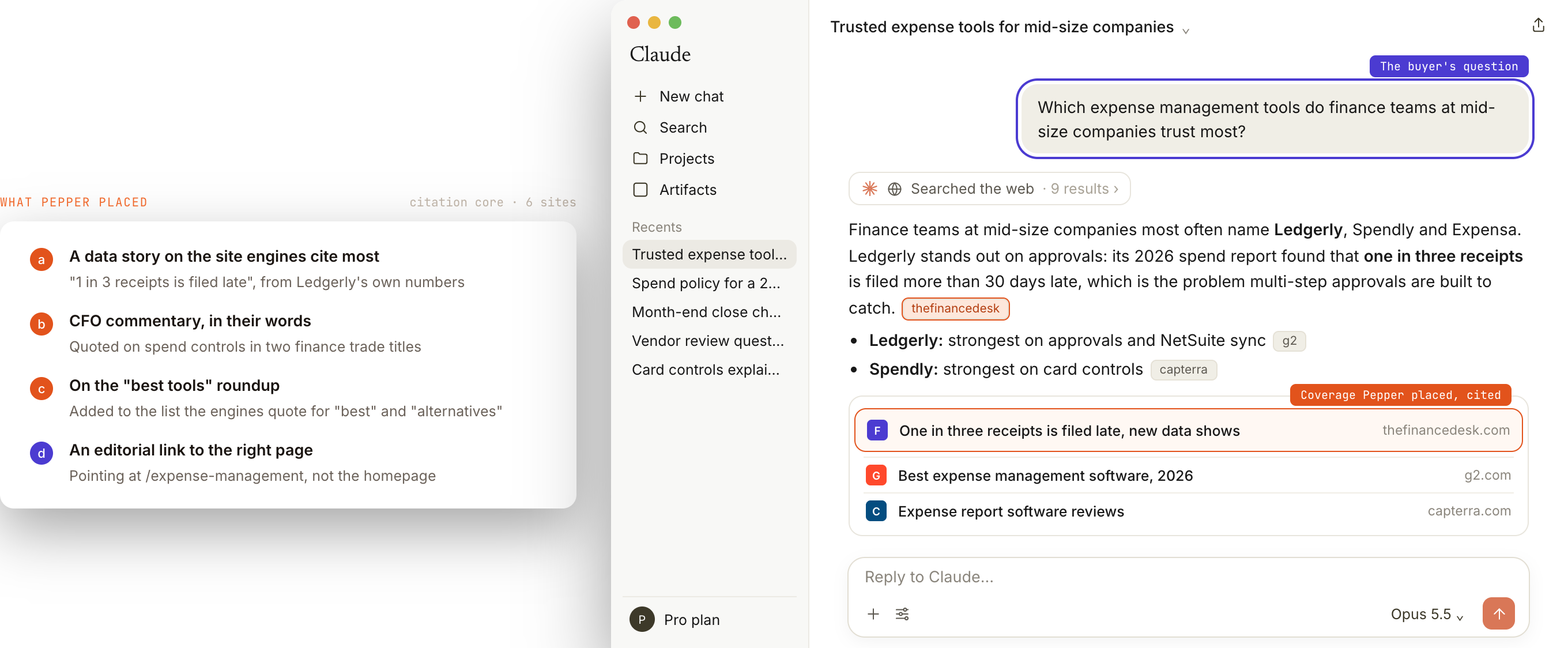
Read the sources under an AI answer about your category. A small number of sites come up again and again. We call that group the Citation Core: the small group of highly authoritative sites AI models consistently trust for an industry. If those sites do not mention you, or mention you without saying what you solve, the answer goes to a brand they do describe.

84%
of the citations in AI answers come from domains you do not own.
Source: Pepper Agent Atlas, [N] prompts across six engines, [month] 2026
01
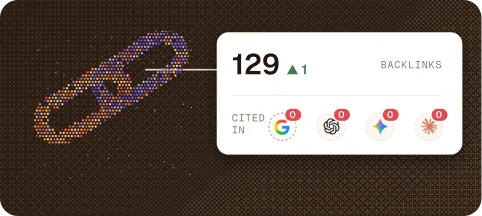
Links on sites no model reads
Outreach lands a link on a blog with no readers and no place in any answer. The count went up. Nothing a model reads has changed.
02
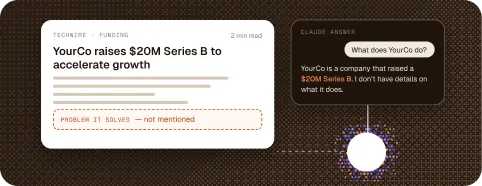
Press that names you and says nothing
The funding announcement names the company and never states the problem it solves. A model reading it learns that you exist, and nothing it can repeat.
03
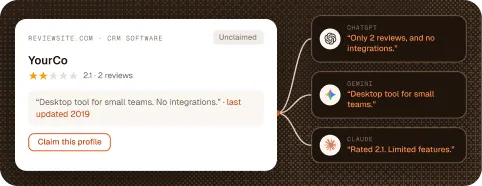
Review sites you have never claimed
G2 and the category equivalents carry an unclaimed profile with an old description and two reviews. Models cite these sites for "best" questions, and they cite what is there.
04
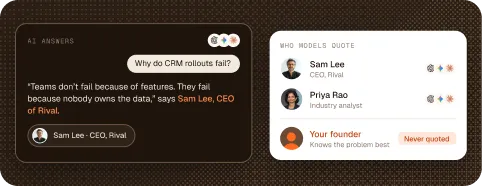
Nobody from your company has been quoted
Your founder knows the problem better than anyone, and no publication has quoted her. Models weight named people. Without one, there is nobody for the answer to attribute.
Our digital PR, link building and off-page SEO services
Five parts, one list of sites. Every engagement starts with a map of the sites models cite for your category, and that map decides where every story, listing and link goes.
01
Citation Core mapping
Which sites the answers come from, and who they mention.
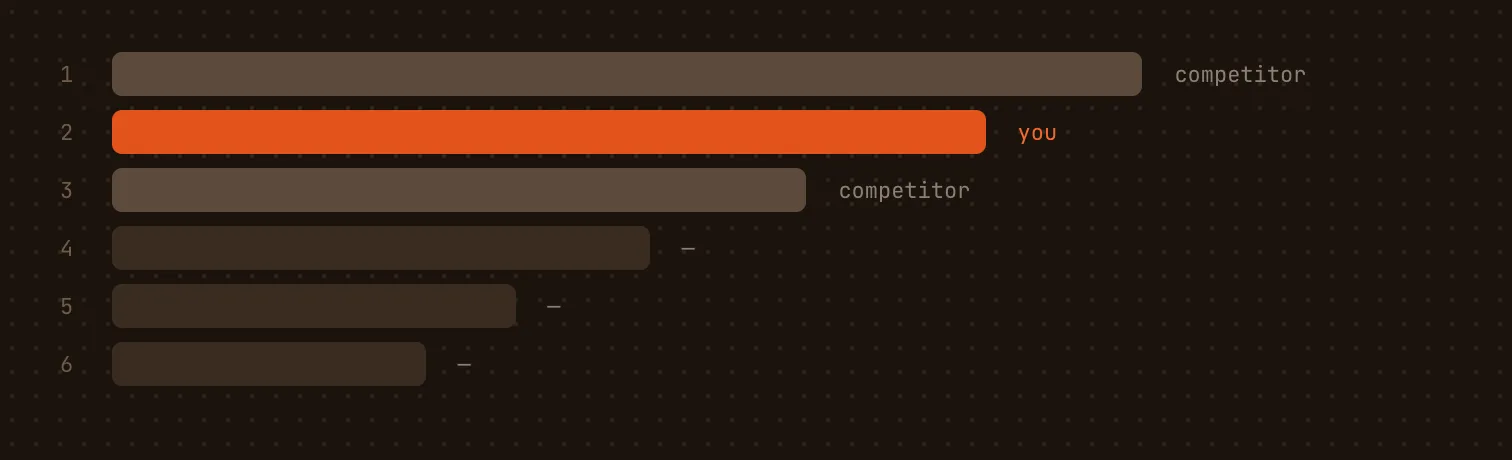
Citation Core map for your category: the sites cited in AI answers for your prompt set, ranked by how often they come up
Mention audit: which sites in the map mention you, which mention competitors, and what each says the brand solves
Gap list: the sites that cite your competitors and have never mentioned you. This is the pitch list
Message check against your website, so every pitch makes the same claim your own pages make
02
Digital PR services
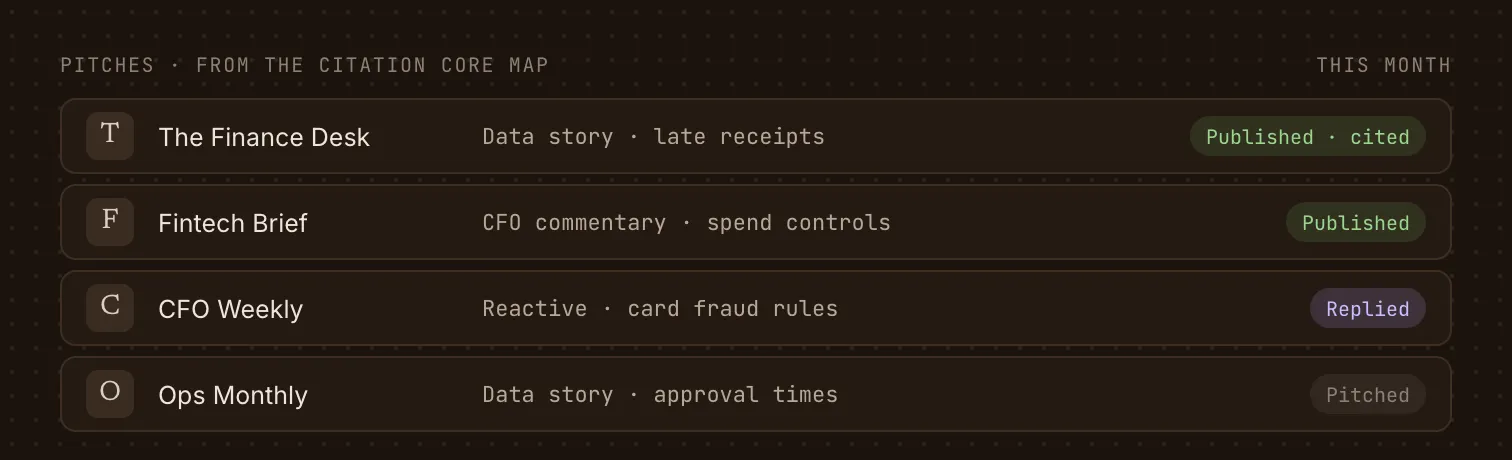
Stories and commentary, pitched to the journalists and editors on the map.
Data stories nobody else can write: built from your own numbers, or from research we run with you, because original data is what a model ends up citing.
Commentary from your people: your founder and experts quoted by name in the publications on your Citation Core, because models weight named experts.
Reactive pitching: commentary on the news your category is already covering, sent while the story is still being written.
One message in every placement: each pitch checked against your website, so the coverage describes the problem you solve the way your pages do.
03
Off-page SEO services
The listings a model reads when it answers "best" and "alternatives".
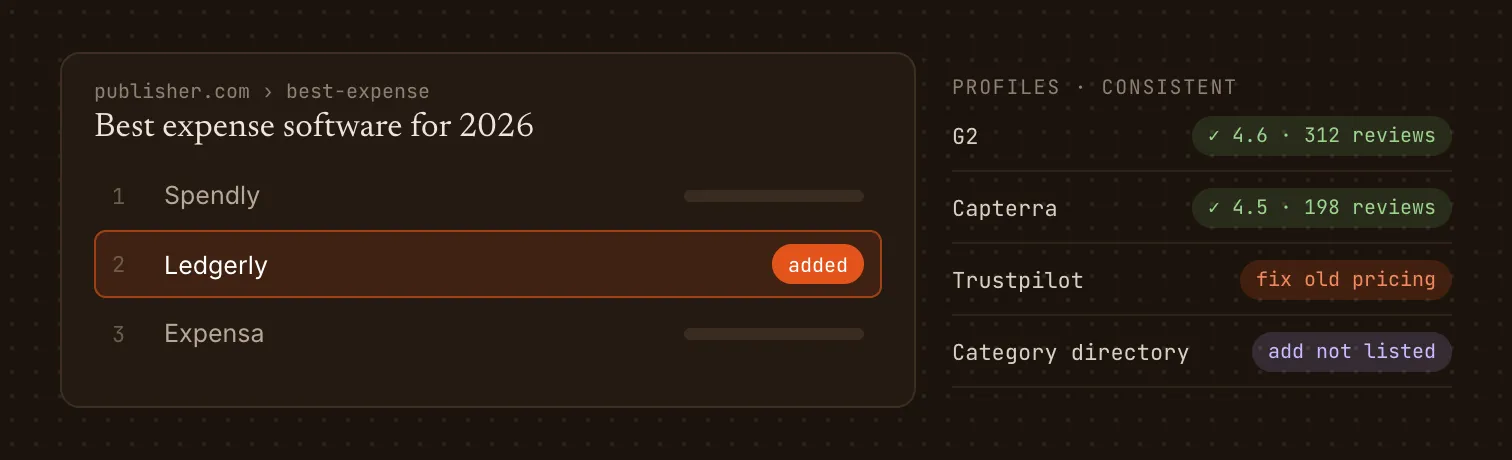
On the lists that get quoted: inclusion in the roundups, comparison articles and "best of" pages the engines cite for your category.
Review profiles claimed and current: G2, Capterra, Trustpilot and your category's own directories, complete and consistent with each other.
Wrong descriptions corrected: outdated pricing, features and positioning fixed on the third-party pages that still describe you.
Named where you should be: alternatives and comparison pages on other domains that list your competitors and leave you out.
04
Link building services
White-hat and editorial, from the same list, and tracked by what they do.
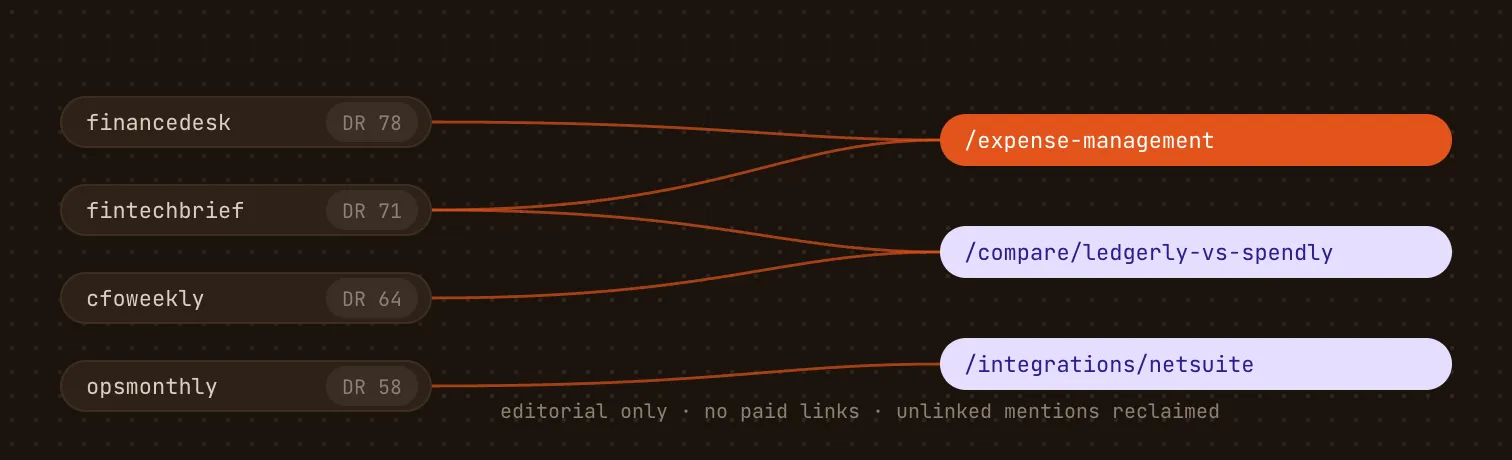
Editorial links only: earned from sites on your Citation Core map. No PBNs, no paid link packages, no automated outreach.
Pointed at the page that answers: links land on the comparison, pricing or product page you want cited, not just the homepage.
Mentions turned into links: unlinked mentions of your brand found and reclaimed.
Judged by what they do: each link tracked for referral traffic, rankings and whether the page it points to gets cited.
04
Measurement
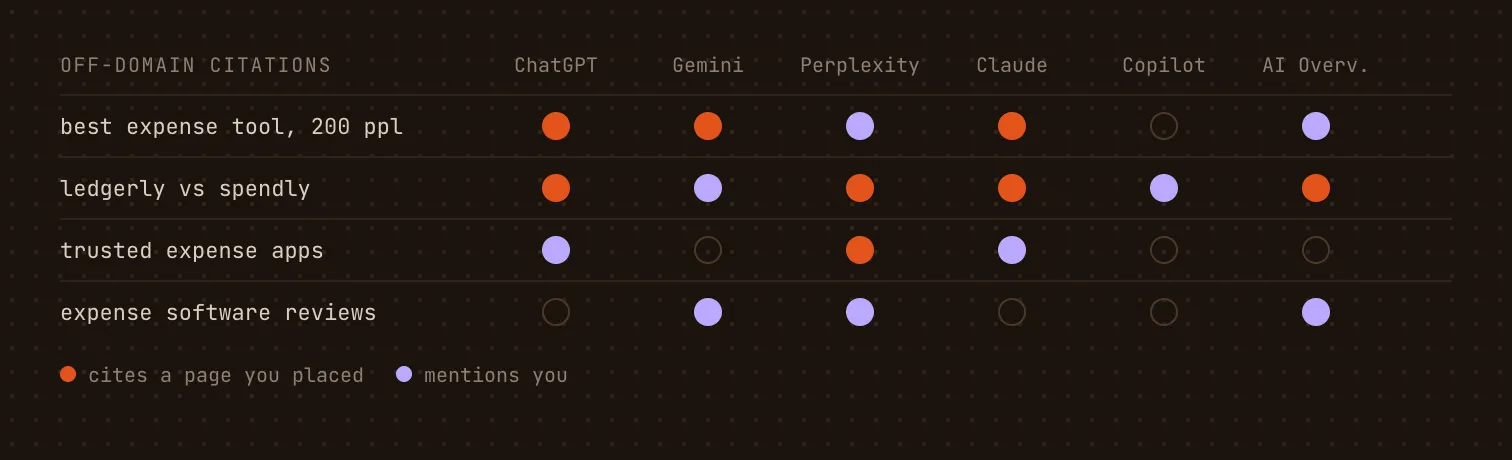
Mentions and citations off your domain, prompt by prompt.
Mentions across the map: every site on your Citation Core tracked for whether it names you, and what it says you solve.
Off-domain citations: which third-party pages that mention you get used in AI answers, prompt by prompt and engine by engine.
Answer Share against competitors: across your tracked prompts and over time, not a screenshot of one answer.
Placement to prompt: a monthly report linking each story, listing and link to the prompts it moved.
Digital PR vs traditional PR services vs a link building agency
Buyers usually compare us with one of two things: a PR agency they already use, or a link building agency that sells links by the month. Here is where each one is strong, and where ours is different.
TRADITIONAL PR AGENCY
LINK BUILDING AGENCY
Main goal
Reputation, launches, crisis
Backlinks and domain authority
Where coverage lands
Big-name and trade media
Any site that accepts outreach
What gets measured
Coverage volume, reach
Links built, DR/DA
Links
Incidental
The product
Off-page SEO
Not in scope
Links only
PEPPER DIGITAL PR
The sites AI models cite for your category
Off-domain citations per prompt, against a contracted number
Earned from the map, white-hat only
Links, mentions, reviews, directories and Wikipedia
Keep your PR agency. Many clients do, for corporate news, crisis and analyst relations. We share the map with them so both sets of placements say the same thing.

Where our digital PR and link building has landed
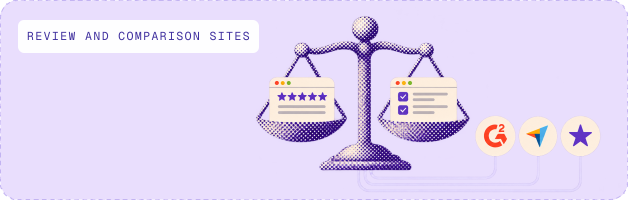
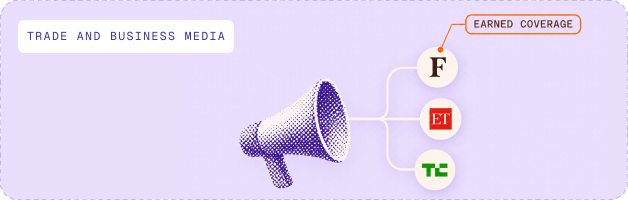
A sample of the publications, review sites and directories where client placements have run, each chosen because it is cited for the client's category.
How long digital PR and link building take to show
This is the slow phase. Placements land in months. Being the brand the trusted sites agree on takes a year, and we say so before you sign.
Weeks 1 to 3
The Citation Core map
You get the map, the message check against your website and the first month's pitches.
Months 1 to 3
First placements
The first placements usually land in the first quarter. The numbers move after the placements are crawled, so they lag the work.
Quarters two to four
The compounding
More of the sites in the map mention you, and say the same thing. This is where off-domain citations move, and it takes a year.
What digital PR will not do on its own: a citation from a trusted site does nothing if your own page says something different. Models look for agreement, which is why this phase comes after structure.
Who runs it: agents for scale, a PR lead for judgment
A prompt set checked weekly across six engines turns up hundreds of citing domains. Reading them is what the software is for. Writing a story an editor runs, and knowing which editor, is not.
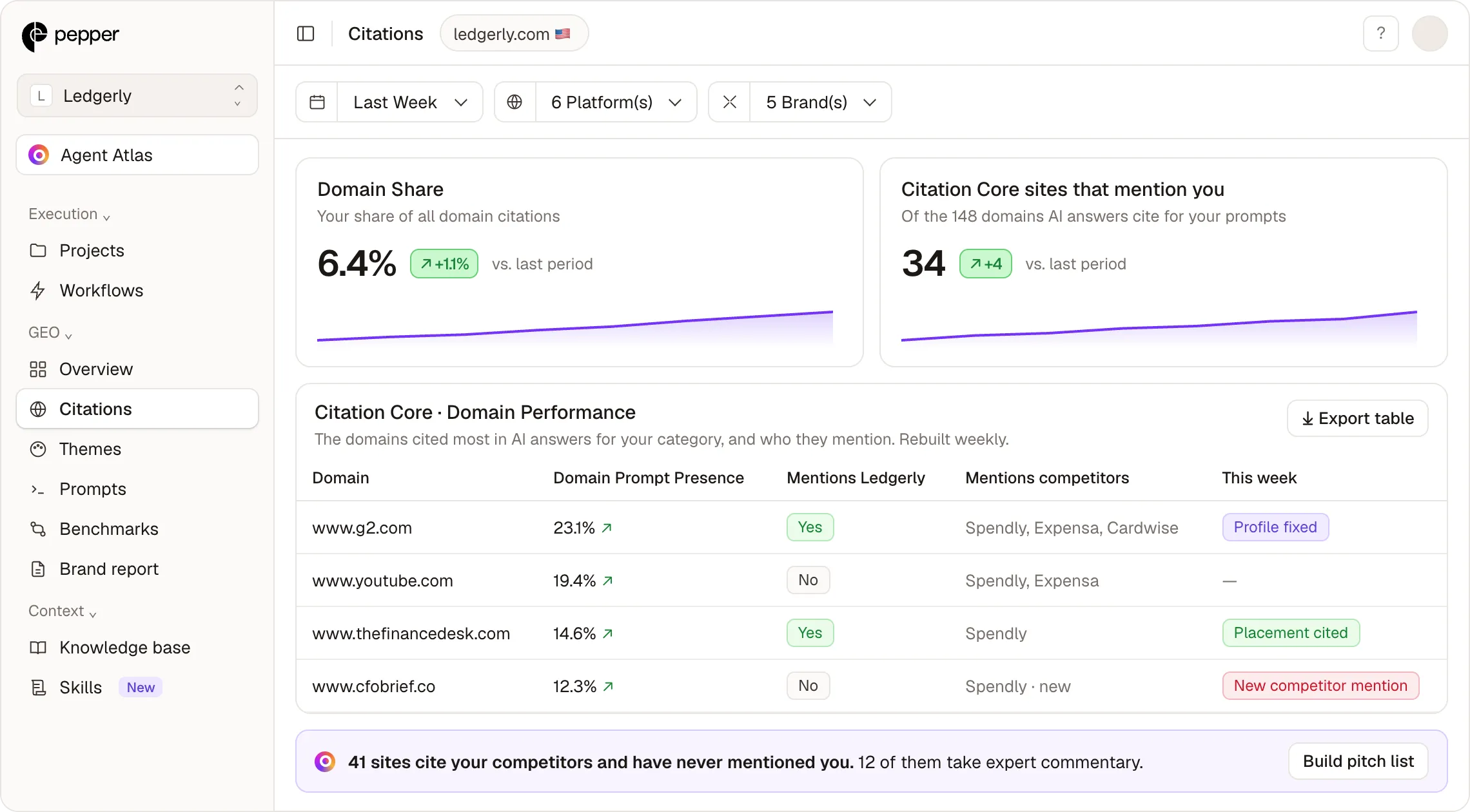
WHAT AGENT ATLAS RUNS
The map, kept current
Set up on your data during onboarding, then running underneath the pitching.
>
Rebuilds the Citation Core map weekly as the sources behind the answers change
>
Flags every new competitor mention on a site in the map
>
Tracks each placement for whether it gets cited, and for which prompt
>
Drafts data stories from your numbers for the PR lead to rewrite
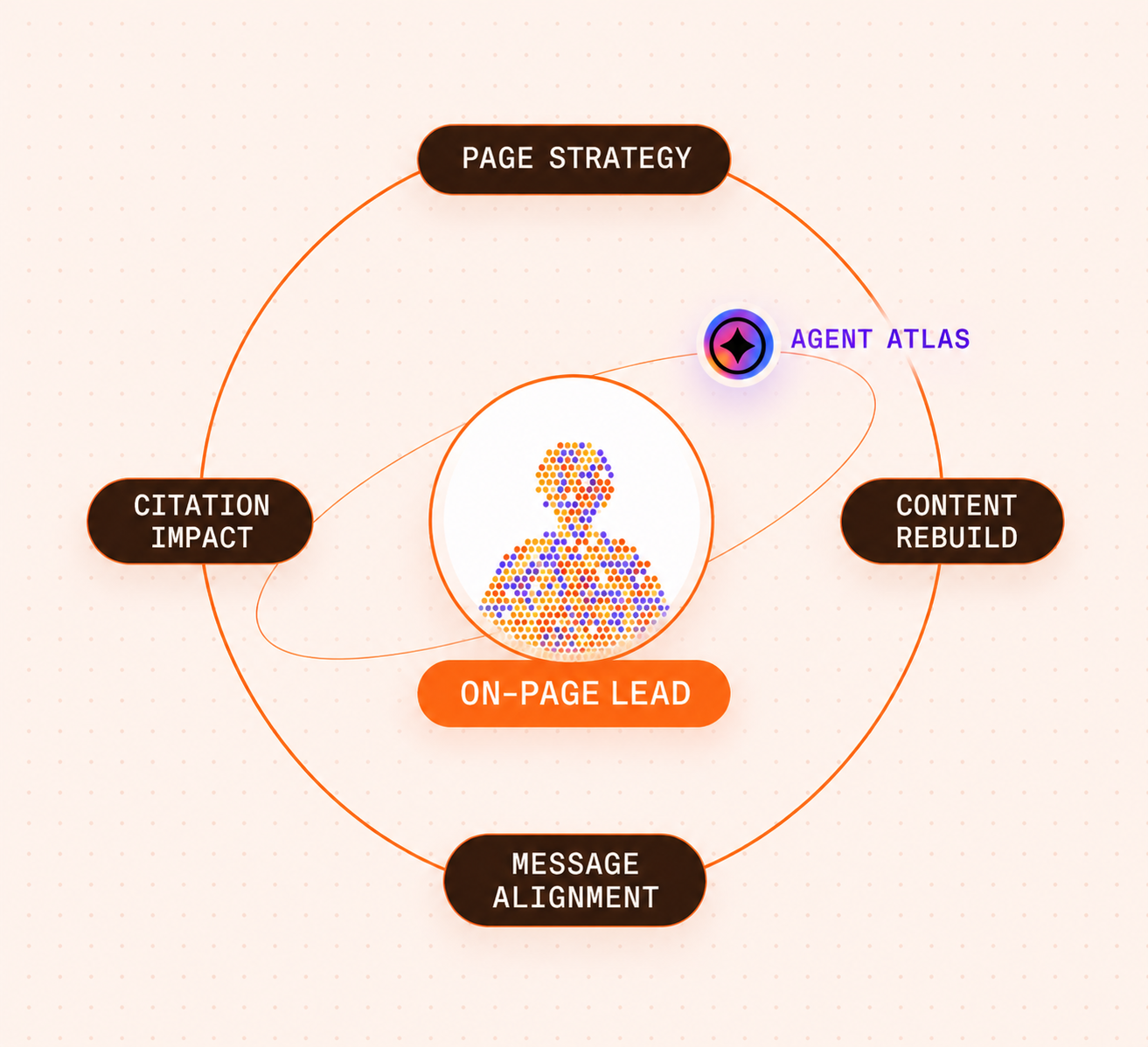
WHAT THE PR LEAD OWNS
A PR lead on your account
A senior operator in your Slack, who works with your named experts.
Decides which stories to tell and which sites to tell them to
Writes the pitches and the commentary with your experts, in their words
Holds the relationships with editors, because an editor replies to a person
Answers for whether the number moved
THE PLATFORM UNDERNEATH
Off-page tracking and AI citation analysis, built in
Agent Atlas is the engine our people run on. It is set up on your data during onboarding, your team gets access to everything we see, and there is no separate software to buy.
See competitor benchmarking in full →
Set up on your data
Your brand kit, audience cohorts, competitor set, and the prompt and theme sets we track for you.
Weekly tracking
Across ChatGPT, Gemini, Claude, Perplexity, Microsoft Copilot and Google AI Overviews. Citation analysis down to the individual URL.
Access for your team
You see what we see. Reporting comes out as something you can take to a board, not a list of completed tasks.
How digital PR fits with on-page SEO, GEO and Reddit marketing
A model answering a buying question reads your website, the press, LinkedIn, YouTube and Reddit, and looks for agreement between them. Where it finds the same answer in several places, it repeats it. Where each surface says something different, it moves on to a brand that is easier to summarise. This is what we mean by Search Everywhere Optimisation. Pepper runs every surface, with one message map under all of them, because that agreement is what gets you recommended. Digital PR is where that agreement gets built off your domain, on the sites a model checks your claim against. Where buyers ask each other instead, our Reddit marketing agency work carries the same message into the threads.
1
PHASE ONE
Retrievability
Crawlability, indexing, rendering, page experience. Without this, nothing else compounds.
2
PHASE TWO · YOU ARE HERE
Structure
One canonical page per buying question, schema, proof in extractable text. Mostly work on pages that already exist, which is why it moves fast.
3
PHASE THREE
Authority
Digital PR, off-page mentions, community presence, named experts. Takes a year and cannot be shortcut.
OFF YOUR SITE
Digital PR & link building
WHERE THE CONVERSATIONS HAPPEN
BEFORE THIS · SOMETHING WORTH CITING
Content strategy & production →
Which buying questions to own, in what order, and the expert-authored content that earns them.
ALONGSIDE · WHERE BUYERS ASK EACH OTHER
Reddit marketing agency →
A presence in the threads models quote, from accounts that have earned the right to post.
The organic growth hub, and how the five fit together
Turning organic into your brand’s most durable growth channel.


Frequently Asked Questions
A traditional SEO agency bills for hours and delivers an agreed list of work each month. Pepper runs your whole organic growth function across Google and AI answers, on its own platform, and the KPI is written into the contract. You pay an agency for the work it does. You pay Pepper against an agreed outcome.
Pepper is a service with the platform built in. Senior strategists and specialists run your organic growth on Agent Atlas, Pepper's platform, set up on your data. Agents handle volume, people make the judgment calls, and one team owns the number.
AI engines recommend the brands that the sources they trust already talk about, such as Reddit, YouTube, G2 and industry publications. Most of that sits off your website. Pepper checks what ChatGPT, Gemini, Claude, Perplexity, Microsoft Copilot and Google AI Overviews say about you every day, plus Google Search. Then we work on your Citation Core: the small set of sites AI engines cite most often in your industry.
Yes, the same as an agency would. Pepper measures that work against your visibility in Google and in AI answers, and agents run it at volume while strategists approve what ships.
No. The work at Pepper runs on the platform. Agents do the volume, and senior strategists direct it and approve what goes out. Adding AI tools to a retainer still leaves the risk with you if the number stays flat.
Yes. Paid and organic are separate disciplines with separate numbers, so splitting them across two suppliers doesn't cause the accountability problem that splitting organic does. Many Pepper accounts run this way.
An agency retainer is a flat monthly fee for a list of deliverables. A Pepper engagement is annual and priced against an outcome. The KPI is in the contract, and your senior strategist reviews progress against your baseline every week. If the number isn't moving, you can leave at six months.
Pepper doesn't publish pricing. Engagements are annual and priced against the outcome. Before you sign anything, you see a full strategy and a projected number.
Expect early movement in the first three months and meaningful results between months six and nine. A lot of your authority sits on sites you don't own, and those sites update on their own schedule.
You do. Everything we produce is yours, and you can export your brand and prompt tracking data at any time. Engagements are annual, with an out-clause at six months.
You'll see it early, because a named strategist reviews progress against your baseline every week. If the number isn't moving, we change the plan with you. If it still isn't on track at six months, you can use the out-clause and keep everything we've built.
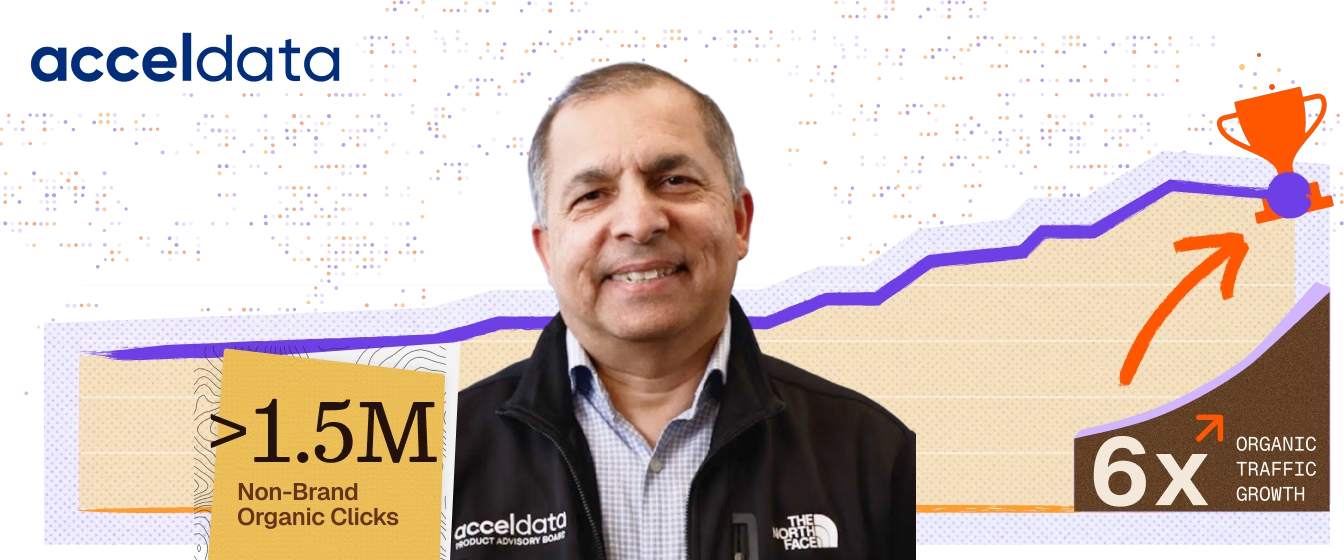
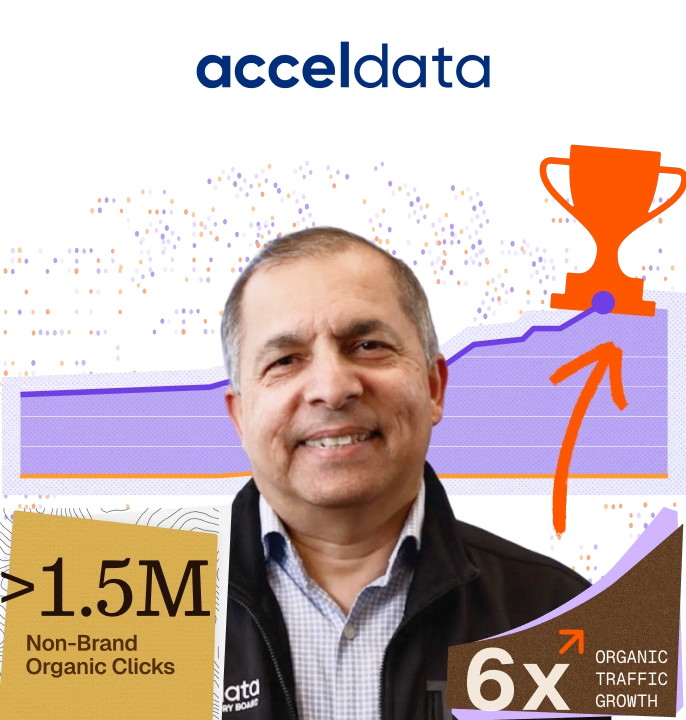
Acceldata grew organic traffic 6x within twelve months, and its keywords in Google's top three went from 85 to 300+. SalesHood went from 14 to 97 keywords in Google AI Overviews in six months, while blog impressions rose from about 200,000 to 417,000.

For businesses playing the long game, Pepper turns your earned authority visible to search & AI, making
organic growth winnable again.
Get a strategy presentation with real projections before you sign up.
i
*the long game is not about waiting.
It is about building something that keeps winning after everyone else's quick win wore off. And you will see it work within a quarter.