

Organic Growth /
On-page GEO optimisation
Put your best page forward.
On-page GEO optimisation is the rebuild of the pages you already have, so that ChatGPT, Gemini, Perplexity and Google AI Overviews can lift the answer off the page and cite it. The pages that already rank, and already get you mentioned, are restructured so the mention turns into a citation.
What is on-page GEO optimisation?
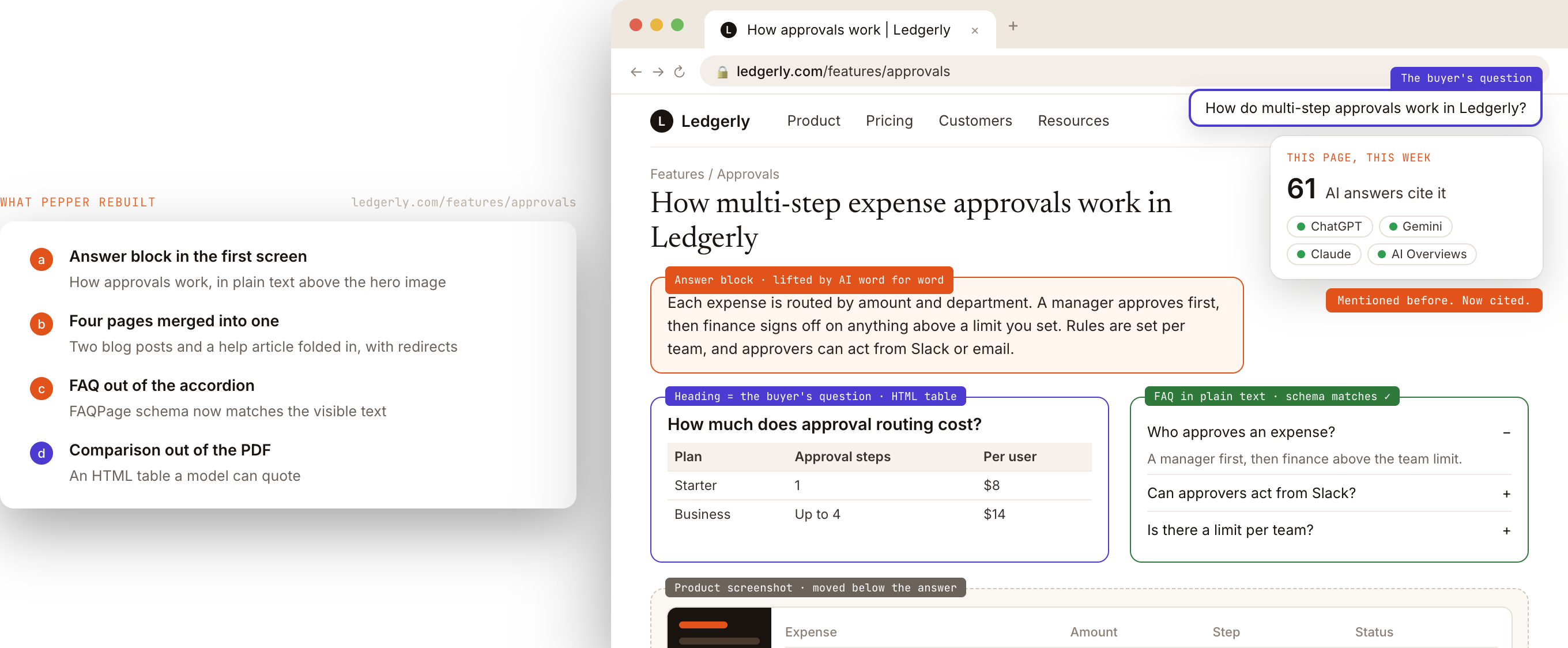
On-page GEO optimisation is the restructuring of pages a crawler can already reach so that an AI model can lift the answer from them whole. It gives each buying question one canonical page, puts the answer in plain text near the top, phrases the headings as the questions buyers ask, keeps the proof in extractable HTML and adds schema that matches the visible text. It works on the pages a brand already has.
What changed is how a page gets used. Google ranked a page and sent a visitor to read it. ChatGPT, Gemini, Claude, Perplexity, Microsoft Copilot and Google AI Overviews read the page themselves, take the passage that answers the question, and name the source. A page that holds its answer inside a hero image gets read and passed over.
Pepper runs on-page GEO as a service. We map your buyers' questions to your pages and rebuild the pages in priority order. Each month the prompt set is re-run to show which rebuilt pages are now cited.
Why does ChatGPT mention us but link to someone else?
This is the mention-to-citation gap: the distance between how often AI names you and how often it cites a page from your domain. A model that has learned your name from the press will name you. When it needs a page to cite, it takes the one that answers the question most cleanly, and that page often belongs to a competitor or a publisher.
01
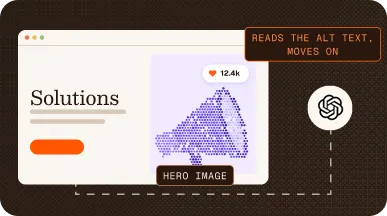
The answer is in the hero image
The product is explained in a graphic. The text under it says "solutions" and never names the problem. A model reads the alt text and moves on.
02
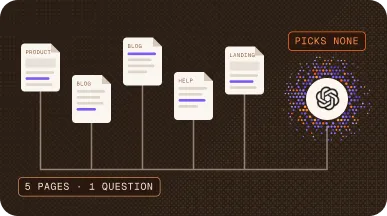
Five pages compete for one question
A product page, two blog posts, a help article and a landing page each answer part of it. The model picks none of them.
03
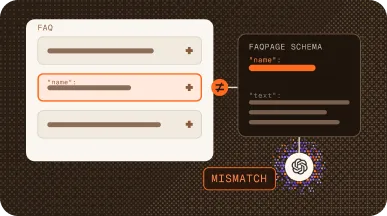
The FAQ is in an accordion with no matching schema
The questions exist, inside a collapsed widget, with FAQPage markup that says something slightly different. The mismatch counts against you.
04
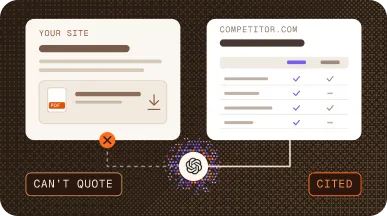
The comparison lives in a PDF
The page a buyer and a model both want, you against the alternatives, is a download. It cannot be quoted, so the competitor's comparison gets quoted.
The work, in four parts
It starts with the prompt set we track for you: the questions buyers ask ChatGPT, Gemini, Perplexity and Google about your category. Every page decision comes from which of those questions it owns.
01
Prompt-to-page mapping
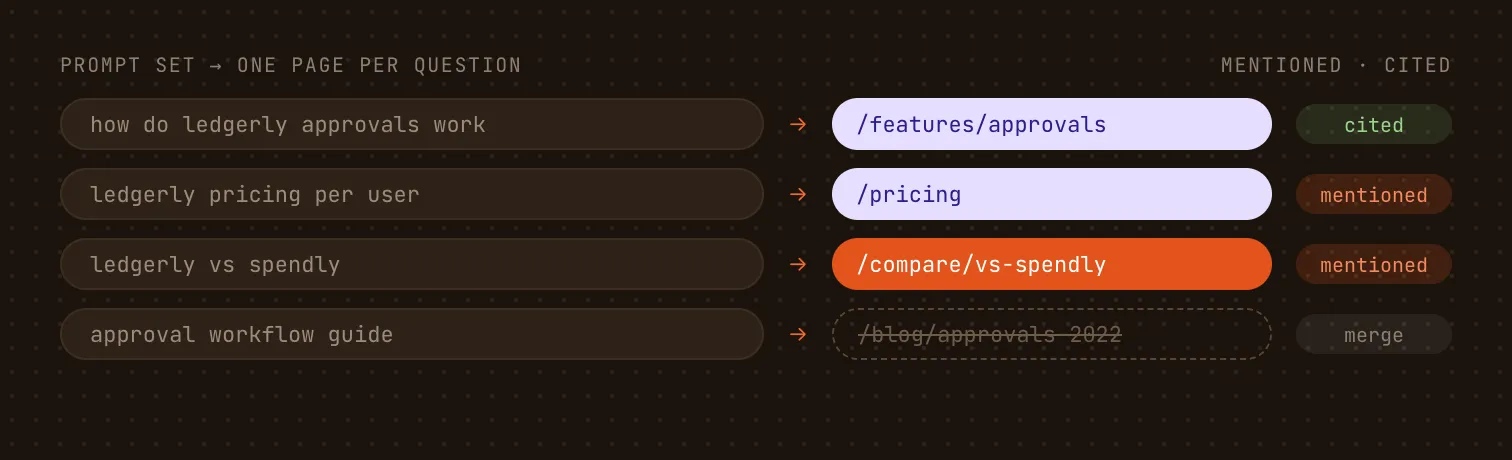
Which questions matter, and which page owns each one.
Prompt set to page map: every tracked buying question assigned to the one URL that will own it, with its mention and citation status beside it
Cannibalisation list: the questions where two or more of your pages compete, and which one stays
Merge and cut list: pages folded into the canonical page or removed, with redirects
Rebuild order: pages ranked by how far their mention count sits ahead of their citation count
02
Page rebuilds
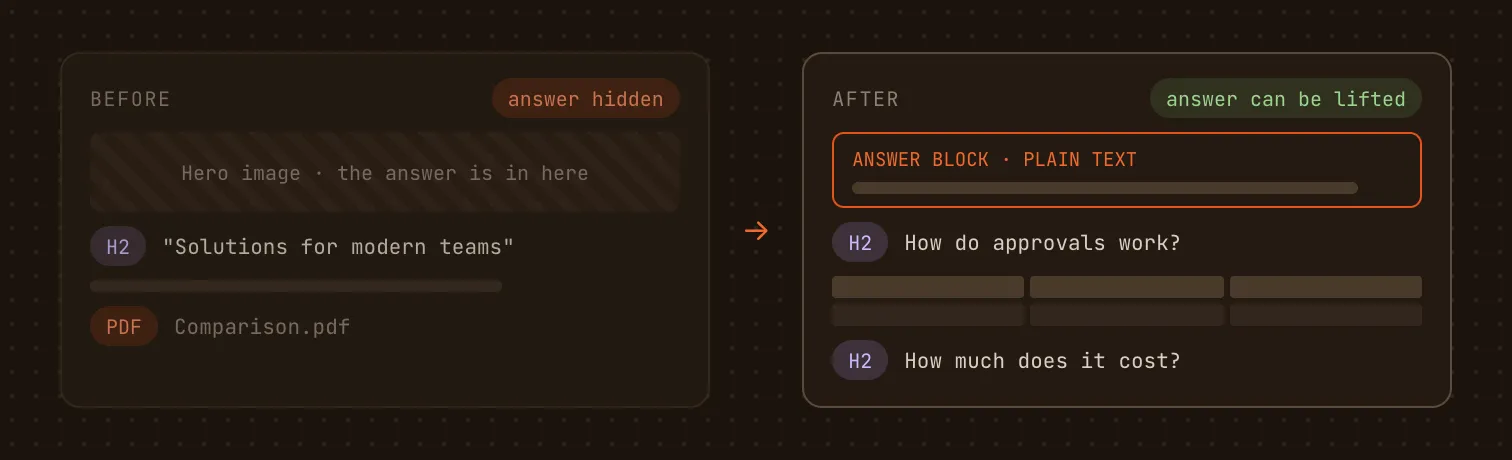
The page, rewritten so the answer can be lifted whole.
The answer block first: the question answered in plain text on the first screen, above any hero image, in words a model can quote as they stand
Headings as the buyer's questions: "How much does it cost?" in place of "Solutions for modern teams", so each section answers one thing
Proof in extractable HTML: pricing, specs and comparisons moved out of images, accordions and PDFs into tables and lists
One message, agreed with your team: the specialist rewrites from the answer block down and settles the claim with product marketing before it ships
03
Schema and markup
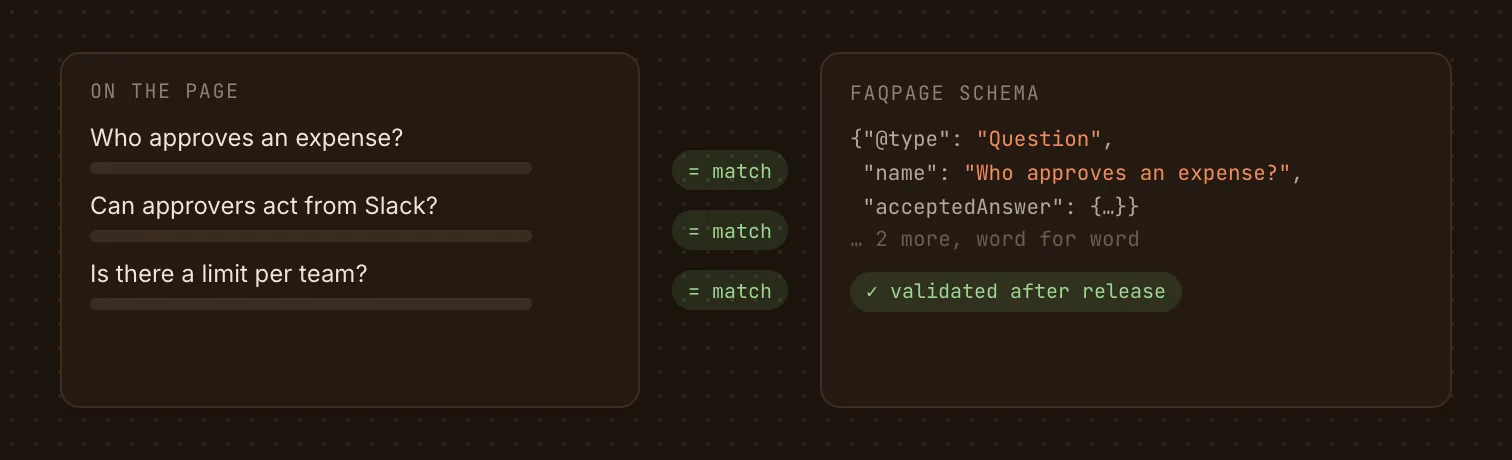
The page tells a model what it is, and the markup agrees with the text.
Schema matched to the page: FAQPage, Product, SoftwareApplication, Article, HowTo or BreadcrumbList, chosen for what the page actually is
Markup that says what the page says: every question and answer in the schema visible on the page, word for word, so no mismatch counts against you
Validated after every release: Agent Atlas checks the markup each time a page ships and flags anything that broke
One set of facts: product names, prices and sameAs links that agree across every rebuilt page
04
Measurement
Whether the rebuilt page is now the one being cited.
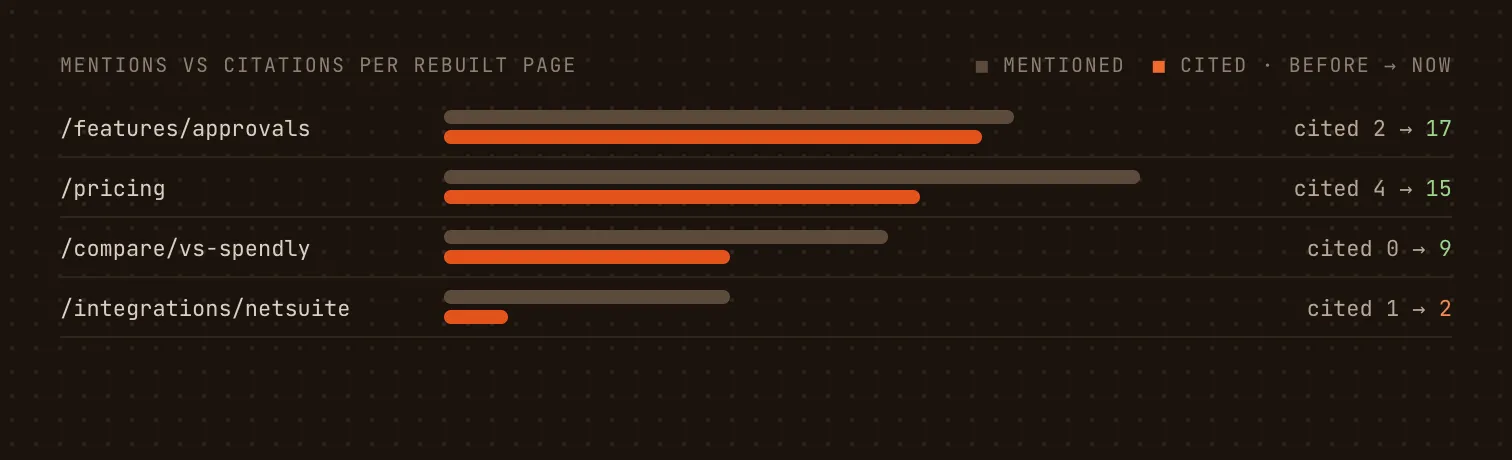
Mentions and citations per URL: for every rebuilt page, how often AI names you and how often it cites that page, across six engines
The gap, before and after: each page's mention-to-citation gap tracked from the week it goes live
A monthly re-run of the prompt set: new questions get a page, and pages that lost a citation get looked at
Reported in plain numbers: which rebuilds moved, which did not, and what is next, in a report you can take to a board
What changes, and when
Most of this is work on pages that already exist and are already being read, which is why it moves faster than new content or authority work.
Weeks 1 to 3
The map, and the rebuild list
Every tracked question is assigned to a page. You get the rebuild list in priority order, with the reason for each item.
Weeks 3 to 10
Rebuilds shipped in priority order
Pages go live in your CMS a few at a time, biggest gap first. Citations on a rebuilt page usually move within a month of going live.
Ongoing
Re-mapping as the questions change
The prompt set is re-run monthly. New questions get a page, pages that lost a citation get looked at.
What on-page GEO optimisation will not do on its own: a rebuilt page gets cited only if a model can reach it and other sources agree with what it says. Technical SEO comes first. Digital PR and the channels come after.
Agents for scale. Humans for judgment.
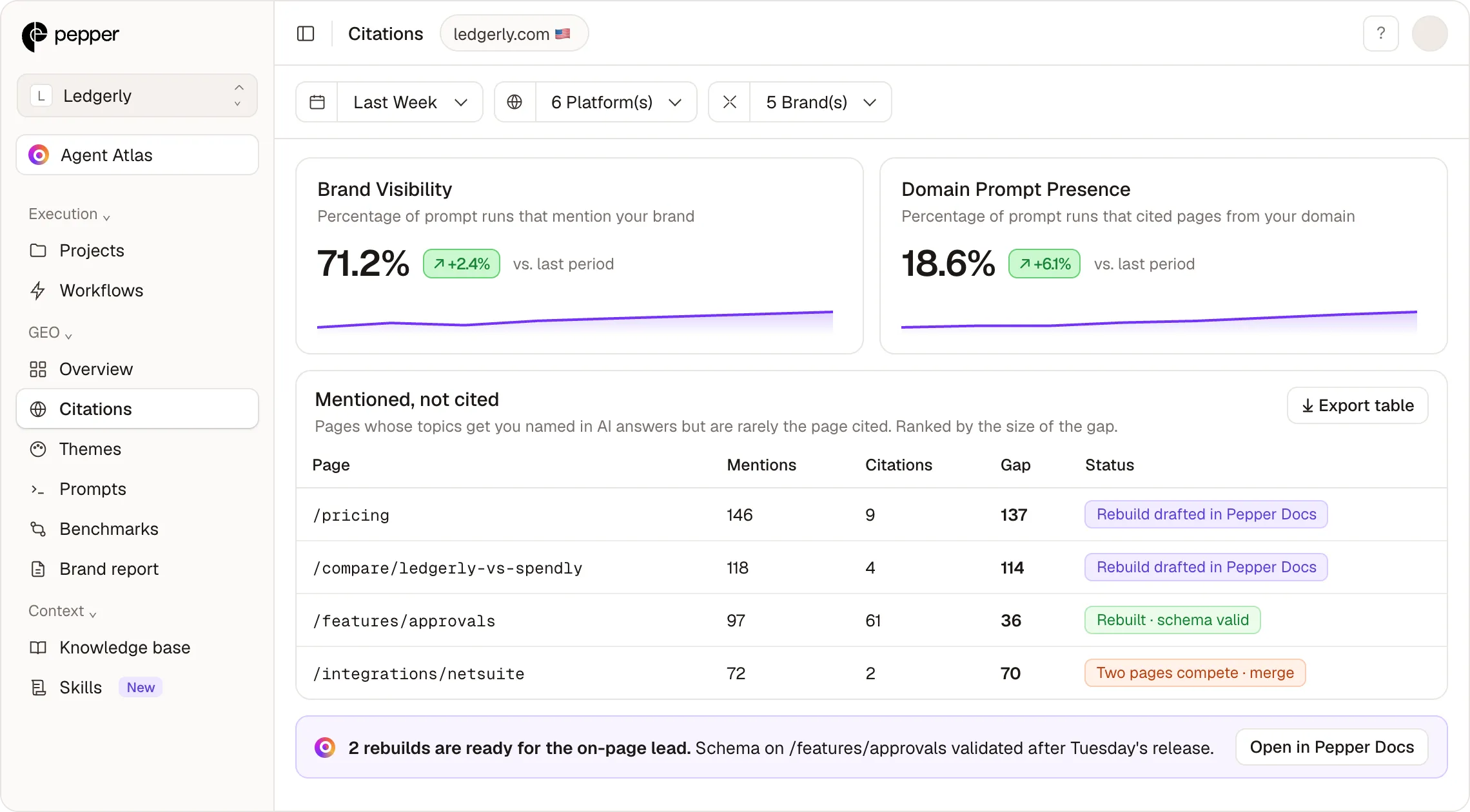
The prompt set, run weekly across six engines, shows which of your pages are mentioned and which are cited. Reading that is what the software is for. Deciding what each page should say is not.
WHAT AGENT ATLAS RUNS
The weekly read
Set up on your data during onboarding, then running underneath the rebuilds.
>
Runs the prompt set weekly and records, per URL, where you were mentioned and cited
>
Flags the pages that are mentioned and never cited, ranked by the size of the gap
>
Drafts the rebuild of each flagged page in Pepper Docs for the specialist to rewrite
>
Validates the schema after every page ships
WHAT THE SPECIALIST OWNS
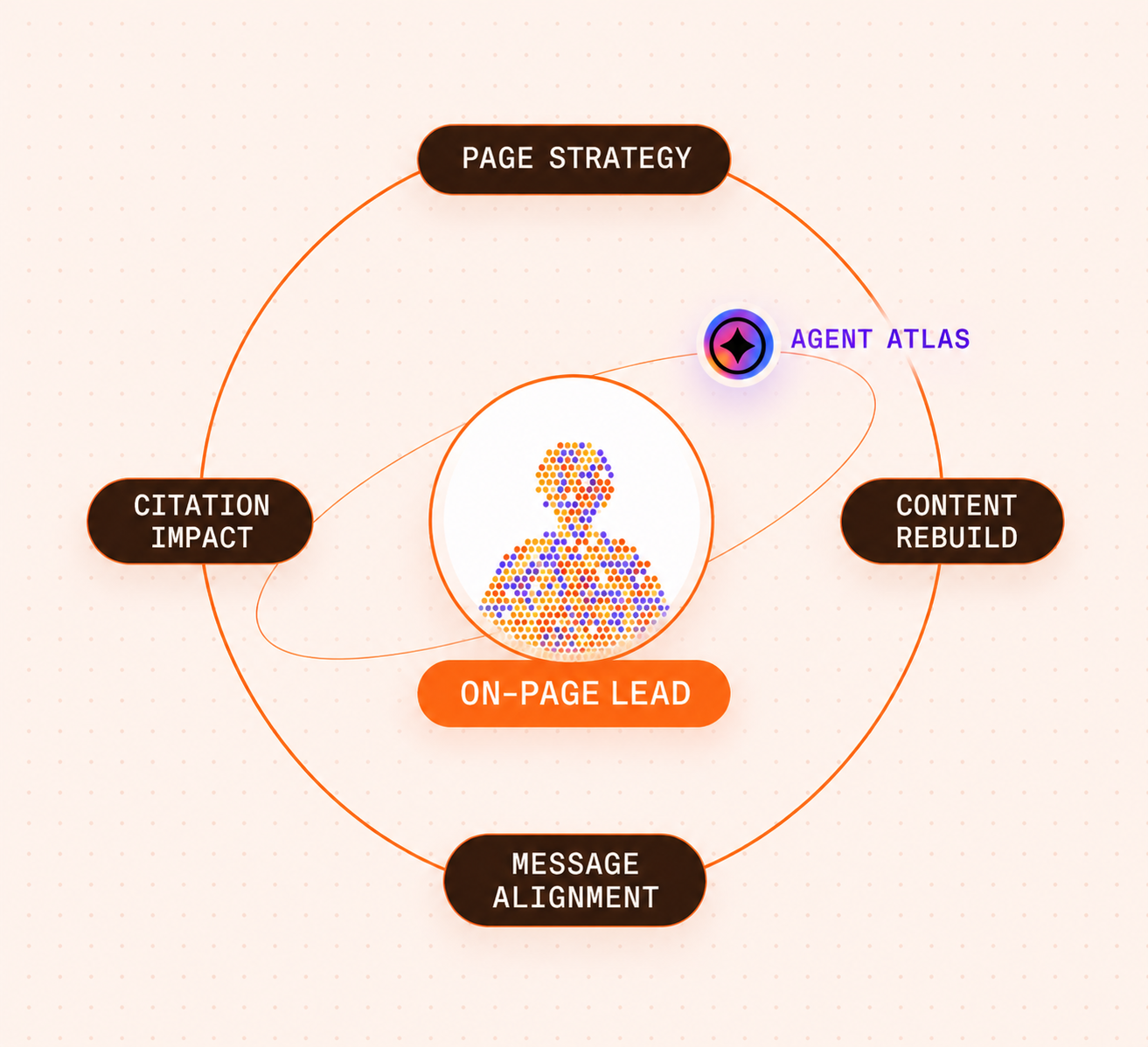
An on-page lead on your account
A senior operator in your Slack and your CMS, on your release cadence.
Decides which page owns which question, and which pages get merged or cut
Writes the rebuild, from the answer block down
Argues the message with your product marketing team until the page says one thing
Answers for whether the citations moved
THE PLATFORM UNDERNEATH
The technology comes with the team.
Agent Atlas is the engine our people run on. It is set up on your data during onboarding, your team gets access to everything we see, and there is no separate software to buy.
See AI visibility and tracking in full →
Set up on your data
Your brand kit, audience cohorts, competitor set, and the prompt and theme sets we track for you.
Weekly tracking
Across ChatGPT, Gemini, Claude, Perplexity, Microsoft Copilot and Google AI Overviews. Citation analysis down to the individual URL.
Access for your team
You see what we see. Reporting comes out as something you can take to a board, not a list of completed tasks.

One message, everywhere a model reads
A model answering a buying question reads your website, the press, LinkedIn, YouTube and Reddit, and looks for agreement between them. Where it finds the same answer in several places, it repeats it. Where each surface says something different, it moves on to a brand that is easier to summarise. This is what we mean by Search Everywhere Optimisation. Pepper runs every surface, with one message map under all of them, because that agreement is what gets you recommended. On-page GEO is where your own site states the answer: one page per question, written so it can be quoted.
1
PHASE ONE
Retrievability
Crawlability, indexing, rendering, page experience. Without this, nothing else compounds.
2
PHASE TWO · YOU ARE HERE
Structure
One canonical page per buying question, schema, proof in extractable text. Mostly work on pages that already exist, which is why it moves fast.
3
PHASE THREE
Authority
Digital PR, off-page mentions, community presence, named experts. Takes a year and cannot be shortcut.
BEFORE THIS · PHASE ONE
Technical SEO →
The work that makes a page reachable by Google's crawler and by the AI crawlers. A rebuilt page nobody can fetch stays uncited.
ALONGSIDE · WHAT DOES NOT EXIST YET
Content strategy & production →
The questions that have no page of yours at all, and the expert-written pages that earn them.
The organic growth hub, and how the five fit together
Turning organic into your brand’s most durable growth channel.

Frequently Asked Questions
A traditional SEO agency bills for hours and delivers an agreed list of work each month. Pepper runs your whole organic growth function across Google and AI answers, on its own platform, and the KPI is written into the contract. You pay an agency for the work it does. You pay Pepper against an agreed outcome.
Pepper is a service with the platform built in. Senior strategists and specialists run your organic growth on Agent Atlas, Pepper's platform, set up on your data. Agents handle volume, people make the judgment calls, and one team owns the number.
AI engines recommend the brands that the sources they trust already talk about, such as Reddit, YouTube, G2 and industry publications. Most of that sits off your website. Pepper checks what ChatGPT, Gemini, Claude, Perplexity, Microsoft Copilot and Google AI Overviews say about you every day, plus Google Search. Then we work on your Citation Core: the small set of sites AI engines cite most often in your industry.
Yes, the same as an agency would. Pepper measures that work against your visibility in Google and in AI answers, and agents run it at volume while strategists approve what ships.
No. The work at Pepper runs on the platform. Agents do the volume, and senior strategists direct it and approve what goes out. Adding AI tools to a retainer still leaves the risk with you if the number stays flat.
Yes. Paid and organic are separate disciplines with separate numbers, so splitting them across two suppliers doesn't cause the accountability problem that splitting organic does. Many Pepper accounts run this way.
An agency retainer is a flat monthly fee for a list of deliverables. A Pepper engagement is annual and priced against an outcome. The KPI is in the contract, and your senior strategist reviews progress against your baseline every week. If the number isn't moving, you can leave at six months.
Pepper doesn't publish pricing. Engagements are annual and priced against the outcome. Before you sign anything, you see a full strategy and a projected number.
Expect early movement in the first three months and meaningful results between months six and nine. A lot of your authority sits on sites you don't own, and those sites update on their own schedule.
You do. Everything we produce is yours, and you can export your brand and prompt tracking data at any time. Engagements are annual, with an out-clause at six months.
You'll see it early, because a named strategist reviews progress against your baseline every week. If the number isn't moving, we change the plan with you. If it still isn't on track at six months, you can use the out-clause and keep everything we've built.
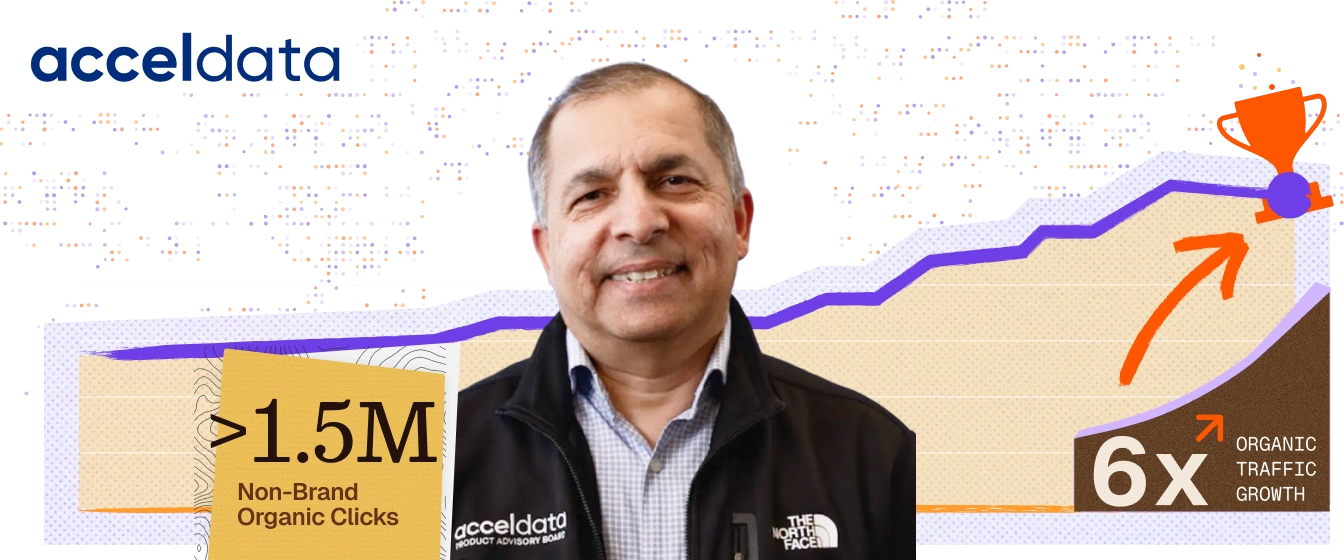
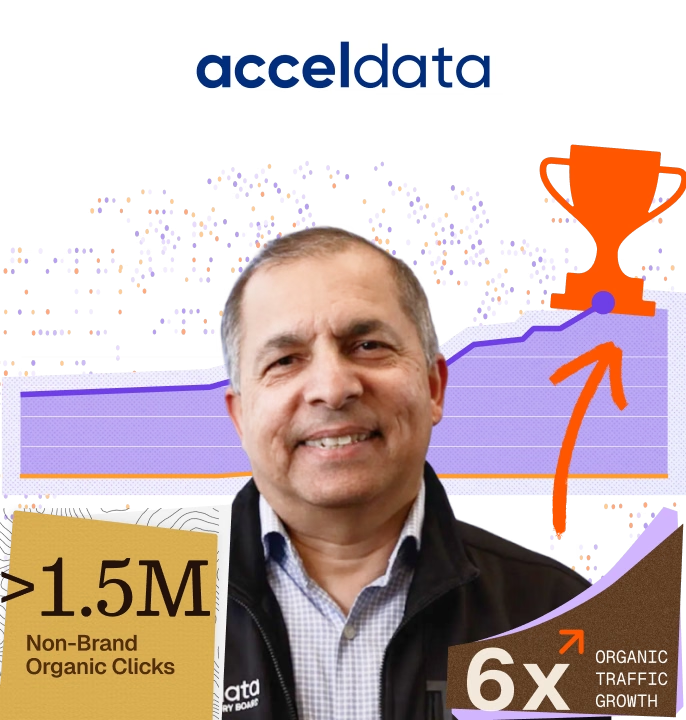
Acceldata grew organic traffic 6x within twelve months, and its keywords in Google's top three went from 85 to 300+. SalesHood went from 14 to 97 keywords in Google AI Overviews in six months, while blog impressions rose from about 200,000 to 417,000.

For businesses playing the long game, Pepper turns your earned authority visible to search & AI, making
organic growth winnable again.
Get a strategy presentation with real projections before you sign up.
i
*the long game is not about waiting.
It is about building something that keeps winning after everyone else's quick win wore off. And you will see it work within a quarter.